Can You Pay a Custom-Home Contractor for Stored Materials Before Installation?
A U.S. contract-first worksheet for checking stored-material payment requests against title, insurance, storage, inspection, liens and lender rules.
The short answer
Yes, a custom-home contract may allow payment for materials before installation, but an invoice or photograph is not enough by itself. Check the executed payment clause, schedule of values, item identity, quantity, storage and segregation, title-transfer evidence, insurance and deductible responsibility, inspection access, lien protection, lender approval and the next installation date. Off-site payment may require written location approval under the contract; AIA-style examples use that gate, but contracts and lender rules vary. Local law governs.Can You Pay a Custom-Home Contractor for Stored Materials Before Installation?
Yes, a custom-home contract may allow payment for materials before installation, but an invoice or photograph is not enough by itself. Check the executed payment clause, schedule of values, item identity, quantity, storage and segregation, title-transfer evidence, insurance and deductible responsibility, inspection access, lien protection, lender approval and the next installation date. Off-site payment may require written location approval under the executed contract; AIA-style examples use that gate, but contracts and lender rules vary. Local law governs.
The practical decision is not “Do I trust this invoice?” It is “What exactly am I being asked to buy, what document authorizes this timing, who can verify the item, what happens if the builder fails or the material is damaged, and what handoff makes the next payment safer?” A stored-material request can be reasonable. It can also shift custody, title, insurance, cash-flow and lien risk to you before the home visibly changes. Those are separate questions that need separate records.
Use this page with the signed contract, the latest schedule of values, the payment application, the construction-loan instructions if any, and the project’s actual insurance documents. The default scope is a United States custom-home project. “United States” does not mean one nationwide construction-payment rule: contract terms, state law, lien law, lender policy, public-program rules and insurance wording can differ. Utah and Delaware appear below as labeled examples, not as rules for other states.
| If the request is… | Release posture | What must happen next |
|---|---|---|
| On-site, clearly identified, protected and allowed by the signed payment clause | Potentially releasable after the contract, title, insurance, inspection and lien gates are satisfied | Record the inspection, documents and the installation handoff |
| Off-site but the address, custody, segregation or access is unclear | Hold | Get written location approval, access arrangements and project-specific storage evidence |
| Supported only by an invoice, purchase order or photograph | Not verified | Ask for the missing identity, quantity, title, insurance, custody and payment-application records |
| Not allowed by the signed contract or lender draw instructions | Do not release under that line | Ask for a written contract change or lender-approved alternative before the deadline |
| Damaged, substituted, commingled, disputed or subject to a supplier balance | Hold or pay only a documented undisputed amount if the contract and adviser support it | Escalate to the contract administrator, lender, title professional or construction attorney |
1. Make the release decision before you make the payment #
A homeowner should release money for stored materials only when the proposed payment is authorized by the executed contract and supported by a verifiable record of the material, location, title or owner-interest protection, insurance, inspection access, lien protection and next installation handoff. If a required gate is missing, the correct status is “hold,” “not comparable” or a documented partial decision—not an automatic yes or an automatic accusation.
The compact originality brief
Current answers commonly explain that installed work, material stored at the job site and material stored somewhere else may be treated differently. They also tend to appear as contract excerpts, contractor-side pay-application advice or broad warnings about mechanics’ liens. That information is useful but leaves the homeowner between two documents: the supplier invoice says money is due, while the finished home is not yet available to inspect.
The missing decision is whether one specific pre-installation line is sufficiently authorized and protected for this project, at this location, on this payment application. The decision includes who must verify it and what record follows the payment. A contractor’s photograph may show a box; it does not by itself show that the box is yours, that it is not promised to another project, that it is insured at the photographed location, or that the lender will recognize the draw.
The original contribution on this page is the Stored-material payment release worksheet. It is a reproducible worksheet, not a legal test. Its method is to reconcile, line by line, the signed payment clause and schedule of values with the item’s quantity and unit, invoice, exact storage address, project label, segregation, title-transfer document, insurance evidence, inspection access, transport cost, lien protection, lender approval and next installation date. The modeled example below shows inputs, units, formulas and sensitivity. Its limitation is important: it organizes evidence but cannot determine title, insurance coverage, lien priority, lender entitlement, contract meaning or legal approval under the law of the project jurisdiction.
The contribution’s documented method is: For each proposed stored-material line, map the signed payment clause to the schedule of values, then record quantity and unit, invoice, location, segregation, title evidence, insurance, inspection access, transport, lien protection, lender approval and installation date. The modeled example uses explicit inputs and arithmetic. Its documented limitations are: The worksheet organizes evidence; it cannot determine title, lien priority, insurance coverage, lender entitlement, contract meaning or legal approval under the law of the project jurisdiction. The executed contract, lender instructions, policies and qualified local professionals control.
You can print the stored-material payment release worksheet from this article after publication or use the Brictale homeowner blog to keep this guide with the rest of your build record. Do not describe the worksheet as an official form, a lien release, an insurance certificate or a professional inspection.
What “stored materials” means for this decision
Stored materials are purchased, fabricated or delivered items that are included in the project but have not yet been incorporated into the work. Examples might include windows held by a supplier, trusses at a staging yard, cabinets in a warehouse, stone slabs at a fabricator, or appliances in a secure contractor facility. The category can include material on the lot and material at a separate location, but the risk picture changes with custody and distance.
Do not silently treat these categories as equivalent:
- Installed work is physically incorporated into the home and can often be checked against drawings, specifications and visible progress. It can still be defective, incomplete or unpaid, but it is no longer merely a box, pallet or fabricated component awaiting installation.
- On-site stored material is at the project address but may be exposed to theft, weather, damage, movement, delivery confusion or another trade’s use. Being on the lot does not prove that it is protected, project-specific or paid for.
- Off-site stored material is away from the property and may be held by the builder, supplier, fabricator, warehouse or another custodian. You need a location, access route and custody record, not just the words “stored off site.”
- In-transit material is moving between places. The invoice, carrier record and insurance may identify it differently from material already received. Do not label a shipment “stored on site” before it has been delivered and accepted under the contract’s process.
- Special-order or fabricated material may be difficult to return or substitute, but nonreturnability is not the same as title transfer, owner approval or insurance coverage.
The AIA-MBA Joint Committee makes the on-site/off-site distinction expressly. Its industry guidance says on-site payment should follow the contract when the material is stored so it does not obstruct progress; for off-site payment, it recommends showing that the material is identified, fabricated, protected for the project and awaiting convenient delivery. The same page says the contract and insurance provisions control discrepancies. That is a useful decision frame, not a federal or state statute. (AIA-MBA Joint Committee guidance on stored construction materials)
The release gate is a sequence, not a trust score
The sequence matters because later evidence cannot repair an earlier authorization gap. A supplier invoice may prove that a supplier billed someone. It does not prove that the owner agreed to fund the item before installation. A photograph may show a pallet. It does not prove a transfer of title or insurance. A lender may approve a draw. That does not change the owner-builder contract or settle a dispute over defective material.
Use this order:
- Authority: Find the signed clause, schedule-of-values line, approved change and any advance written approval required for off-site payment.
- Identity: Reconcile the description, model, dimensions, finish, quantity, unit and intended location in the home.
- Custody: Verify on-site or off-site address, project marking, segregation, protection and access for a reasonable inspection.
- Financial interest: Review the documents that the contract or a qualified professional says establish title or otherwise protect your interest.
- Risk transfer: Confirm which policy or endorsement covers physical loss or damage in storage and transit, who is insured, and who bears the deductible or retention.
- Lien protection: Confirm the supplier and subcontractor payment trail and obtain the contract-required waivers, releases or other protection.
- Funding: Send the same package through the lender, architect, owner’s representative or title company required by the project’s draw process.
- Handoff: Record when the item will travel to the site, who accepts it, how it will be inspected, and which next payment line depends on installation.
If a request fails at step 1, do not try to compensate with extra photographs. If it fails at step 4, do not assume the invoice’s “paid” stamp transferred title. If it fails at step 6, do not assume the material is lien-free because the builder says the supplier was paid. Each failure goes to the person who owns that verification.
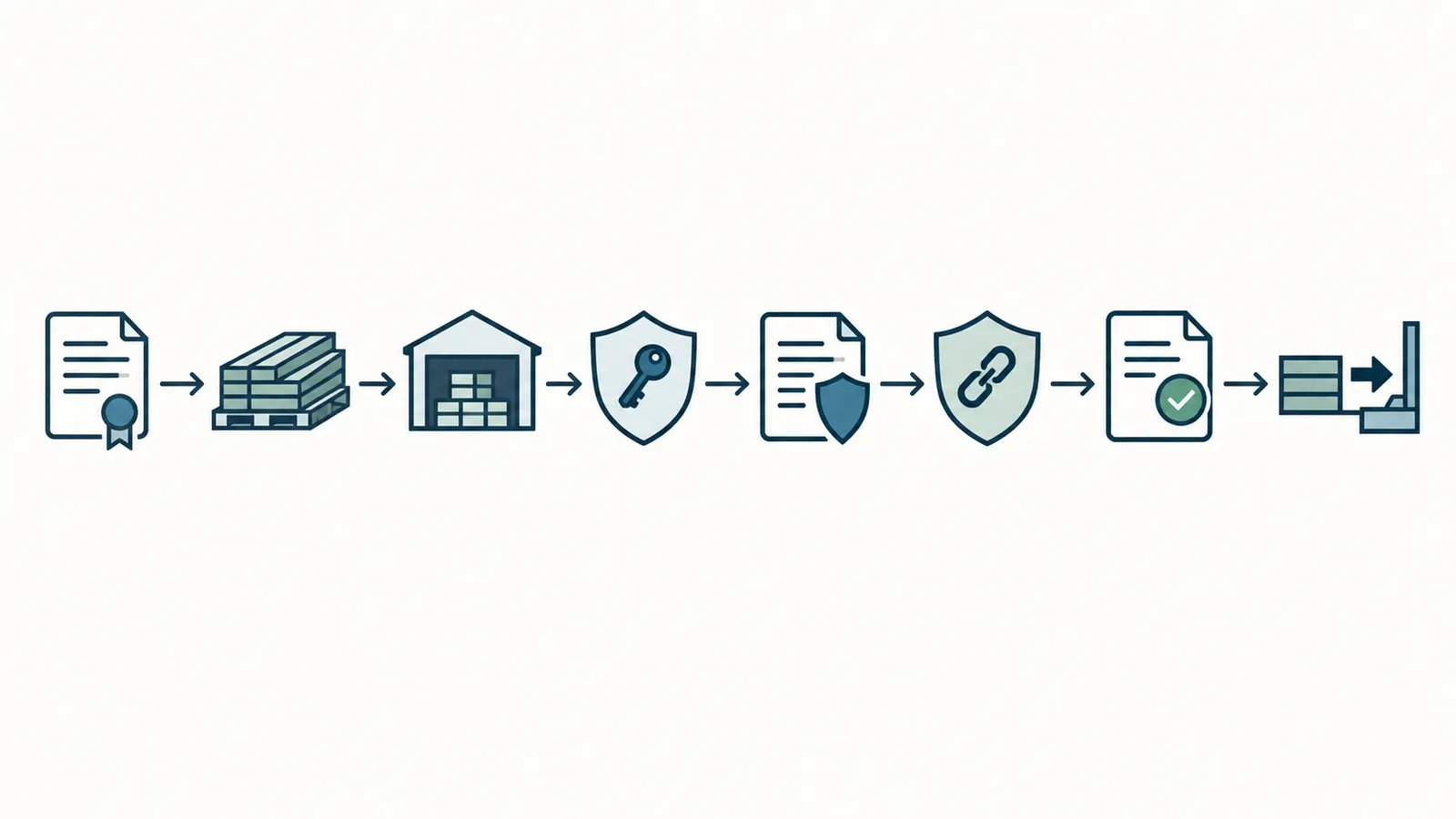
2. Read the executed contract and payment application together #
The signed contract decides whether pre-installation payment is available on this project; a general industry practice, a supplier deadline or a contractor’s standard draw form cannot add permission that the contract does not contain. Read the payment article, schedule of values, exhibits, general conditions, supplementary conditions, change-order procedure, insurance provisions and any lender or title-company addendum as one system.
Start with the payment clause, not the invoice
Ask the builder to identify the exact paragraph that permits the proposed payment. Record the document name, revision date, article, section, page and any incorporated exhibit. The clause may say one of several very different things:
- payment is based only on completed or installed work;
- payment includes materials delivered and suitably stored at the site;
- payment can include off-site materials only after the owner approves the location in writing;
- payment is based on cost incurred, subject to receipts or audit rights;
- an allowance is funded at a different milestone;
- a deposit or procurement payment is due before fabrication;
- payment is allowed only for certain named materials or percentages;
- payment requires a title document, insurance evidence, inspection, lien waiver or lender approval;
- payment timing is changed by a signed change order or supplemental condition.
These are not interchangeable. “Materials included in the contract price” can describe who bears the cost overall without saying when the owner must fund it. “Materials ordered” can mean a procurement status without saying the material is paid, delivered, insured or owned. “Stored materials” can be a defined payment category with its own evidence requirements. Copy the clause rather than paraphrasing it in your worksheet, then ask the contract administrator or construction attorney about meaning if the language is unclear.
The AIA-MBA Joint Committee recommends that stored-material payment follow the contract documents for on-site material and separates off-site treatment. The ABA Construction Lawyer article similarly explains that AIA-style language allows payment for material suitably stored at the site, while off-site payment is subject to advance owner approval, a location agreed in writing and procedures satisfactory to the owner to establish title or otherwise protect the owner’s interest. Those sources show why “can contractors ever bill stored material?” is not the same question as “does this signed contract authorize this line today?” (AIA-MBA stored-material payment guidance, ABA discussion of off-site payment procedures)
Confirm who is allowed to approve the payment
The word “approved” needs an owner. On a custom home, the contract may assign payment review to you, an architect, a construction manager, an owner’s representative, a lender inspector, a title company or a combination. A supplier’s sales representative cannot approve an owner’s draw. A lender’s inspector may verify a loan condition without certifying the builder’s compliance with every contract specification. An architect’s payment certification may be limited by the contract and the information available.
Write the approval chain in plain language:
Builder prepares payment application
        ↓
Architect / owner’s representative checks contract progress and documents
        ↓
Lender or title company checks its draw package, if applicable
        ↓
Owner authorizes release under the signed contract
        ↓
Builder pays supplier or custodian and records the handoff
Your project may have fewer or more boxes. The point is to name each person’s decision. The person who verifies physical existence may not be the person who decides whether title passes. The person who releases loan funds may not be the person who determines whether the material meets the design specification. Ask for written confirmation if roles are unclear.
The ABA article describes AIA-style payment administration in which an architect reviews and certifies payment applications within seven days, but it also explains that owners sometimes take on or reduce those construction-administration responsibilities. Treat that as a contract-design and project-role issue, not as an automatic right to impose a seven-day process on a private job. (ABA discussion of payment-application review)
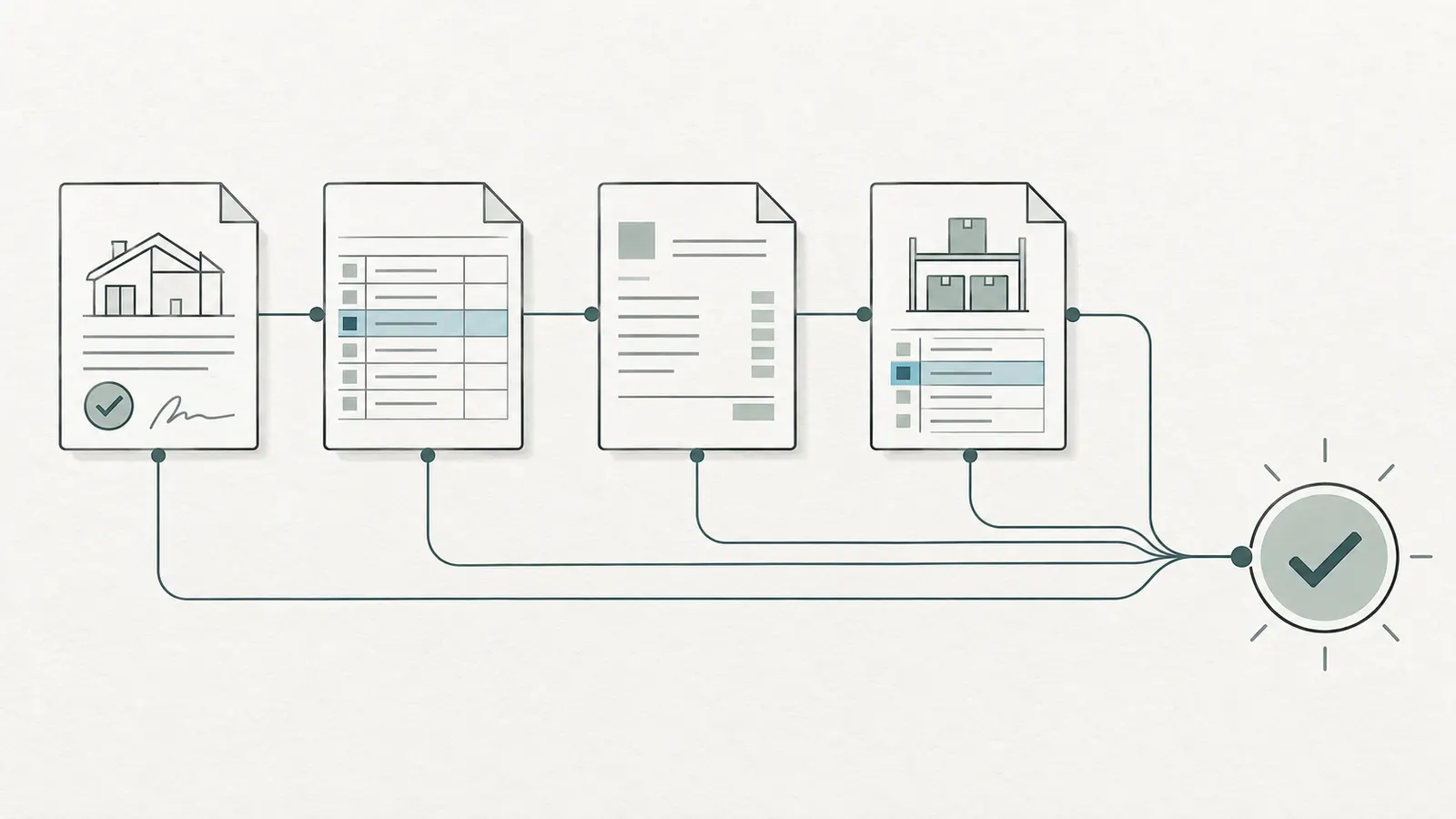
Reconcile the schedule of values
A schedule of values, or SOV, is the payment map. It breaks the contract sum into lines such as sitework, foundations, framing, windows, roofing, cabinetry, mechanical systems and finishes. A line can be broad enough to conceal a problem. “Windows — $42,000” may include shop drawings, frames, glazing, screens, freight, storage and installation. The payment request should show which portion is being billed and what remains.
The ABA article describes an SOV as an itemized breakdown of contract work with a corresponding dollar value and says payment applications are commonly reviewed against that schedule. A Delaware public-project specification provides a clearly labeled public-contract example: its AIA-style language requires an itemized payment application prepared with the schedule of values and supporting data such as requisitions and lien releases or waivers when required by the contract documents. That Delaware document is a scope-comparison example for a public project, not a private-home rule. (ABA explanation of schedules of values, Delaware public-project payment example)
For each stored-material line, calculate the amount requested rather than accepting a new percentage without support:
eligible line amount
= documented material cost
+ contract-allowed freight
+ contract-allowed storage
+ contract-allowed insurance
+ contract-allowed transport to site
− credits, refunds, substitutions and prior payments
The formula is a worksheet structure, not a statement that every contract allows every add-on. The contract may include overhead and profit, retainage, allowances, taxes or a different valuation method. Put each disputed component on its own line. Do not bury storage or freight in a material subtotal if the contract requires separate treatment.
Then apply the contract’s retainage and prior-payment rules. If the SOV line is $40,000, prior approved payment is $8,000 and the current evidence supports $20,000 of additional eligible stored material, the requested gross line total before retainage is $28,000. If the contract requires 10% retainage on that line, the current release attributable to the new amount might be $18,000, but only if the contract’s retainage method and the reviewer’s calculation use that base. Do not invent a retainage percentage from a common practice.
Separate an authorized change from a procurement surprise
If the material is a substitution, upgrade, deleted item, changed quantity or changed finish, find the signed change order or other authorization required by your contract before reviewing payment. A builder may have ordered an item to protect the schedule, but urgency does not make an unapproved change part of the owner’s obligation. Conversely, a builder may be entitled to order a specified long-lead item within the original scope without a change order. The documents decide.
Record:
- the original drawing or specification reference;
- the approved SOV line;
- the proposed and actual quantity;
- the unit and unit price;
- the change-order number, if any;
- who signed and when;
- whether the request includes only original scope or also a change;
- whether the change affects insurance, storage, lender value or installation sequence.
Do not approve a stored-material payment because it prevents a delay if you have not decided whether the material is the correct material. A payment can fund an incorrect selection and make later recovery harder. Have the design professional or qualified trade verify technical compliance when the item affects structure, weather protection, fire separation, energy performance, electrical capacity, plumbing, heating, ventilation or other regulated work. The homeowner can compare records; the homeowner should not remotely sign off on engineering or code compliance.
Utah example: a useful record right with a limited jurisdiction
Utah’s Department of Commerce, Division of Professional Licensing publishes an optional Residential Construction Agreement and FAQ for Utah homeowners and contractors. The page says the form can be modified, is not legal advice and does not itself get enforced by DOPL. Its payment section describes monthly invoices itemizing costs, labor and supply expenses, and its FAQ says a homeowner may request documentation such as subcontractor and supplier invoices. It also describes detailed records kept for three years after completion and a written discrepancy process. These are Utah-specific model-agreement inputs, not a national entitlement for every custom-home owner. (Utah DOPL construction contract and invoice FAQ)
If your project is in Utah and the parties adopted or adapted that agreement, inspect the signed version and its modifications. If your project is in another state, ask what your actual contract and local law provide. Do not quote the Utah three-year period as if it governs a project in Arizona, Colorado, Georgia or any other jurisdiction.
3. Verify the material, the storage location and the inspection path #
Payment for stored material is supportable only when the material can be identified and accessed well enough for the responsible reviewer to determine what it is, where it is and whether it is protected for this project. A photograph is one piece of evidence; it is not a complete custody or inspection record.
Make the item physically specific
The line should let another person find the same material without guessing. Record the manufacturer, model or product number, dimensions, grade, finish, color, quantity, unit, lot or serial number where available, drawing/specification reference and intended location in the home. For fabricated items, add shop-drawing revision, opening or room reference, fabrication status and the responsible fabricator.
Examples of weak and strong descriptions:
| Weak request | Stronger line record |
|---|---|
| “Windows, 50%” | “Window schedule W-04, six units, 36 × 60 in, specified manufacturer/model, bronze exterior/clear interior, shop drawing revision 3, rooms 101–106, supplier invoice 1842” |
| “Cabinets ordered” | “Kitchen cabinet package, approved elevation set revision B, 26 boxes plus fillers and hardware, finish code N-12, fabricator work order 771, warehouse rack location” |
| “Roof trusses” | “Thirty-two roof trusses, truss layout T-2 revision 1, labeled by truss mark, fabricator delivery ticket, intended for the permitted roof framing package” |
| “Appliances” | “Range, refrigerator and dishwasher, exact model numbers, quantities one each, approved appliance schedule, serial numbers if received, storage custodian and condition notes” |
“Quantity” must have a unit. Ten what? Ten windows, ten crates, ten square feet, ten bundles or ten appliances produce different payment and installation implications. Use the invoice unit and convert only with a visible formula. If the contractor requests a percentage of a package, show how the percentage maps to actual received or fabricated units.
Identify the place, custodian and condition
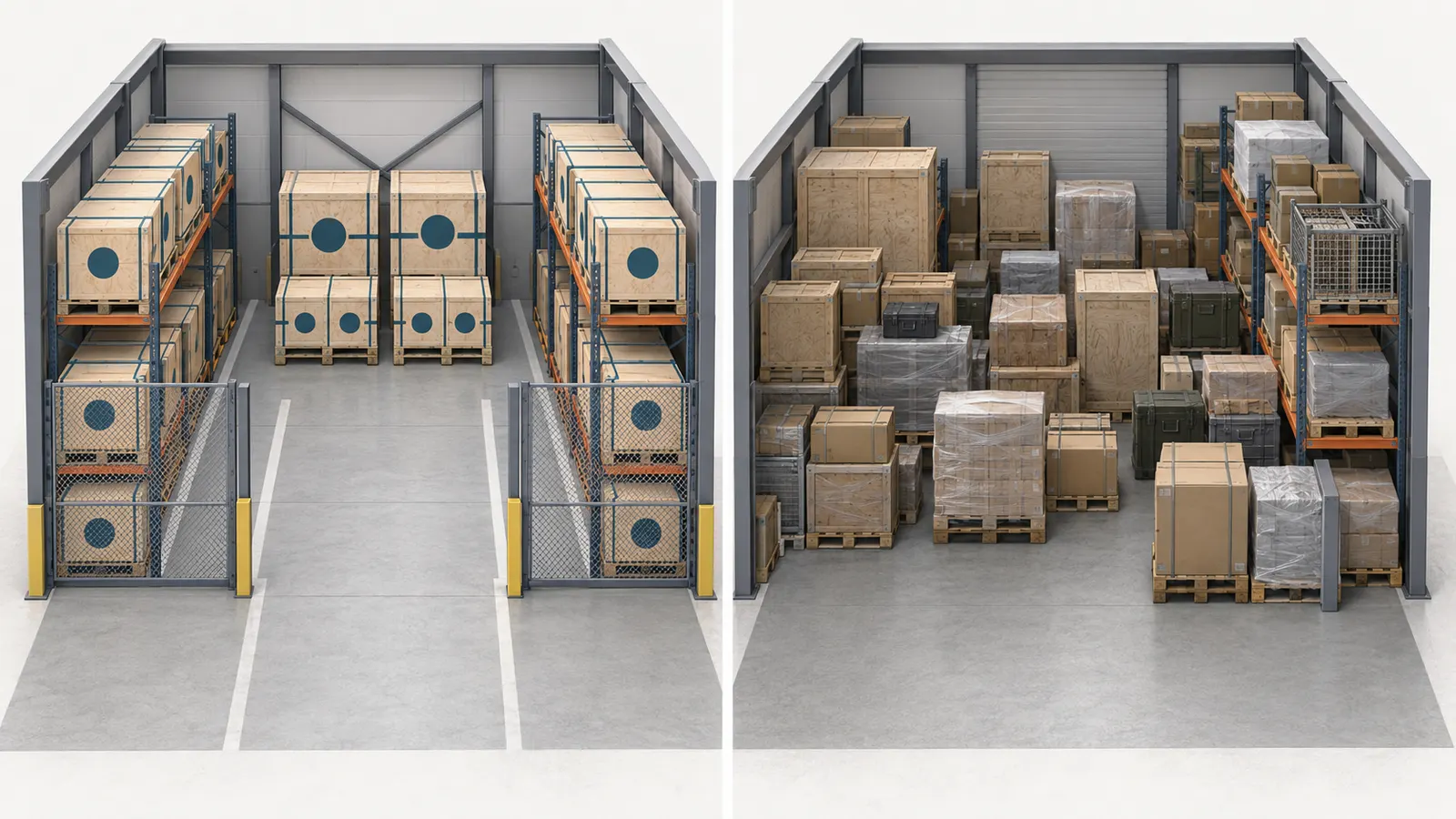
For on-site material, record the area of the lot or structure, weather protection, access limitations and whether another trade could accidentally use or move it. For off-site material, record a complete street address, facility name, room or bay if available, custodian, contact information, normal access hours, security arrangements, project label and whether an inspection can happen without relying on the builder to select only favorable boxes.
“At the supplier” is not a location. “In the warehouse” is not a custody agreement. “We can send photos” is not inspection access. A storage receipt should ideally identify the owner or project, item description, quantity, condition, location, storage dates and responsible custodian. The contract may require a bonded warehouse or a particular facility; do not add that requirement to the article as a universal rule, but ask whether the contract has it.
The ABA article says off-site materials should be specially ordered for the project and discusses bonded storage, segregation and marking as protections when a subcontractor fails or becomes insolvent. It explains that commingled or unmarked material can create a dispute over possession and may be treated as belonging to the subcontractor in a bankruptcy context. That is legal and risk-management analysis, not a court determination about your material. (ABA discussion of marked and segregated off-site materials)
Use project marking and segregation as a verification control
Project marking should make it hard to confuse the paid material with another customer’s stock. A useful record may include a project name, address or internal job number, item identifiers, quantity, date marked, custodian and photographs showing the mark in relation to the item. If an item is too large to isolate, document how it is tagged, which pieces are allocated to the project and how the custodian prevents substitution.
Segregation can mean a dedicated rack, fenced bay, pallet group, container, labeled crate or other arrangement appropriate to the material. It does not necessarily mean that every item must occupy a separate building. The decision is whether the stated arrangement makes identity and access credible under the contract and the risk scenario being managed.
Look for failure signals:
- the same model is stacked in unmarked rows for multiple jobs;
- the requested quantity cannot be counted;
- the photo shows a label but not the contents or condition;
- the material has been cut, altered, installed in another project or returned to stock;
- the supplier invoice lists a different project, quantity or model;
- the warehouse will not confirm the owner’s access;
- the builder says the material is “reserved” but cannot show fabrication or allocation;
- the material is damaged, wet, warped, scratched, incomplete or missing accessories;
- a substitution was made without an approved design or owner decision.
One failure does not prove fraud. It does mean the current evidence is not enough to release the line as fully verified. Ask for the missing record and give the custodian a due date.
Inspect safely and assign technical verification correctly
The homeowner can request an inspection, compare a label to the invoice, count accessible items, photograph project marks and note visible damage from a safe, authorized location. Do not climb unstable stacks, enter a restricted warehouse, walk under suspended loads, enter a confined space, move heavy material, operate forklifts, open electrical equipment or disturb weatherproofing. A fall, crush injury, exposure or electrical hazard is not made safe by the fact that the item belongs to your project.
Use qualified professionals for work that requires a site visit, lifting, elevated access, structural judgment, electrical or mechanical testing, hazardous-material handling, code interpretation or a permit/inspection decision. If the material affects a structural frame, the engineer or design professional should verify the relevant design and fabrication records. If it affects a building system, the qualified trade should verify model, compatibility and installation prerequisites. If a local authority inspection is required, only the authority having jurisdiction can describe its actual inspection requirement.
Remote inspection has a hard limit. A video call can show that a crate exists at the moment of the call. It may not verify the full quantity, unseen damage, storage conditions, ownership, policy coverage, lien status or the absence of a competing claim. Record it as remote visual evidence, not as a title or insurance determination.
Do not count future installation as present completion
The contractor may request payment for a stored item to reserve a long-lead slot, lock a price, complete fabrication or avoid a schedule interruption. Those can be real project reasons. They do not convert the item into installed work. Keep the SOV status explicit:
procured → fabricated → delivered → stored → inspected → transported
→ received on site → installed → inspected for incorporation → accepted under contract
One item can occupy only the status supported by the records. A delivery ticket can support “delivered” but not necessarily “stored in protected condition.” A photograph can support “observed” but not necessarily “inspected for specification compliance.” A building inspection approval can support a local inspection event but not necessarily title transfer. The handoff record should name the next state and the person responsible for moving the item there.
4. Check title, lien exposure and insurance as separate gates #
Payment, title, lien protection and insurance are related but not identical; a homeowner should not treat one document as proof of all four. Before paying, ask which document transfers or confirms the owner’s interest, which document addresses supplier and subcontractor claims, and which policy covers physical loss or damage at the actual storage and transit locations.
Title is a document question, not an invoice adjective
An invoice may say “paid,” “special order,” “nonreturnable” or “customer-owned,” but the legal effect depends on the contract, sale terms, applicable law and the facts of possession and payment. Do not decide title from a photograph, an email subject line or a verbal promise. Ask the project attorney, title professional or other qualified adviser to identify the document and legal mechanism the contract requires.
The AIA-MBA Joint Committee recommends that, upon payment, title transfer to the owner for stored materials, while also stating that the contract and insurance provisions govern. The ABA article says contracts should provide for title passing to the owner upon payment and describes off-site procedures designed to protect that interest. A Delaware public-project example also conditions payment on procedures establishing the owner’s title or otherwise protecting the owner’s interest. These are useful source comparisons, not a claim that title automatically passes in every U.S. project when a homeowner pays an invoice. (AIA-MBA title and stored-material guidance, ABA title-procedure discussion, Delaware public-contract example)
Ask for a written answer to these questions:
- What exact event transfers title or creates the owner’s protected interest?
- Does payment transfer title to the material itself, or only reimburse the contractor’s cost?
- Does the supplier retain a security interest or other right until paid in full?
- Is the material subject to a purchase-money security interest, reservation of title, consignment, fabrication lien or other encumbrance?
- Does the builder have authority to transfer the material if the builder is terminated?
- Who can retrieve it from the storage facility, and what document must the facility see?
- Does the transfer cover accessories, fasteners, controls, shop-fabricated pieces and shipping crates needed for installation?
- What happens if the material is defective, substituted, rejected or not usable at this project?
The homeowner does not need to answer these legal questions from the kitchen table. The homeowner does need to notice that they exist and route them to a qualified local professional before sending money where the protection is unclear.
Lien protection is not the same as a title document
A mechanics’ or materialmen’s lien is a jurisdiction-specific claim that may be available to qualifying participants who furnish labor or materials, subject to the project jurisdiction’s prerequisites, notices, deadlines and defenses. For example, Utah’s Division of Professional Licensing explains that a person who provides labor or materials may file a mechanics’ lien for unpaid services, but that a lien notice is not itself a judgment and enforcement requires a foreclosure action and judgment. That is Utah guidance under Utah Code Title 38, Chapter 1a—not a national rule. This guide does not identify the lien law for your project’s state or county and does not tell you whether a particular waiver is effective. (Utah DOPL explanation of Utah mechanics’ liens)
What you can do is ask who supplied the material, who has been paid from prior draws, what lien notices have been sent, what waiver or release form the contract requires, and whether a title company or attorney must review it. Projects may distinguish waiver and release documents by payment stage. For example, Utah’s State Construction Registry publishes a Conditional Waiver and Release Upon Progress Payment template and a Waiver and Release Upon Final Payment form. Those labels do not tell you which form your contract or jurisdiction requires, or what legal effect it has. Never sign an owner waiver that says more than you understand. (Utah State Construction Registry waiver forms)
The ABA article describes payment applications supported by lien releases and waivers when required by the contract, and its stored-material discussion explains why marking and segregation can matter if a contractor or subcontractor is terminated or becomes insolvent. A Delaware public-project example shows requisitions and releases or waivers as supporting data when required by the contract documents. Use those sources to build a document request, not to assume that one form erases every lien right in your state. (ABA payment and stored-material analysis, Delaware public-project payment language)
If the builder says “the supplier is paid,” request the payment trail appropriate to your contract: supplier invoice, receipt or paid statement; subcontractor certification; the project-specific waiver or release form identified by the contract; joint-check arrangement; or title-company confirmation. Do not demand documents that could create a false legal representation. Ask the contract administrator or local construction attorney which form is appropriate and for what date range.
Insurance follows policy wording, locations and time
Insurance is a coverage question. Ask for the policy, certificate, endorsement or written insurer confirmation that identifies the material, storage address, transit segment, covered causes of loss, policy period, named insureds or other insured interests, valuation basis, exclusions, deductibles and claim procedure. As a Texas regulatory example, the Texas Department of Insurance says a certificate may not alter, amend or extend the coverage provided by the policy, and that rights such as additional-insured status depend on policy provisions or endorsements. An email saying “builder’s risk covers it” is not enough to know whether an off-site warehouse, fabrication shop or transit loss is included. (Texas Department of Insurance certificate FAQ)
The AIA-MBA Joint Committee says stored material should be insured to protect the owner’s interests. Its insurance guidance also says project requirements and contractor deductibles should be stated in the supplementary conditions. A Delaware public-project insurance exhibit provides a useful example of why the details matter: it calls for insurance evidence at specified times, requires disclosure of contractor deductibles or self-insured retentions and includes a separately selectable form of property coverage for physical damage while material is in storage and transit. That exhibit belongs to a Delaware public project; it does not prove that a private homeowner has the same coverage. (AIA-MBA insurance guidance, Delaware public-project insurance exhibit)
Ask the insurance broker or project risk adviser, not only the builder:
- Is the exact material covered before delivery, while stored, during loading, in transit and after delivery?
- Is the off-site address scheduled, included by definition or excluded?
- Does “materials” include custom-fabricated components, appliances, equipment and temporary packaging?
- Is the owner an insured, loss payee or otherwise protected as the contract requires?
- What is the replacement-cost or actual-cash-value basis, and does it include freight, storage and installation costs after a loss?
- Is there a deductible, self-insured retention or sublimit, and who pays it?
- What security, fire protection, temperature, moisture or inspection conditions apply to storage?
- What notice must be given after damage, theft, delay or a change in location?
Do not infer coverage from the material’s value being included in the contract sum. Do not infer coverage from a builder’s general liability certificate. The California Department of Insurance describes property insurance as addressing property stolen, damaged or destroyed by a covered peril, while casualty insurance—including commercial general liability—primarily addresses liability for bodily injury or property damage to a third party. That regulator’s category explanation is a useful coverage map, not a determination of this project’s policy. The applicable policy language controls; an insurance professional can explain the documents, but only the insurer and governing policy decide the claim. (California Department of Insurance commercial insurance guide)
Run a simple loss scenario before release
Imagine you pay $24,000 for custom windows held off site. Three weeks later, the builder’s business fails, the storage facility has a fire, or the windows are found to be the wrong size. A release gate should answer different questions for each event:
| Event | Evidence needed before payment | Professional handoff |
|---|---|---|
| Builder termination | Title or owner-interest document, retrieval right, custody record, project marking | Construction attorney and storage custodian; title professional if required |
| Warehouse theft or fire | Coverage for the address and period, valuation and deductible, claim notice path | Insurance broker/insurer and contract administrator |
| Wrong size or substitution | Approved specification, shop drawings, inspection record and change authorization | Architect, engineer or qualified trade |
| Supplier unpaid | Payment trail and jurisdiction-appropriate lien protection | Local construction attorney/title company |
| Material delayed past the schedule | Contract schedule, storage costs, transport obligation and revised installation date | Builder, architect/owner’s representative and lender |
The exercise is not a probability estimate. It is a test for missing handoffs. If the answer to every loss scenario is “the builder says it will work out,” the package is not complete enough for an owner release.
5. Coordinate the builder, reviewer, lender and title-company handoffs #
The contractor’s payment application is only one part of a custom-home funding chain; if a lender, architect, inspector or title company is involved, the stored-material package must satisfy the actual draw process as well as the owner-builder contract. Loan funds can be advanced in stages, but the lender’s rules are not universal and may be stricter, different or silent on off-site material.
Ask the lender for the draw rule in writing
The Consumer Financial Protection Bureau explains that construction-loan funds are typically provided in a series of advances as construction progresses and that loan choices and terms depend on the lender and the borrower’s circumstances. That is enough to establish the need for a lender-specific handoff; it does not say that every lender must pay for stored material or use the same inspection standard. (CFPB construction-loan overview)
Before a stored-material draw, send the lender or draw administrator these questions:
- Does this loan allow on-site stored material?
- Does it allow off-site stored material, and if so, does it require preapproval of the facility and address?
- Is the lender’s inspection physical, remote or both?
- Who arranges and pays for the inspection or draw fee?
- What form, invoice, receipt, title evidence, insurance evidence and lien waiver are required?
- Does the lender require the owner to sign before funds are released?
- Is payment based on cost incurred, percentage complete, appraised value, installed progress or a lender-specific schedule?
- Are deposits, retainage, freight, storage, taxes and change orders treated differently?
- Does the lender need a title-company update or lien search before funding?
- If the lender rejects the line, does the builder expect owner funds, a resubmission or a contract change?
Use the answer as a project constraint. A lender may allow a draw only after a field inspector verifies a material at the lot. A different lender may require the material to be installed. A public-program loan may impose a form that a conventional private loan does not. The homeowner should not promise the builder that a contract-authorized line will be lender-funded until the lender confirms it.
CFPB Regulation Z guidance discusses inspection and handling fees, including draw fees for staged construction-loan disbursements, as construction-loan costs in the circumstances covered by the regulation. That disclosure point does not decide whether the stored-material line is eligible for a draw, but it is a reminder to ask who performs the inspection and how the fee appears in the loan documents. (CFPB multiple-advance construction-loan guidance)
Distinguish contract certification from lender funding
There are at least three different statements people may call “approved”:
- Contract compliance: the builder has submitted what the owner-builder agreement requires for payment.
- Progress certification: the architect, owner’s representative or inspector believes the amount is properly due under the role assigned by the contract.
- Loan eligibility: the lender is willing to release money under the loan agreement and underwriting rules.
One approval does not automatically create the other two. A lender may fund a line while reserving rights under the owner-builder contract. An architect may certify a payment application based on evaluation of submitted data without conducting an exhaustive inspection of every item. An owner may approve a contract line while the lender refuses to fund it. Put the approving party and scope beside every signature.
The ABA article describes AIA-style architect certification and explains that certification is based on evaluation of the work and payment-application data, not an exhaustive or continuous inspection or a review of every supplier requisition unless required. The Delaware public-project example contains similar limitations in its reproduced AIA-style payment language. The practical lesson is to read the certification’s scope and not ask one reviewer to make a representation the contract does not assign. (ABA payment-certification discussion, Delaware public-project certification example)
Keep the title-company handoff visible
A title company may process disbursements, issue title updates, review lien documents or protect a lender’s priority. Its role depends on the title and escrow agreement. Ask whether the company is checking the stored-material ownership issue, merely disbursing funds after a lender’s instruction, or doing both. Do not assume that the presence of a title company means the material itself is insured or owned by you.
If your project uses construction-to-permanent financing sold to Fannie Mae, Fannie Mae’s delivery guidance says construction work and lien claims relating to construction must be completed, paid for and satisfied before the mortgage loan is delivered to Fannie Mae. That is a downstream loan-delivery requirement for loans delivered to Fannie Mae, not a universal rule for every private lender or a direction to withhold a particular draw. It shows why unresolved supplier and lien records can surface at conversion even when the material is physically present. (Fannie Mae construction-to-permanent delivery guidance)
Bring the title company a clean packet:
- executed contract and stored-material clause;
- current SOV and payment application line;
- invoice, purchase order and receipt or delivery evidence;
- item identity and project-marking record;
- storage agreement and inspection record;
- title-transfer or owner-interest document;
- insurance evidence and deductible allocation;
- supplier/subcontractor payment record and required waivers;
- approved change order, if applicable;
- lender approval or written draw instruction;
- transport and installation plan.
The title company may ask for different evidence. Record what it requested and why, then provide the same decision record to the builder and owner’s representative so the project file does not split into contradictory versions.
Set a deadline without turning it into a waiver
Long-lead materials create pressure: the supplier may hold a fabrication slot for only a short time, storage rates may increase, or the builder may warn of a schedule shift. A deadline can be managed with a written conditional plan, but do not let urgency silently waive the contract’s evidence requirements.
Write:
Supplier decision deadline: __________
Evidence due from builder: __________
Lender response due: ________________
Inspection date: _____________________
Owner decision date: _________________
Installation target: ________________
If evidence is late: _________________
If lender declines: __________________
The last two lines matter. If the lender declines an otherwise contract-authorized payment, the parties need to decide whether the builder carries the cost temporarily, the owner pays from non-loan funds, the parties amend the payment timing, or the item choice changes. That is a commercial decision under the contract, not something the homeowner should resolve by paying first and documenting later.
6. Complete the stored-material payment release worksheet #
The worksheet is complete only when one line of the payment application can be followed from contract authorization to physical item, custody, owner-interest protection, insurance, lien record, funding approval and installation handoff. A blank is not a neutral result: it means the evidence is incomplete and the line needs a named owner and due date.
Part A: identify the request
Copy these fields from the payment application rather than retyping a general description:
| Field | Example input | Why it matters |
|---|---|---|
| Project address and jurisdiction | 118 Example Road; Utah County, Utah | Governing documents and local professionals depend on location |
| Payment application | Draw 07, received September 8, 2026 | Preserves the review period and version |
| SOV line | 08-220 Windows | Connects evidence to the approved payment map |
| Contract paragraph | General Conditions § 9.3.2, if actually incorporated | Shows the claimed authority; never assume the section |
| Material state | Off-site, fabricated and stored | Determines which evidence branch applies |
| Requested amount | $24,000 | Lets the reviewer calculate the exposure |
| Prior approved amount | $0 or exact prior total | Prevents double payment |
| Retainage | Contract method, not a guessed percentage | Changes the release calculation |
| Next installation | Week of October 5, 2026 | Makes the handoff testable |
The date in this example is illustrative. It is not a fact about a real project. In your record, use the actual dates, exact jurisdiction and document revisions.
Part B: use a line-level identity record
For the material, record:
Description: ______________________________________________
Manufacturer and model: ___________________________________
Specification/drawing revision: ___________________________
Quantity: __________   Unit: __________
Invoice number and date: _________________________________
Purchase order or work order: ____________________________
Intended room, elevation or grid: _________________________
Serial, lot, crate or tag numbers: _________________________
Supplier/fabricator: ______________________________________
Condition observed: _______________________________________
If the item has no serial number, use a crate, pallet, work-order or project tag. If the material is fabricated in a way that prevents a simple count, record the fabricator’s production schedule and the countable components. If the contractor says the item is “90% complete,” ask what that percentage means in units, not just in labor or value.
Part C: record storage and access
Use separate fields for on-site and off-site:
| Evidence field | On-site record | Off-site record |
|---|---|---|
| Exact location | Lot, building area, protected room or container | Facility street address, bay/rack/room |
| Custodian | Builder or named trade | Builder, supplier, fabricator or warehouse |
| Project marking | Address/job number on crates or bundles | Address/job number plus storage inventory |
| Segregation | Dedicated protected area | Dedicated rack/bay or documented allocation |
| Access | Safe owner/representative visit | Written access contact and inspection appointment |
| Condition | Weather, water, theft and handling exposure | Fire, moisture, security, stacking and custody conditions |
| Transport | Delivery status and route to install area | Carrier, cost, insurance and delivery appointment |
Do not photograph a person or facility in a way that creates a privacy or security problem without permission. The record can state that access was offered and the custodian confirmed a condition; do not claim that you personally observed what you did not observe.
Part D: calculate the requested amount transparently
Use a table like this:
| Component | Input | Formula or source |
|---|---|---|
| Material | $21,600 | Supplier invoice 1842; exact item and quantity |
| Freight to storage | $480 | Carrier invoice; contract treatment |
| Storage through planned install | $360 | Storage agreement; dates and rate |
| Insurance charge | $0 or $____ | Policy/contract; do not invent coverage |
| Transport to site | $420 | Carrier quote; off-site treatment |
| Credits/substitutions | −$____ | Approved credit or change record |
| Gross eligible basis | $22,860 | Sum of documented contract-allowed inputs |
| Prior payment | −$0 | Payment ledger |
| Current gross request | $22,860 | Gross basis less prior payment |
| Retainage | −$2,286 if contract requires 10% of this base | $22,860 × 0.10; illustrative only |
| Potential release | $20,574 | $22,860 − $2,286, subject to all gates |
The $21,600 material, $480 freight, $360 storage, $420 transport and 10% retainage are illustrative inputs. They are not a market price, estimate or recommendation. If the contract excludes storage or treats freight as part of the SOV line, remove or reclassify the input. If the contract calculates retainage on a different base, use the actual clause.
The formulas are:
gross eligible basis
= material + allowed freight + allowed storage
  + allowed insurance + allowed transport − credits

current gross request
= gross eligible basis − prior approved payments

potential release after retainage
= current gross request × (1 − retainage rate)
Sensitivity makes the commercial exposure visible. With the illustrative $22,860 gross request:
| Retainage assumption | Potential release |
|---|---|
| 0% | $22,860 |
| 5% | $21,717 |
| 10% | $20,574 |
| 15% | $19,431 |
This sensitivity does not tell you which rate applies. It shows why a seemingly small contract difference changes cash released by hundreds or thousands of dollars. The largest uncertainty may not be retainage; it may be whether the material subtotal is real, whether storage and transport are allowed, whether the builder has already been paid, or whether title and lien protection are effective.
Part E: score the evidence without pretending it is a legal formula
The worksheet can use three statuses for every gate:
- Verified for this review: the named document or inspection addresses the exact item, date, location and contract requirement.
- Partially supported: some evidence exists, but a condition or scope is missing.
- Not verified: evidence is absent, contradictory, inaccessible or outside the reviewer’s authority.
Do not create a numeric score that says six of eight gates equals “safe.” A missing title document is not offset by excellent photographs. A missing insurance endorsement is not offset by a signed delivery ticket. Use a stop rule for critical unknowns:
If authority, item identity, owner-interest/title protection,
insurance, access, lien protection or lender approval is required
by the project documents and is not verified:
    status = HOLD or NOT COMPARABLE
else:
    status = proceed to contract-authorized release decision
The “if required” phrase is essential. A project may not require lender approval because it is self-funded; another may require it for every draw. A contract may require title transfer upon payment; another may contain a different mechanism. The worksheet exposes the decision; it does not write the contract.
Worked illustrative example: custom windows stored at a fabricator
Assume, illustratively, that a custom-home owner receives Draw 07 for six windows. The builder provides a supplier invoice for $21,600, a purchase order, a fabricator work order, photographs of six labeled crates and a proposed installation week. The SOV line is “Windows — $42,000,” and the builder asks to bill $24,000 before installation.
The first review question is authority. The executed contract allows stored materials on site, but the off-site clause says the owner must approve the storage location in writing. The builder has not obtained that approval. The invoice is therefore not enough for release. The first status is hold, even though the items appear specific.
The builder then supplies the address of the fabricator, an access appointment, an inventory showing six crates with the project number, a storage agreement, a title-transfer document for review by the owner’s construction attorney, and insurance confirmation from the broker identifying storage and transit. The lender confirms that off-site materials are eligible only after its inspector completes a report and the owner signs the draw package. The architect confirms the window schedule revision and flags no known design substitution.
Now the worksheet can move each gate from “not verified” to “supported for review.” It still does not say the owner has a legal title opinion or that the insurer will pay a future claim. It says the right people have a document to review. The owner’s next step is to obtain the attorney’s and lender’s responses, not to infer approval from the quantity of paperwork.
Suppose the documented gross basis is $22,860 from the table above, while the builder’s $24,000 request includes $1,140 of unitemized overhead. If the contract permits that overhead within the SOV, the reviewer maps it to the contract line. If not, the $1,140 remains unsupported or requires a change authorization. At a 10% illustrative retainage on the documented basis, the potential release is $20,574, not $24,000. The actual number depends on the contract and approved SOV.
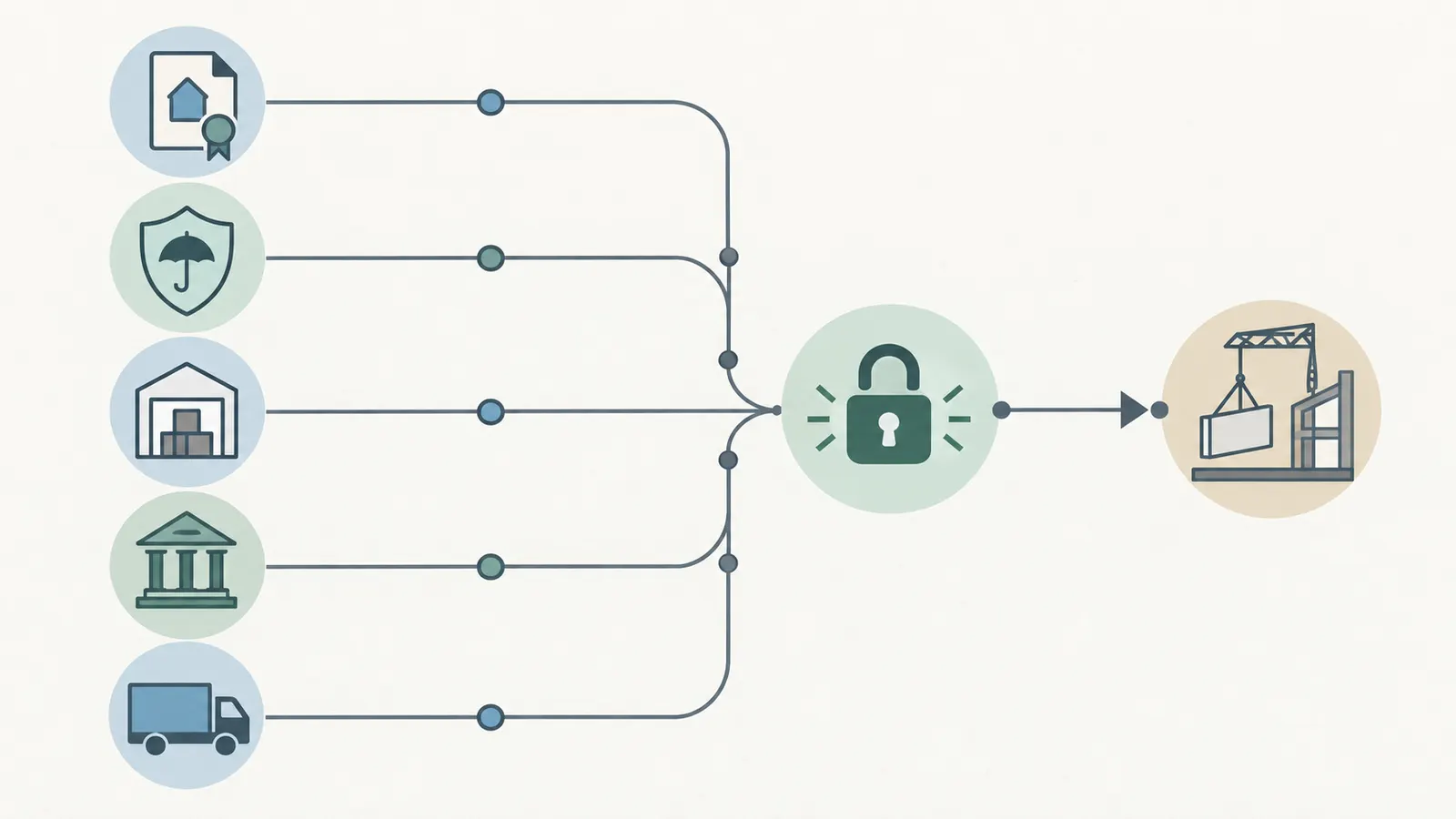
The handoff record says the fabricator will release the crates to the carrier on October 2, the carrier will deliver to the lot on October 5, the builder will inspect the crates before setting them, and the architect or qualified reviewer will verify the installed units against the window schedule at the appropriate checkpoint. If the carrier cannot provide transit coverage or the storage date extends past October 5, the team updates the insurance and cost record before transport.
This example is illustrative and modeled. It does not claim that a real window package, price, storage facility, attorney, insurer, lender or inspection occurred. Its check is reproducibility: another reviewer can replace each input with actual documents, rerun the arithmetic and see which gate remains open.
Explain the method and limitations in the project file
Paste a short note into the payment review:
Method: We matched each requested stored-material line to the executed payment clause and SOV, recorded exact identity and quantity, checked storage and access, requested owner-interest/title and lien documents, reviewed insurance and deductible responsibility, routed the package to the lender/owner’s representative, and recorded the installation handoff. Amounts use documented contract-allowed inputs; illustrative calculations are labeled.
Limitations: This review does not determine title, insurance coverage, lien priority, contract meaning, specification compliance, lender entitlement or legal approval. The executed contract, policy, lender instructions, local law and qualified professionals control.
That note keeps the worksheet from becoming a false certification. The owner can say what was reviewed and what remains open.
7. Follow the failure branch when the evidence does not line up #
When a stored-material request is incomplete or contradictory, the safest next action is a written, narrow request for the missing evidence and a documented payment status; do not improvise a legal conclusion, silently approve the line or withhold unrelated undisputed work without following the contract and applicable law.
Failure branch: “Here is the invoice and a photo”
What you can infer: someone issued an invoice, and a material-looking object was photographed.
What you cannot infer: exact quantity, project allocation, paid status, title, insurance, storage protection, access, lien protection, lender eligibility or specification compliance.
Response: “Please identify the contract paragraph and SOV line, provide the exact item and quantity, storage address and custodian, project marking/segregation record, title or owner-interest document, insurance evidence for the location and transit, required lien record, lender approval and next installation date.” Give a response deadline tied to the payment cycle.
Failure branch: off-site address is vague or inaccessible
What you can infer: the builder says material is not at the home.
What you cannot infer: that the material is present, segregated, insured or retrievable.
Response: Hold the off-site line until the contract-required location approval and access process is completed. If the builder will not disclose an address because of security, ask whether the lender, owner’s representative, title company or attorney can receive a confidential verification. Do not accept a staged photo or a promise of later access as a substitute without checking the contract.
Failure branch: the material is on site but exposed
What you can infer: the material is physically near the project.
What you cannot infer: that the site is a suitable storage condition or that builder’s-risk coverage responds to the item and risk.
Response: Document the condition without moving the material. Ask the builder and insurance professional for a protection plan, coverage confirmation and a revised inspection date. Do not climb, lift, cover, re-stack or connect anything yourself. If the material could fall, collapse, energize, contaminate or injure someone, keep clear and use qualified site personnel.
Failure branch: item is marked but commingled
What you can infer: a tag or label exists.
What you cannot infer: that the tag controls the physical allocation or gives you a retrieval right if the custodian fails.
Response: Ask for a countable inventory, segregation method, custodian acknowledgment and title/owner-interest process. The ABA article’s discussion of marking and segregation explains why the risk becomes more serious if a subcontractor is terminated or becomes insolvent. Route legal consequences to a construction attorney; do not claim the material automatically belongs to you or automatically belongs to the subcontractor. (ABA commingling and bankruptcy-risk discussion)
Failure branch: builder says title passes when paid, but supplier terms disagree
What you can infer: two documents use different ownership language.
What you cannot infer: which term controls, whether a security interest survives, whether the builder had authority to transfer, or how local law resolves the conflict.
Response: Do not solve the conflict by paying faster. Send the contract, invoice terms, purchase order and proposed title document to the project attorney or title professional. Ask for a written path that covers payment, title, retrieval and supplier claims. If the lender is involved, ask whether its lien or collateral requirements add a condition.
Failure branch: builder says insurance is “covered” but no endorsement is supplied
What you can infer: the builder believes a policy may respond.
What you cannot infer: location, transit, period, cause of loss, deductible, valuation, insured party or exclusions.
Response: Request policy-specific confirmation from the broker or insurer. Ask who bears the deductible and what happens when the storage date or location changes. If the only proof is a general certificate, record insurance as not verified for the stored-material gate until the responsible risk professional addresses the actual question.
Failure branch: lender rejects the draw
What you can infer: the requested line does not meet the lender’s current funding process.
What you cannot infer: that the builder lacks a contract right, that the owner owes the money immediately from personal funds, or that the contract is void.
Response: Ask the lender for the exact missing condition and the builder for the contract consequence. Options may include resubmission after delivery, a different payment milestone, owner funds, a written amendment, a different storage arrangement or a material change. Have the contract administrator explain schedule and default consequences. Do not risk a loan covenant breach to meet a supplier deadline.
Failure branch: an item is defective or disputed
What you can infer: the payment line is no longer an ordinary undisputed procurement line.
What you cannot infer: that every amount in the payment application may be withheld, or that the disputed amount can be ignored indefinitely.
Response: Separate the disputed line from undisputed lines, document the defect or discrepancy, notify the responsible parties within the contract’s notice period and ask the architect, owner’s representative or qualified trade for a written technical assessment. A construction attorney can advise on withholding, retainage, setoff, prompt-payment rules and dispute procedure for the project’s jurisdiction.
The ABA article cautions owners and architects about short-paying applications over deficient work or delays and discusses documenting the disputed amount contemporaneously. It also notes that prompt-payment statutes can impose timing and notice consequences. That is a reason to follow the contract and local legal advice, not a reason to pay an unsupported stored-material line. (ABA discussion of disputed payment applications)
Use a written response that preserves the next decision
Avoid a vague email such as “I’m not comfortable with this.” Use a record that identifies the line and the open gate:
I received Payment Application ___ dated . I am holding line ___ for $ pending the following contract-required or project-agreed records: ___. The current record establishes ___, but does not establish ___. Please provide the missing documents by ___, identify the responsible reviewer for each item and confirm the next installation date. This review does not decide unrelated payment lines or waive any contract notice, approval or dispute procedure.
If you are approving a line with conditions, make the conditions concrete:
I authorize release of $___ for line ___ only after ___ confirms title/owner-interest documentation, ___ confirms coverage at ___ address through ___ date, the lender approves draw form ___, and the custodian provides access on . The remaining $ is not approved because ___. Installation handoff is due ___ to ___, with record ___ added to the project file.
Have the person with authority under the contract send the actual authorization. A homeowner’s email can be evidence of an owner instruction, so do not use casual wording that accidentally changes the contract, approves a substitution or waives a requirement.
8. Record the release and make the next payment safer #
The final decision is not complete when the wire is sent; it is complete when the payment, documents, custody and installation handoff are recorded so the next reviewer can tell what was paid, what remains exposed and what must be verified next. Release only the amount and line that the authorized decision supports.
Choose one of four explicit outcomes
Use one of these statuses:
| Status | Meaning | Record before closing the review |
|---|---|---|
| Release | All required gates for the exact line are supported and the authorized payer approves | Amount, signatures, source documents, date, conditions and next handoff |
| Release with written conditions | Contract and decision-maker allow a limited release while named conditions remain | Exact dollars, conditions, owner, due dates and what is not approved |
| Hold | A required document, inspection, approval or correction is missing | Missing gate, responsible person, response deadline and contract notice path |
| Not comparable | The request does not fit the contract category or evidence cannot establish what is being paid | Reason, proposed alternative milestone and whether a change or professional opinion is needed |
Do not use “approved” when you mean “received.” Do not use “paid” when you mean “invoice submitted.” Do not use “owned” when you mean “reserved.” Use status words that reflect the evidence.
Close the loop at delivery and installation
At the next handoff, do not simply move the line to 100% complete. Update:
- carrier and delivery date;
- quantity received and any shortage;
- crate, tag or serial identifiers;
- visible damage and photos taken with permission;
- weather or security condition;
- who accepted custody;
- whether the material is still separated from other stock;
- whether the insurance location changed;
- whether the design professional or qualified trade found a substitution or defect;
- installation date and responsible trade;
- inspection or test record required by the contract or authority having jurisdiction;
- remaining balance and any credit, replacement or claim.
The next payment application should not bill the same dollars again as installed work unless the SOV and contract method expressly require a reclassification with credit for the stored-material payment. Ask the builder to show how prior stored payment is carried forward and credited. Double billing can arise from a poor ledger without any intentional misconduct, so make the reconciliation routine.
Keep the file that would explain a failure six months later
The project file should allow a new reviewer to answer: what was requested, what was paid, who authorized it, where the item was, who controlled it, whether it was marked and segregated, what title or owner-interest document existed, what insurance applied, what lien record was obtained, what the lender allowed and when the item was installed.
Save the payment application, SOV revision, contract excerpt, approved change, invoice, purchase order, receipt, delivery ticket, storage agreement, inventory, inspection notes, photographs, insurance documents, deductible allocation, title or owner-interest document, waiver/release records, lender response, wire/check confirmation and installation record. Keep versions; do not overwrite an earlier SOV or payment application after the fact.
If your project is in Utah and the signed agreement follows the optional DOPL form, review its specific record and discrepancy provisions. If your project is in another jurisdiction, ask your attorney, title company or contract administrator how long to retain construction-payment and lien records. The Utah page itself warns that its agreement is optional and not legal advice, which is exactly why a state example should not become a national retention rule. (Utah DOPL agreement limits and records FAQ)
Know the professional boundaries
This guide is a remote decision surface, not a legal opinion, title search, insurance coverage opinion, lender instruction, engineering review, building inspection or payment certification. For a project-specific question, bring the actual contract, SOV, payment application, invoice, storage records, policy documents, title records and lender instructions to the professional who owns that decision.
Use a construction attorney licensed or otherwise authorized for the project jurisdiction for contract interpretation, title-transfer language, lien exposure, waivers, disputed payment, default, termination, prompt-payment deadlines and remedies. Use a title professional for the title or lien record the project requires. Use an insurance broker or insurer for storage, transit, endorsements, deductibles and claims. Use the lender or draw administrator for loan eligibility. Use the architect, engineer or qualified trade for specification, fabrication, compatibility, structural, electrical, plumbing, HVAC, fire and installation verification. Use the authority having jurisdiction for actual permit and inspection requirements.
Do not enter a restricted storage facility, climb material stacks, move heavy components, operate lifting equipment, open energized equipment or perform hazardous site work to verify a payment. Ask a qualified person to perform any inspection requiring falls protection, lifting, electrical isolation, structural judgment, confined-space entry, hazardous-material handling or regulated trade work. A well, pump or pressure-tank procedure is not relevant to this decision and is intentionally excluded.
Make the next decision explicit
After the stored-material review, the next decision should be one of these:
- approve the documented amount and schedule the installation handoff;
- approve a smaller documented amount and hold the rest;
- obtain the missing title, insurance, lien or lender record;
- correct the item, quantity, SOV or change-order record;
- move the material to an agreed and insured location;
- revise the payment milestone in writing;
- escalate a legal, title, insurance, lender or technical question;
- reject the line and choose the contract’s dispute or resubmission path.
Write the next decision, owner and date in the worksheet. That final field is what turns a payment review into project control. An invoice asks for money now; a good homeowner record preserves the evidence needed when the material is delivered, installed, damaged, substituted, rejected, or claimed by someone else.
For more decision surfaces across the build journey, continue through Brictale’s homeowner learning library and the single homeowner blog. This guide belongs to the contractors journey because the core work is verifying responsibilities, contract authorization, payment evidence and handoffs—not treating stored materials as a separate materials-only library.
Cite this guide
Brictale. “Can You Pay a Custom-Home Contractor for Stored Materials Before Installation?.” Published 2026-09-24; updated 2026-09-24.
https://brictale.com/build/contractors/verify-custom-home-stored-materials-payment-before-installation · Read the Markdown version
Original contribution: Stored-material payment release worksheet. A contract-first release gate that reconciles authorization, item identity, storage, title, insurance, inspection access, lien protection, lender approval and the next installation handoff.
Sources and scope
Evidence behind this page
- The AIA-MBA Joint Committee distinguishes payment treatment for materials stored on site from materials stored off site; for on-site materials it recommends following the contract documents when the materials do not obstruct progress, while off-site payment requires a showing that the materials are identified, fabricated, protected for the project and awaiting delivery.
Industry best-practice guidance identified on the source page as reviewed March 2011 and reviewed July 2010; it is not a nationwide statute and its recommendations remain subject to the executed contract and insurance provisions.
Accessed · Link to this claim - The AIA-MBA Joint Committee recommends inspection access, insurance protecting the owner's interests and transfer of title to the owner upon payment for stored construction materials, subject to the contract and insurance provisions.
Industry guidance for on-site and off-site stored materials; it does not decide title, coverage or lien priority under a particular state's law.
Accessed · Link to this claim - The ABA Construction Lawyer article explains that stored-material clauses should address title passing on payment and, for off-site storage, a bonded warehouse, segregation and marking; it notes that commingling can create possession and bankruptcy risks.
American Bar Association — Betting “In the Money”—Customizing Your Payment Clauses
A 2026 ABA Construction Law article discussing contract drafting and payment administration; it is legal information and industry analysis, not advice about a particular project or jurisdiction.
Accessed · Link to this claim - The ABA article describes a schedule of values as an itemized breakdown of contract work and explains that payment applications should be supported by documentation required by the contract, owner, lender or architect, including requisitions and lien releases or waivers when required.
American Bar Association — Betting “In the Money”—Customizing Your Payment Clauses
Discussion of AIA-style payment administration and common documentation; the executed owner-builder contract and applicable law determine the actual requirement.
Accessed · Link to this claim - The ABA article describes AIA-style treatment in which off-site storage requires advance owner approval, a location agreed in writing and procedures satisfactory to the owner to establish title or otherwise protect the owner's interest; it also identifies insurance, storage and transportation costs as part of the off-site treatment.
American Bar Association — Betting “In the Money”—Customizing Your Payment Clauses
The article's discussion of A201-2017 language; it is a scope-comparison reference, not an assertion that every U.S. residential contract contains those terms.
Accessed · Link to this claim - Utah's Division of Professional Licensing optional Residential Construction Agreement says the contractor sends monthly invoices itemizing costs, labor and supply expenses, and that on request the contractor must provide supporting documentation including subcontractor and supplier invoices; it also describes a three-year record-retention and written-review process.
Utah Department of Commerce, Division of Professional Licensing — Construction Contract
Utah-specific optional residential agreement and FAQ; the page says it is not legal advice, can be modified, and does not establish a rule for projects outside Utah.
Accessed · Link to this claim - Utah's optional residential agreement assigns the contractor responsibility for materials, labor, equipment, tools and supervision needed to complete the project and says required approvals, permits and inspections are handled as specified in the agreement.
Utah Department of Commerce, Division of Professional Licensing — Construction Contract
Utah-specific model agreement provisions; responsibility can differ in another executed contract and jurisdiction.
Accessed · Link to this claim - A Delaware public-project specification reproduces AIA-style payment language that allows payment for materials suitably stored at the site and, with advance owner approval, off site at a location agreed in writing, conditioned on procedures establishing owner title or otherwise protecting the owner's interest and including applicable insurance, storage and transportation costs.
Delaware public procurement contract example incorporating AIA Document A201-2017 language; it is explicitly a public-project scope comparison, not a residential rule for all states.
Accessed · Link to this claim - The Delaware public-project example requires insurance evidence at specified times, disclosure of contractor deductibles or self-insured retentions, and includes an optional coverage for physical damage to property while in storage and transit; the selected contract terms control.
Delaware public-project contract exhibit; insurance selections, limits, parties and deductibles are project-specific and do not prove coverage for a private home.
Accessed · Link to this claim - The Delaware public-project example requires an itemized payment application prepared with the schedule of values and supporting data such as requisitions and lien releases or waivers when required by the contract documents.
Delaware public-project contract example; the referenced forms are not automatically incorporated into a private residential contract.
Accessed · Link to this claim - The Consumer Financial Protection Bureau explains that construction-loan funds are typically provided in a series of advances as construction progresses and that loan choices and terms depend on the lender and the borrower's circumstances.
Consumer Financial Protection Bureau — What is a construction loan?
General U.S. consumer guidance last modified September 13, 2024; it supports lender variation but does not specify a stored-material approval process for a particular loan.
Accessed · Link to this claim - CFPB Regulation Z guidance treats inspection and handling fees, including draw fees for staged construction-loan disbursements, as disclosed construction-loan costs in the circumstances described by the regulation.
Consumer Financial Protection Bureau — Appendix D to Part 1026, Multiple Advance Construction Loans
Federal consumer-credit disclosure guidance for covered transactions; it does not decide whether a lender must advance money for stored materials.
Accessed · Link to this claim - Fannie Mae's construction-to-permanent loan-delivery guidance says construction work and lien claims relating to construction must be completed, paid for and satisfied before the mortgage loan is delivered to Fannie Mae.
Fannie Mae — Loan Delivery Job Aid: Construction-to-Permanent
Fannie Mae delivery requirements for loans delivered to Fannie Mae; it is not a universal draw rule and does not govern lenders that do not sell loans to Fannie Mae.
Accessed · Link to this claim - Utah's Division of Professional Licensing explains that, under Utah's Mechanics' Lien Law, a person who provides labor or materials for a construction project may file a mechanics' lien to recover the value of unpaid services, and that a lien notice is not itself a judgment; enforcement requires a foreclosure action and judgment.
Utah-specific homeowner guidance describing Utah Code Title 38, Chapter 1a; it is a labeled Utah example and does not establish lien rights, deadlines or defenses in another jurisdiction.
Accessed · Link to this claim - Utah's State Construction Registry publishes a Conditional Waiver and Release Upon Progress Payment template and a Waiver and Release Upon Final Payment form, showing that the project record may distinguish waiver documents by payment stage; the page does not determine which form or legal effect applies to another project.
Utah Department of Commerce, Division of Professional Licensing — State Construction Registry Forms
Utah-specific State Construction Registry forms page; it supports the existence and labels of Utah templates, not their application or legal effect outside Utah.
Accessed · Link to this claim - The Texas Department of Insurance states that a certificate of insurance may not alter, amend or extend coverage provided by the policy, and that a certificate holder's rights such as additional-insured status or waiver of subrogation depend on policy provisions or endorsements.
Texas Department of Insurance — Certificates of Insurance Frequently Asked Questions
Texas insurance-regulatory guidance under Texas Insurance Code Chapter 1811; it supports a Texas example of certificate limits and does not interpret the project's policy or another jurisdiction's insurance law.
Accessed · Link to this claim - The California Department of Insurance describes property insurance as coverage for property stolen, damaged or destroyed by a covered peril and casualty insurance as coverage primarily for liability arising from bodily injury or property damage to a third party; it identifies commercial general liability as a casualty coverage.
California Department of Insurance — Commercial Insurance Guide
California regulator's general commercial-insurance guide; it provides a coverage-category explanation, not a determination of the builder's policy, stored-material coverage or a private project's governing law.
Accessed · Link to this claim