How to Maintain a Custom-Home Scope Register for Allowances, Exclusions, Alternates, and Handoffs
Maintain one auditable custom-home scope register from awarded proposal through procurement, trade handoffs, payments, and written changes.
The short answer
Maintain one row per consequential item and keep it tied to the current contract, drawing or specification revision, inclusion boundary, exclusion, allowance basis, alternate, accountable person, handoff evidence, payment record and change-order status. Before a trade starts or an owner approves payment, require the row to be complete or explicitly blocked. State-specific contract rules vary; verify the property jurisdiction and governing agreement.How to Maintain a Custom-Home Scope Register for Allowances, Exclusions, Alternates, and Handoffs
Maintain one row per consequential home-building item and keep the row tied to the current contract, drawing or specification revision, inclusion boundary, allowance basis, alternate, accountable person, trade handoff, evidence location, payment record and change-order status. Before a trade starts or you approve payment, the row should be complete or explicitly blocked. State rules vary, so verify the property jurisdiction and governing contract.
This guide is for a United States homeowner after a builder or general contractor has been selected: the award is being converted into a signed agreement, permit set, procurement plan and sequence of trade handoffs. It is not contract interpretation or personalized legal advice. A scope register cannot replace the contract, licensed design professionals, permit decisions, a payment review, or a lawyer in the jurisdiction where the home is located. Its job is narrower and practical: make it difficult for an important item to disappear between documents, people and dates.
The governing question is not “Did the proposal mention the kitchen, windows or HVAC?” It is “Can I show, for this exact item, what is included, what is excluded, who must act, which revision controls, what money is provisional, what must be handed to the next trade, and what written record authorizes a change?” That question is useful because a broad word can be present in four documents while the actual responsibility remains absent.
1. Use the register as a go/no-go gate for every important item #
The register is ready for a project decision when each important item has a current document reference, a single accountable owner, a boundary between included and excluded work, a money basis, a next handoff and evidence that another person can verify. If any of those fields is blank, the item is not “included by implication”; it is open, blocked or awaiting a written decision.
What counts as an important item
An important item is any decision whose omission can delay another trade, change the price, affect a permit or inspection, damage completed work, change the owner's selection, or create an argument about who supplies or installs something. That includes obvious systems such as the foundation, roof, windows, electrical service, plumbing rough-in, heating and cooling equipment, ventilation, insulation and finishes. It also includes small-looking interfaces: blocking for cabinets, backing for grab bars, flashing at a deck ledger, a curb or drain, appliance circuits, door hardware, paint-grade versus stain-grade trim, delivery access and disposal.
Do not make the register a catalog of every screw. Use one row for a decision boundary, then use a linked sublist only when the boundary has multiple selections or trades. For example, “kitchen appliances” may be one parent row with child rows for refrigerator, range, hood, dishwasher and microwave. “Windows” may be one parent row with child rows only if the contract treats different openings, suppliers or installation methods differently. The test is whether a later person can verify the row without guessing which portion of the work it describes.
The minimum row
Create these fields before attempting to color-code status:
| Field | What to record | Why it prevents a gap |
|---|---|---|
| Item ID and plain-language name | Example: WIN-07, bedroom egress windows | People can refer to one thing without relying on a vague room name. |
| Location and quantity | Level, grid, room, opening or system; units and count | A scope can be included for one location and absent elsewhere. |
| Governing document and revision | Contract section, proposal page, drawing sheet/detail, specification section, addendum or approved submittal | A current source is distinguishable from an outdated promise. |
| Included work | Supply, delivery, unloading, storage, preparation, installation, testing, cleanup and closeout as applicable | “Furnish” and “install” are not treated as the same verb. |
| Excluded work | Specifically omitted work, by whom it will be performed, and the trigger for revisiting it | A negative boundary has an owner instead of becoming a surprise. |
| Allowance or basis | Fixed amount, unit basis, quantity, labor basis, or “not an allowance” | A number is not mistaken for a complete installed budget. |
| Alternate | Description, add/deduct basis, affected documents and selection deadline | A design option does not become an unpriced field instruction. |
| Accountable owner | One person or entity who must resolve the next action | Several copied recipients do not equal responsibility. |
| Trade handoff | Receiving trade, prerequisite, due date, packet and acceptance check | The item travels with the work sequence. |
| Evidence location | File name, folder, email thread, submittal, invoice, delivery ticket, photo or inspection record | A later reviewer can reproduce the decision. |
| Change record | Change-order number, request date, approval date, price and schedule effect | A changed scope is not silently folded into a payment request. |
| Status and unresolved question | Open, ready, blocked, in procurement, installed, verified, change pending or closed | The next decision is visible. |
The register is a coordination index, not a second contract. Copy the operative language or a faithful short summary and link to the source document; do not rewrite a legal clause in a way that changes its meaning. Keep the original proposal, signed agreement, drawings, specifications, addenda, approved submittals, change orders, payment applications and closeout records in a controlled folder. The row tells you where to look and what to verify.
The pre-start decision
Before a trade starts, ask five questions in order:
- Which document revision controls this item today?
- What exactly must this trade provide, and what is deliberately outside its scope?
- What must be true before the trade arrives: dimensions, backing, access, approved selection, permit, inspection, delivery or another trade's work?
- What evidence will show completion or acceptance?
- If the answer changes, where is the written authorization and who must sign it?
If the answer to any question is “we usually do that,” record it as an unresolved question. Custom homes have enough variation that ordinary practice is not reliable proof of the agreed scope. The California Contractors State License Board says a contract should describe products, materials and how the work will be performed in detail, including what each party will do; its consumer page also says price or scope changes should be written and signed before the change. That is California consumer guidance, not a national rule, but it illustrates why a register should point back to explicit documents rather than convention. California CSLB's contract guidance
What the homeowner can verify safely
You can compare document versions, count rows, identify blank fields, request missing records, walk locations without entering unsafe areas, check that a selection has a model or performance description, compare a payment request to completed visible scope, and ask who owns the next handoff. You should not open energized electrical equipment, enter an excavation or confined space, climb an unprotected roof, alter a structural member, pressure-test a system, change a gas connection or direct a code-sensitive installation because a spreadsheet row is incomplete. Use the required qualified professional, inspector or design professional for those decisions.
The output of this first pass is a short exception list. A healthy list is not zero exceptions; it identifies the few items that must be resolved before the next milestone. The next decision is whether to baseline the awarded documents now or pause signature, procurement or payment for an item-specific clarification.
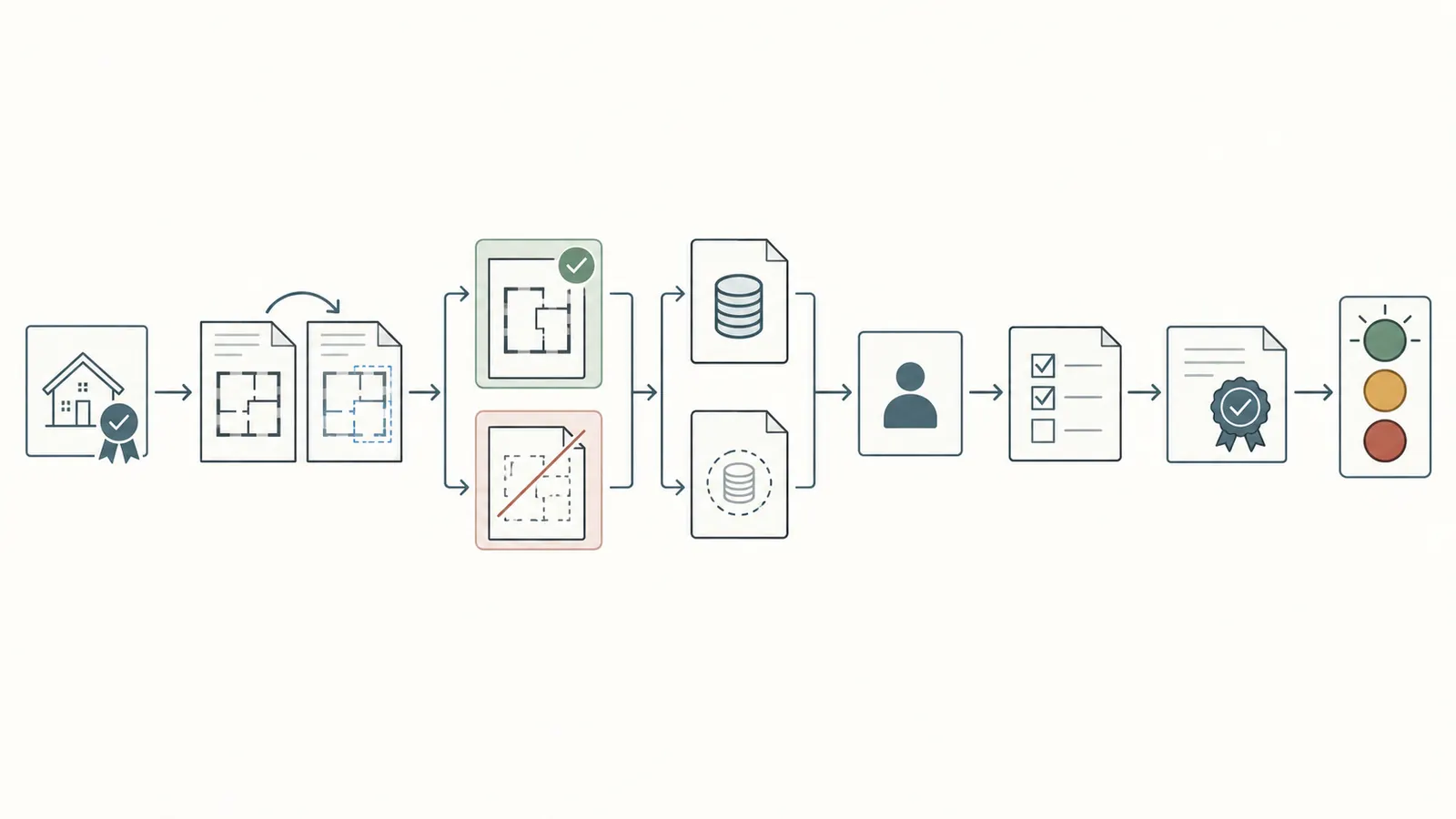
2. Convert the awarded proposal into a controlled document baseline #
The baseline is complete when the awarded proposal, contract, drawings, specifications, addenda and approved clarifications are reconciled into one dated document set with a known order of precedence. Do not start by copying the proposal line by line into a new spreadsheet; start by freezing the documents that actually define the award and finding conflicts between them.
Establish the document stack
Create a folder or project record with at least these registers:
| Register or folder | Minimum contents | Owner of the record |
|---|---|---|
| Award | Requests for proposal, bidder questions, proposal, exclusions, alternates, accepted clarifications and notice of award | Homeowner or owner's representative, with contractor acknowledgment |
| Agreement | Signed contract, exhibits, schedules, insurance and licensing records required by the agreement | Contracting parties |
| Design baseline | Permit drawings, issued-for-construction drawings if used, specifications, schedules, addenda and revision log | Architect or engineer for design documents; contractor for controlled distribution |
| Selection and procurement | Selection decisions, approved submittals, manufacturer information, lead-time confirmation, purchase order and delivery record | The party buying and coordinating the item |
| Field and handoff | Meeting decisions, requests for information, clarifications, inspection records, concealed-work evidence and trade handoff packets | Contractor or delegated project manager, with homeowner access |
| Money and change | Payment applications, invoices, stored-material support, allowance reconciliation, signed change orders and credits | Contractor prepares; homeowner reviews against the agreement |
| Closeout | Warranties, manuals, as-built information, certificates, inspection approvals, unresolved punch items and final release records | Contractor assembles; homeowner receives and verifies |
Give every file a stable name such as A-101_issued-2026-08-14.pdf or CO-004_signed-2026-09-02.pdf. Do not create a new revision by overwriting an old one. Keep an index with document name, revision, issue date, issuer, status and superseded document. A register row should refer to the index entry, not merely a cloud link that could be replaced.
Public Utah guidance is a useful example of this separation: the Utah Division of Professional Licensing publishes an optional residential agreement with separate public exhibits for project plans, a change order, and proof of licensure and insurance. Utah DOPL says the form is optional, customizable and not legal advice, so use the idea of distinct exhibits and evidence records without treating that form as your contract. Utah DOPL's construction-contract resource
Reconcile the award in three passes
Pass one: existence
For every proposal line, ask where the item appears in the signed agreement or its incorporated exhibits. Record “found,” “found with different wording,” “not found,” or “superseded.” Do the same for every owner-requested exclusion and alternate. A line that exists only in an email may be important evidence, but whether it is contractually operative depends on the agreement and jurisdiction. Mark it for contract review rather than silently promoting it to scope.
Pass two: boundary
For every item marked found, split the action into supply, delivery, unloading, storage, preparation, installation, connection, testing, protection, cleanup and documentation. Then assign each action to a party. A contract line reading “provide plumbing fixtures” may not resolve who buys the fixtures, who carries them into the house, who stores them, who installs trim, who supplies stops and traps, who connects appliances, who tests the system or who repairs damage from another trade.
Pass three: dependency
List what has to happen before and after the item. A window handoff might require final opening dimensions, sill-pan details, approved shop drawing, delivery inspection, rough opening preparation, flashing, air-sealing, exterior water management, interior returns and protection. If the register records only “windows: included,” it has not yet made the sequence auditable.
Decide the order of precedence before a conflict occurs
The contract may contain an order-of-precedence clause. Read it with the project attorney or design professional when it matters. If the contract does not resolve a conflict, do not let the field pick the answer by convenience. The AIA-MBA Joint Committee publicly recommends treating drawings and specifications as complementary and raising discrepancies promptly for written clarification by the architect or engineer and contractor; it also notes that an actual contract's terms control the result. AIA-MBA's public guidance on drawings and specifications
Record conflicts in a clarification log:
| Conflict ID | Documents and revisions | Conflict stated without interpretation | Temporary risk | Requested clarification | Issuer and date | Register rows affected |
|---|---|---|---|---|---|---|
| RFI-014 | A-203 Rev 2; Spec 08 50 00 Rev 1 | Window schedule says bronze exterior; elevation note says dark gray | Purchase could lock the wrong finish | Confirm finish and affected opening schedule | Architect; date pending | WIN-01 to WIN-12 |
Do not use the clarification log to hide a cost or schedule decision. If the response changes scope, price, documents or time, create or reference the change process required by the contract. The next decision is whether the baseline is stable enough for a signed agreement and a procurement release. If not, keep the item open and name the person who must resolve it.
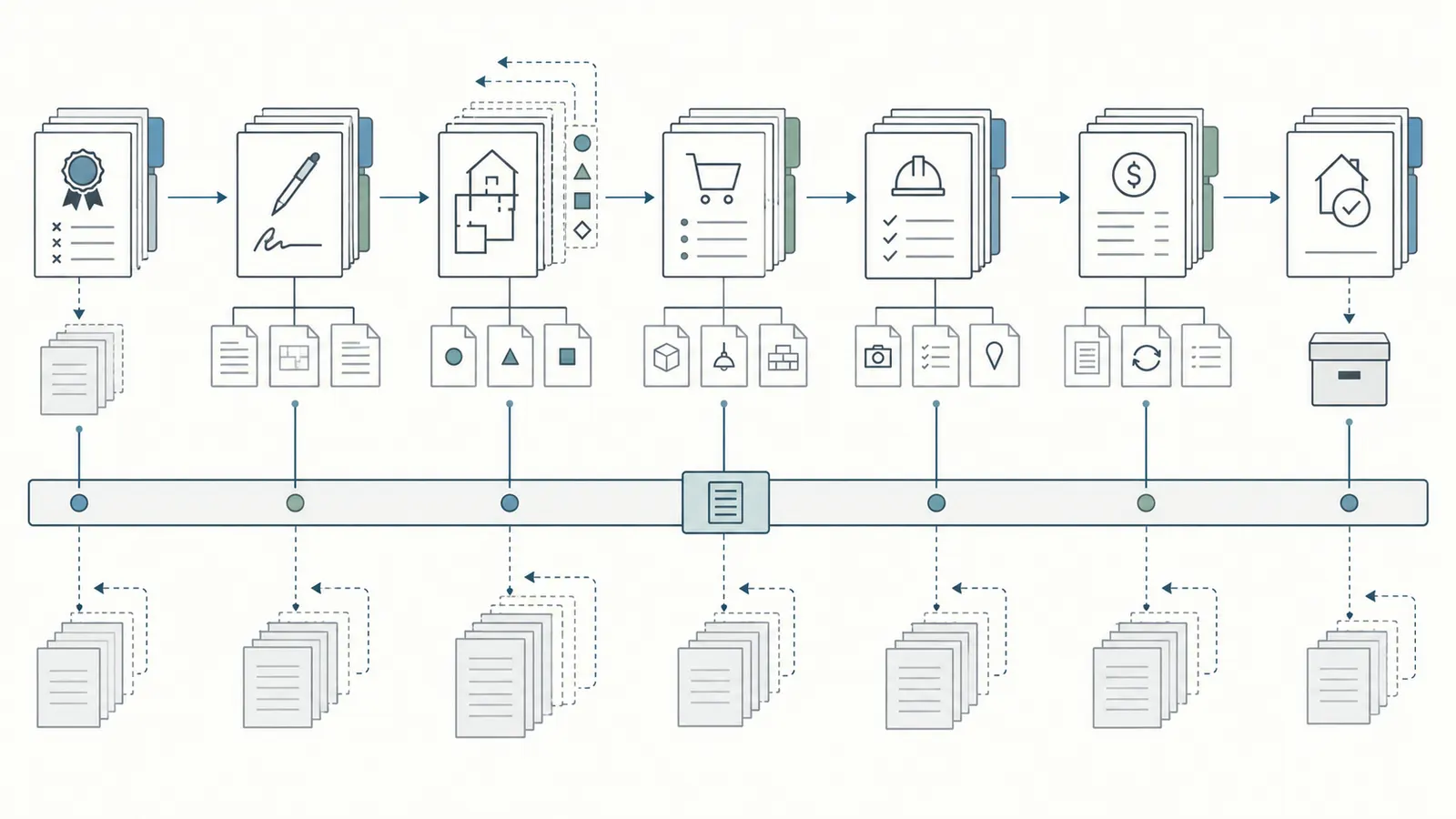
3. Use the scope-continuity register and allowance-normalization worksheet #
The scope-continuity register and allowance-normalization worksheet make an allowance comparable only after its included cost components, quantity basis, owner, handoff and change mechanism are written down. The worksheet is an original Brictale contribution: it is a repeatable recordkeeping method derived from the cited contract and allowance guidance, not a market-price database or a claim about what a typical custom home costs.
Classify the money basis before comparing numbers
Use one of these labels in the “basis” field:
| Basis | Meaning to record | What it does not prove |
|---|---|---|
| Firm included scope | Defined work and materials included in the contract sum | That quantities, selections or site conditions cannot change the price |
| Allowance | A provisional amount or quantity basis to be converted when the item is defined | That the amount covers a complete installed result |
| Alternate | A separately priced option that changes the baseline if selected | That the option is available after procurement or without schedule effects |
| Exclusion | Work intentionally outside the party's scope | That the work is unnecessary or free |
| Owner-supplied | Owner buys or provides the item under stated responsibility | That installation, damage, storage, warranty or compatibility is covered |
| Unit price | Price per defined unit under stated measurement and inclusions | That the unit price is comparable if scope or quantity changes materially |
| Time and materials or cost plus | Payment basis defined by the contract | That an unapproved invoice is authorized |
| Pending change | Existing scope or condition is being revised through the contract process | That field work can begin on a verbal promise |
Do not label a line “allowance” merely because it contains a dollar value. The row must state the object, quantity, unit, quality or performance level, included labor, delivery, tax treatment, installation, waste or handling assumptions, overhead and profit treatment, and the record that changes the contract sum. A low allowance with many omitted components can be less informative than a higher, fully installed amount.
Build the allowance component ledger
Use these components even when the answer is “included,” “excluded,” “unknown” or “not applicable”:
| Component | Example question | Record as |
|---|---|---|
| Material or equipment | What exact quantity, size, grade, model or performance description is priced? | Unit, quantity and evidence |
| Waste, trims and accessories | Are transition pieces, fasteners, sealants, filters, controls, supports or spare parts included? | Included or a named exclusion |
| Freight | Who pays the supplier's delivery charge and what delivery point applies? | Amount or basis, not “delivery included” alone |
| Unloading and handling | Who unloads, carries, stores, protects and moves the item? | Responsible party and handoff |
| Installation labor | What installation, preparation, connection, testing and cleanup are included? | Labor scope and trade |
| Tax | Which tax, jurisdiction, exemption or resale treatment applies? | Contract treatment to be verified |
| Contractor overhead and profit | Is markup included in the allowance or applied to the difference? | Contract formula or “ask before approval” |
| Design or engineering | Are shop drawings, calculations, revisions or professional services included? | Named responsibility |
| Permits and inspection | Is the permit, fee, test or reinspection in this item? | Jurisdiction-specific record |
| Credit or overage | How is the difference from the allowance priced and documented? | Change-order formula and evidence |
The AIA-MBA Joint Committee recommends converting allowances to a defined scope quickly. Its public recommendation specifically calls for clarity about materials, labor and equipment, freight, installation, unloading, handling and tax; it also says the contract should define whether contractor overhead and profit apply and that overages or savings should be adjusted by change order. This is public best-practice guidance, not a rule that automatically modifies your agreement. AIA-MBA's allowance guidance
Illustrative allowance conversion
The following is a modeled example using invented worksheet inputs for demonstration only. It is not a quote, measured result, national price, tax rate or claim about any product. Replace every input with the project documents or an actual written supplier or contractor record.
Assume an allowance row for a built-in appliance package has an allowance amount of $10,000 and a selection deadline 45 days before rough-in. The hypothetical project team enters these inputs:
| Input | Illustrative value | Unit | Source status |
|---|---|---|---|
| Appliance material invoice | 10,000 | USD | Hypothetical worksheet input |
| Freight | 600 | USD | Hypothetical worksheet input |
| Unloading and handling | 250 | USD | Hypothetical worksheet input |
| Installation labor and connection | 2,400 | USD | Hypothetical worksheet input |
| Tax | 0 | USD | Hypothetical assumption that tax treatment is included elsewhere; verify |
| Contractor overhead and profit | 12% | percent of listed direct components | Hypothetical contract formula; verify |
| Allowance credit already carried in contract | 10,000 | USD | Hypothetical baseline |
First calculate direct installed cost before markup:
direct cost = material + freight + unloading + installation + tax
direct cost = $10,000 + $600 + $250 + $2,400 + $0 = $13,250
Then calculate illustrative overhead and profit:
markup = direct cost × 12% = $13,250 × 0.12 = $1,590
Then calculate the illustrative conversion amount:
converted installed amount = direct cost + markup = $13,250 + $1,590 = $14,840
Then compare the converted installed amount with the allowance carried in the contract:
illustrative change before any other contract adjustment = $14,840 − $10,000 = $4,840
This arithmetic does not tell the homeowner that $4,840 is owed. It shows what must be clarified: whether the allowance already included freight or labor, whether tax is handled differently, whether the markup applies to the full difference, whether the contract uses another formula, whether the selection is within the allowance, whether the supplier discount belongs to the owner, and whether the work is actually in the same quantity and quality basis. A contractor's invoice or a selection email cannot answer those questions if the contract uses a different adjustment method.
Sensitivity without pretending to know the price
Use sensitivity to find which missing input deserves the next question. Holding the hypothetical material, unloading and installation inputs constant, vary freight, tax and markup as ranges supplied by the project record. The table below is illustrative math only:
| Scenario | Freight | Tax | Markup basis | Illustrative converted installed amount |
|---|---|---|---|---|
| A: low omitted components | $0 | $0 | 0% | $12,650 |
| B: base worksheet | $600 | $0 | 12% on direct cost | $14,840 |
| C: freight and tax exposure | $1,000 | $800 | 12% on direct cost | $16,184 |
| D: higher coordination burden | $1,500 | $800 | 15% on direct cost | $17,192.50 |
For Scenario C, the direct cost is $10,000 + $1,000 + $250 + $2,400 + $800 = $14,450; 12% markup is $1,734; the total is $16,184. For Scenario D, the direct cost is $10,000 + $1,500 + $250 + $2,400 + $800 = $14,950; 15% markup is $2,242.50; the total is $17,192.50, not $16,675. That correction illustrates an important review habit: show the formula, recalculate independently and do not trust a rounded table. The exact values are less important than exposing that changes in freight, tax and markup can matter as much as the product selection.
The sensitivity question is: “Which variable can the next owner of the item actually resolve?” If tax is unknown because the job location, buyer, exemption or invoice treatment is unclear, assign it to the responsible contract or accounting party. If freight varies because delivery access is unverified, assign a site logistics check. If markup is silent, send the contract clause and the proposed change to the person authorized to interpret it. Do not substitute a national tax assumption, online retail price or a contractor's verbal estimate.
Owner-supplied and alternate traps
An owner-supplied item needs its own responsibility line. Record who selects, purchases, pays, receives, inspects, stores, protects, carries, installs, connects, tests, warrants and replaces it. “Owner supplies faucet” may leave the installer without the correct rough-in, trim kit, shutoffs or delivery date. It may also create a dispute if the item arrives damaged or incompatible. The next handoff cannot be “deliver to site”; it must be “trade confirms model, rough-in, accessories and ready-for-install date.”
An alternate needs a complete delta. Record the base item, alternate item, add or deduct amount, affected drawing and specification, design or permit effect, lead time, responsibility changes, selection deadline, and whether the price includes the same delivery, installation, tax, overhead and profit components. If the alternate changes only the finish but the allowance changes quantity, the register should show both differences instead of treating the alternate as a label.
The worksheet's output is one of three decisions: accept the item as a firm, comparable scope; issue a written clarification or change; or hold the procurement or trade start until the missing basis is resolved. The register is doing its job when it makes the third decision visible early.
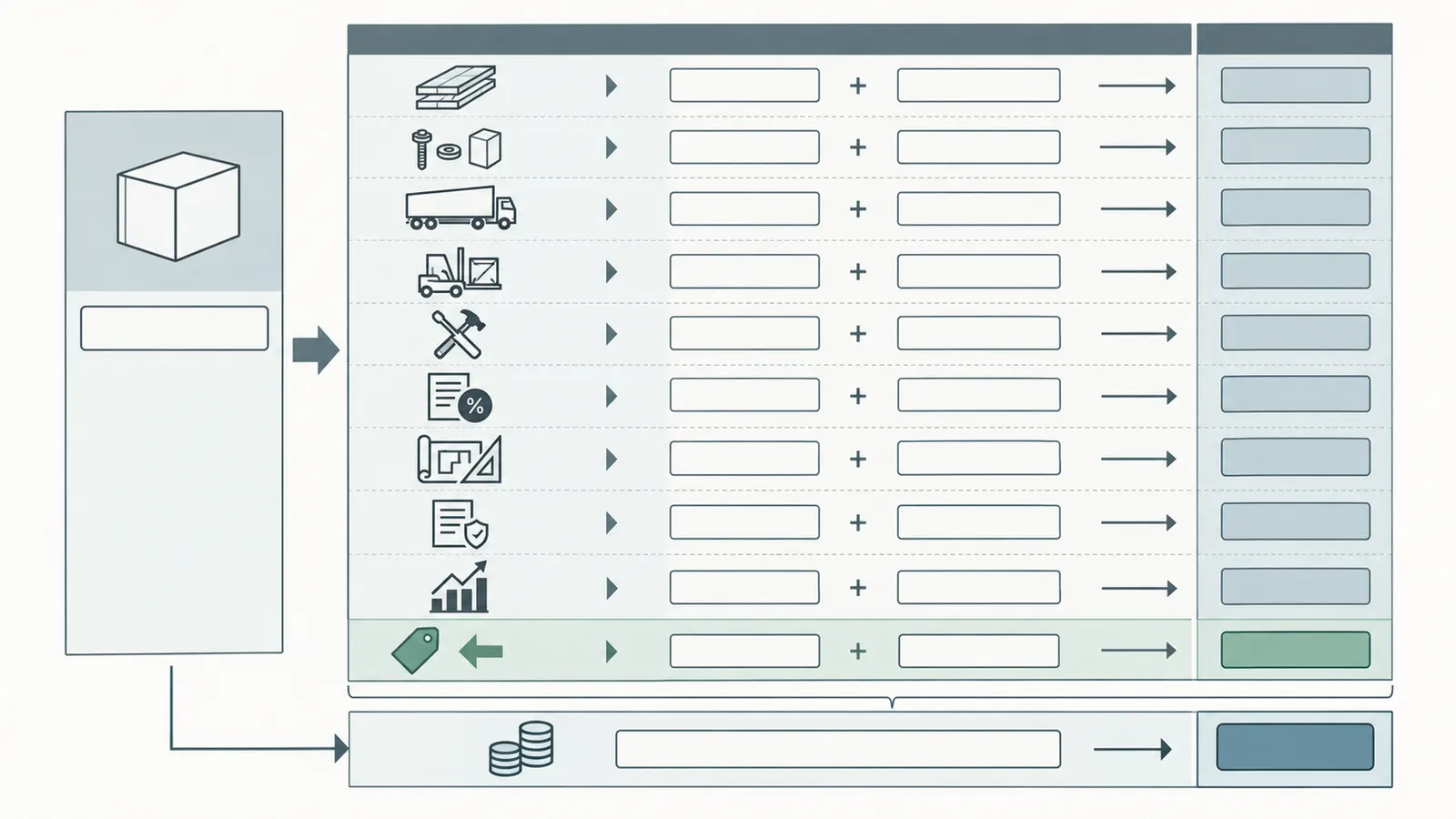
4. Assign one accountable owner and make every trade handoff testable #
Every unresolved scope row should name one accountable owner, even when several people contribute. The owner is the person responsible for obtaining the next answer, not necessarily the person performing the work or paying the invoice. A homeowner may own the selection; the contractor may own coordination; the architect may own a design clarification; an engineer may own a structural detail; a supplier may own a confirmation of availability; and the authority having jurisdiction may own a permit decision. Do not assign an authority having jurisdiction a private contractual task or imply that an inspector approves a scope allocation.
Separate responsibility types
Use separate columns for these roles:
- Decision owner: chooses or authorizes the next project decision.
- Scope owner: confirms what the contract includes and excludes.
- Design author: issues or approves the design information.
- Procurement owner: buys the item, confirms lead time and preserves the order record.
- Installing trade: receives, installs, connects and protects the work within its scope.
- Verification owner: confirms the specified evidence exists, such as a submittal, inspection, test, photograph of concealed work or owner acceptance.
- Payment reviewer: compares the request to the contract, completed work and approved change record.
- Record custodian: stores the authoritative document where the next person can find it.
One organization can hold several roles, but the register should still show them. “GC” is too compressed if the contractor is also selecting, buying, installing, coordinating inspections and preparing payment. A role map exposes where a decision is expected to cross from one person to another.
Build a handoff packet, not just an email
Before the receiving trade starts, give it a small packet linked to the row:
| Packet field | Example content | Receiving-trade check |
|---|---|---|
| Item and location | Door D-14, second-floor bedroom | Is the location and quantity clear? |
| Contract basis | Finish carpentry scope section and accepted exclusion | Does the trade know what is outside its work? |
| Current design | Sheet A-601 Rev 3, detail 5 | Is this the latest authorized revision? |
| Selection or submittal | Model, finish, dimensions and approval date | Does the product match rough-in and performance needs? |
| Prerequisites | Framing complete, wall dry, backing installed, floor elevation verified | Can the trade start without rework? |
| Delivery condition | Received, inspected, protected, damage noted | Who owns a defect discovered now? |
| Interface | Adjacent trade, sealant, blocking, trim, electrical or plumbing connection | Where does one scope end and the next begin? |
| Evidence | Photo, inspection record, delivery ticket, test or signed acceptance | What must be uploaded before the next payment or cover-up? |
| Exception | Missing hardware, dimension conflict or unresolved allowance | Is work blocked, or is an approved change available? |
Have the receiving trade acknowledge one of three conditions: accepted and ready; accepted with listed exceptions; or not ready. An acknowledgement is not a release from contract obligations and should not be described as one. It is a coordination record that prevents a supervisor from assuming readiness because an email was sent.
Sequence the register around irreversible work
The risk is greatest immediately before a decision becomes expensive to reverse. Common gates are:
- Before permit submission or permit revision: design scope, responsibility for fees and required documents are clear.
- Before long-lead procurement: model, quantity, finish, compatibility, delivery point, damage risk and change authority are documented.
- Before rough-in: locations, dimensions, sleeves, backing, service capacity and applicable design details are current.
- Before covering work: required inspection, testing, photographs and concealed-work evidence are complete.
- Before finish installation: material condition, substrate, layout, acclimation or manufacturer requirements that apply to the specified product are verified by the responsible professional or trade.
- Before payment: completed scope, stored-material support if allowed, approved changes, credits, retention or other contract terms are reconciled.
- Before substantial completion or handover: warranties, manuals, certificates, test reports, final inspections, punch items and unresolved exclusions are recorded.
The register should show the next gate, not only the current status. “In procurement” is weak; “in procurement—GC to upload purchase order and supplier lead-time confirmation before rough-in release” is actionable. “Installed” is also weak; “installed—trade to provide test record and photo before close-in inspection” is verifiable.
The next decision is whether the receiving party can accept the packet. If not, return the row to the accountable owner with a specific missing input rather than asking the entire team to “review scope.”
5. Maintain the revision, change-order, payment, and evidence loop #
Maintain the register on a predictable review cycle and update a row when a document, decision, physical condition, price, schedule or responsibility changes. A weekly meeting is not enough if a trade will start tomorrow; use event-based updates at procurement release, delivery, concealed work, payment application and change request.
Use a state machine instead of a single green status
Choose statuses that explain what can happen next:
| Status | Meaning | Allowed next action |
|---|---|---|
| Baseline open | Award or contract documents are not reconciled | Identify source and assign owner |
| Clarification needed | Documents conflict or boundary is vague | Request written clarification; do not interpret in the field |
| Ready for selection | Scope is defined but the owner choice is pending | Record selection deadline and decision effects |
| Ready for procurement | Selection, responsibility and budget basis are complete | Release purchase only under authorized process |
| In procurement | Order or fabrication is active | Track confirmation, lead time, delivery and changes |
| Ready for handoff | Prerequisites and packet are complete | Receiving trade accepts or lists exceptions |
| Change pending | Existing scope or price is proposed to change | Price, time and document effects; obtain required approval |
| Installed—verification pending | Physical work appears complete | Obtain test, inspection, photo, certificate or acceptance evidence |
| Payment review | Request is being reconciled | Approve, query or hold according to the agreement |
| Closed | Scope, evidence and financial record are reconciled | Retain record and carry warranty/maintenance information |
Do not use “closed” merely because an invoice is paid. An item may be physically installed but lack a required test, inspection, warranty, operating manual or as-built record. Conversely, a payment may be due under the contract even when closeout evidence is pending; that is a contract-specific decision, not a spreadsheet rule.
Treat a change as a packet
A useful change record contains:
- unique change number and request date;
- affected register item IDs;
- current baseline and proposed replacement;
- reason, such as owner selection, document clarification, unforeseen condition or correction;
- drawing, specification, submittal or field condition reference;
- labor, material, equipment, freight, tax, markup, credit and allowance treatment;
- schedule effect and affected handoffs;
- permit, engineering or inspection effect;
- who prepared it, who reviewed it and who has authority to approve it;
- signatures or other approval method required by the governing contract;
- effective date and distribution list; and
- updated register status.
For example, if a homeowner selects a different exterior door after framing, the register should not merely state “door upgrade +$X.” It should show whether the opening, threshold, flashing, hardware, delivery, lead time, security wiring, trim, weather protection and inspection records change. If the price is an allowance conversion rather than an owner change, label it as such and apply the contract's allowance adjustment method. If the contractor began before approval, record that fact and ask a qualified contract adviser how it affects the parties; do not retroactively manufacture a signature.
California CSLB consumer guidance says changes to contract price or scope must be a written change order signed by the customer and contractor before the change. Maine's Attorney General gives a state-specific example: for Maine home construction or repair above the stated threshold, a change in work or materials that changes contract price must be in a written change order signed by both parties and state previous and revised prices. Oregon CCB guidance also recommends written signed change orders. These are not interchangeable national rules; they are examples of why the register should always point to the law and contract that actually govern the home. California CSLB on written change orders, Maine Attorney General on written change orders, and Oregon CCB on written change orders
Reconcile payment without turning the register into legal advice
For each payment application, select the rows it claims to advance and check:
- Is the billed scope in the signed baseline or an approved change?
- If an allowance is being converted, are the supplier records and component treatment visible?
- If materials are stored or billed before installation, does the contract permit that and does the record show location, ownership, protection and delivery evidence?
- Does the amount match the quantity or milestone actually completed?
- Are credits, approved alternates, retainage, deposits, previous payments and disputed items handled according to the agreement?
- Does the payment release a dependency before a required inspection or test?
- What remains open after payment, and who owns it?
California CSLB says its home-improvement contract guidance calls for a detailed written payment schedule and says payments cannot exceed the value of work performed subject to the state's stated down-payment rule and context. Oregon CCB lists total price, labor and materials, payment schedule and allowance amounts among written contract contents. Treat those as California and Oregon examples, not an instruction to withhold money or rewrite a payment clause. Ask a lawyer, accountant or qualified construction professional in the property jurisdiction before taking action that could breach the contract or affect lien rights. California CSLB payment-schedule guidance and Oregon CCB contract-content guidance
Preserve an evidence chain
The evidence location should answer “what happened, when, under which revision and who confirmed it?” Use a simple naming convention and do not rely on text-message history as the only record. A record may be a signed change order, approved submittal, invoice, delivery ticket, photo with location and date, permit or inspection record, test report, meeting minute, warranty, manufacturer's installation information or a written clarification. The register should not imply that a photo proves hidden compliance; it only records what was observed and what professional or inspector evidence remains required.
AIA Contract Documents describes coordinated documents across bidding and award, design and engineering, construction and subcontracts, payment and compliance, and closeout, with change orders and field documentation included in the construction phase. That supports a phase-based record system, but it does not require the homeowner to purchase AIA documents or prove that an AIA form governs the job. AIA Contract Documents' project-phase overview
The next decision is whether the change or payment record can be linked to a specific baseline row. If it cannot, stop and identify the missing relationship before the record becomes difficult to reconstruct.
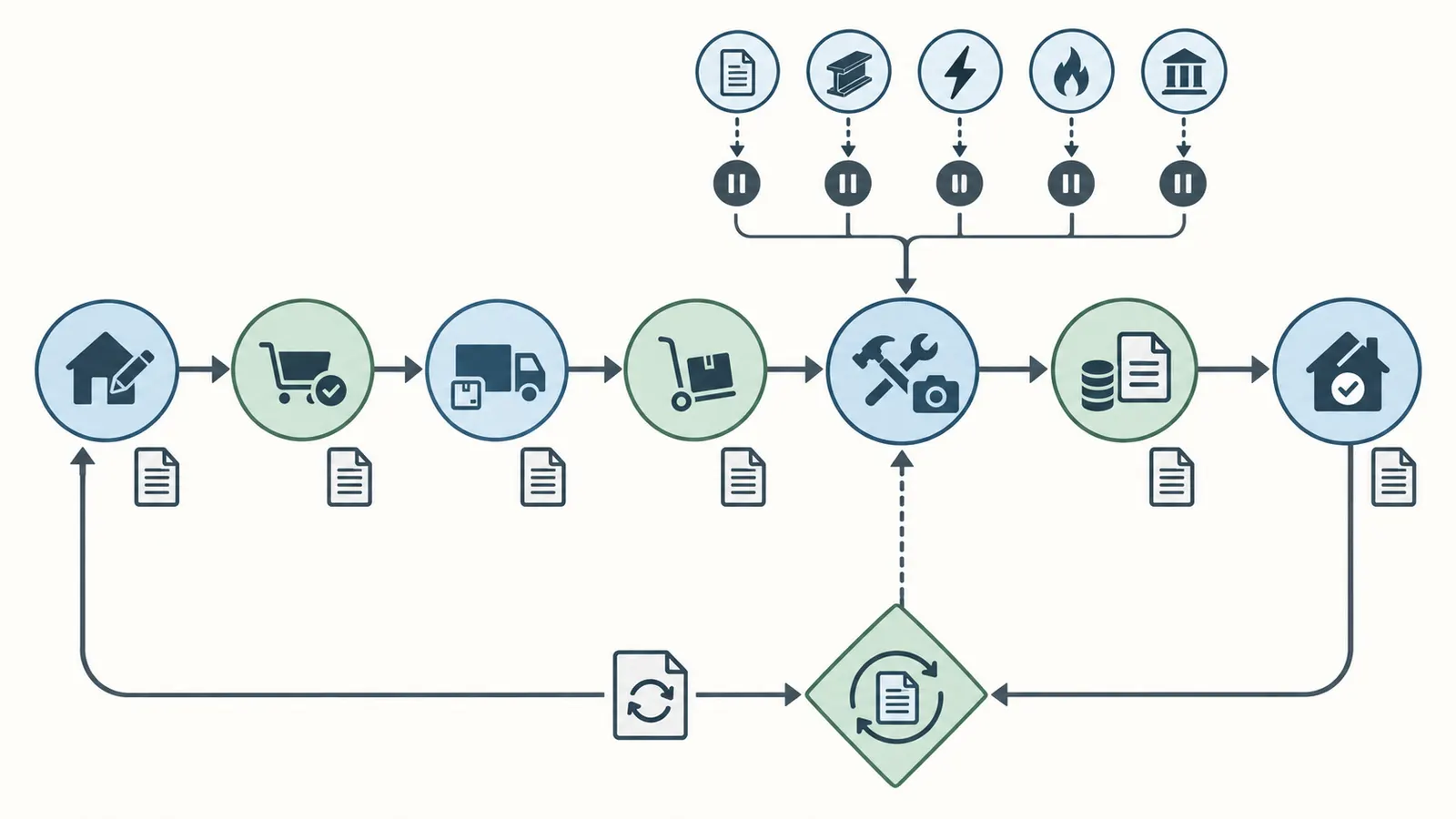
6. Apply the register to the actual jurisdiction without overclaiming a rule #
Use the register nationally as a coordination method, but treat legal thresholds, licensing, permits, code enforcement, notice requirements, warranties, payment rules and change-order formalities as jurisdiction-specific. Start with the property address, the project type, the contracting parties, the local authority having jurisdiction and the governing contract. Then check the current state and local sources before using a rule in a decision.
California: distinguish CSLB consumer guidance from your contract
The California Contractors State License Board consumer page says a written contract is required for California home-improvement projects over $500 and that home-improvement contracts and changes must be written and legible. It also lists detailed products and work, a written payment schedule, permit responsibility, completion date, written change orders and warranties among useful contract content. Because the page is framed around California home-improvement contracts, do not copy its threshold into a ground-up custom-home conclusion without checking the project classification, the current law and the governing agreement. California CSLB's consumer contract page
For a California project, add a “California verification” field that records the CSLB page or current statute reviewed, contractor license information when relevant, the contract section on changes and the name of the lawyer or contract professional consulted if the homeowner seeks legal advice. Keep the register's coordination fields separate from the CSLB's legal requirements. A row can be operationally complete yet legally defective, or legally documented yet operationally ambiguous.
Oregon: preserve the signed contract and related materials
Oregon CCB consumer guidance says a well-written contract often includes the contractor's license information, owner and job address, detailed scope, specific materials, dates, price, payment schedule, allowances, permit responsibility, written signed change orders and signatures. It also says to keep a signed copy and related materials in a safe place. The page states that construction agreements over $2,000 must be in writing and recommends all agreements and changes be written. These are Oregon-specific statements and should be checked against current law and the particular contract. Oregon CCB's written-contract guidance
For an Oregon project, add a record-retention check at contract execution: signed agreement, consumer notices, exhibits, plan revisions, changes and payment records are all present in the controlled folder. If the homeowner is acting as an employer or coordinating unlicensed workers, Oregon CCB warns that additional responsibilities can arise, including permits and employment-related obligations. That is a reason to identify the responsible contracting structure early, not to infer that a register makes an owner-builder arrangement safe or simple. Oregon CCB's owner-builder responsibility guidance
Maine: record the threshold and the change-order fields
The Maine Attorney General says Maine law requires a written contract for home construction or repair costing more than $3,000. The page describes required provisions including total price, estimated start and end dates, work and materials, and an express warranty of good workmanship. It also says a price-changing work or materials change must use a signed written change order with both prior and revised prices, subject to stated statutory exceptions or written exemptions. Do not turn that summary into legal advice; check the current Maine statute and have counsel review any exemption or disputed change. Maine Attorney General's home-construction guidance
For a Maine project, include previous contract price and revised contract price as separate required-looking fields in the register, then confirm whether the particular transaction is covered and whether any exemption was properly made. Also ask the local municipality whether applicable building and energy code administration affects the project. The Maine Attorney General explains that municipalities with more than 4,000 residents must enforce the Maine Uniform Building and Energy Code, with listed exceptions, and recommends an applicable compliance provision. That is a Maine example, not a national code rule. Maine Attorney General's MUBEC explanation
Utah: use public exhibits as prompts, not as an adopted contract
Utah DOPL says its Residential Construction Agreement is optional, can be customized and is not legal advice. The resource separates project plans, a change order and proof of licensure and insurance into public exhibits. It also says specificity helps make homeowner and contractor expectations clear, while the agency does not enforce the private contract itself. Utah DOPL's optional agreement and exhibits
For a Utah project, the register can use these exhibit ideas as prompts: Does the signed agreement identify the plan set? Is the change form linked to affected rows? Are licensure and insurance records in the project file? But do not tell a homeowner that attaching the public Utah form resolves a contract dispute or substitutes for counsel. The actual signed documents, applicable Utah law, permit requirements and property-county venue provisions control.
AIA-MBA and AIA Contract Documents: recommendations and workflows are not statutes
The AIA-MBA Joint Committee's public guidance is useful for the allowance and document-coordination ideas in this article. It recommends clearly describing allowance components and using change orders for differences, and it recommends prompt written clarification of drawing and specification discrepancies. Those recommendations can improve a register, but they are not automatically incorporated into a private custom-home contract. The AIA Contract Documents site describes a coordinated system across phases and change tracking; it does not make every project an AIA project. AIA-MBA allowance and clarification guidance and AIA Contract Documents phase guidance
The next decision is jurisdictional escalation. If a row invokes a dollar threshold, lien, permit, code, licensing, warranty, right to cancel, payment withholding, insurance or dispute process, stop generalizing. Capture the question, source and date, then ask the current authority or qualified professional for the property location.
7. Use failure branches to decide when to stop, clarify, or proceed #
The safest next action depends on the type of failure: a missing document, an unclear boundary, an unpriced selection, an unsafe field condition, a changed requirement or an unsupported payment. Use the matrix below to avoid treating every gap as a spreadsheet cleanup.
| Observed failure | What it may mean | Do not infer | Safest next action | Handoff after resolution |
|---|---|---|---|---|
| Proposal includes item; signed contract is silent | Award was not fully incorporated or wording is elsewhere | That the item is automatically included | Ask contract owner to identify operative document or issue written amendment | Update baseline and affected trade packet |
| “Install” appears without supply or accessory scope | Partial scope boundary | That the installing trade supplies everything | Split supply, delivery, accessories, labor and testing into rows | Obtain acceptance from both supplying and installing parties |
| Allowance has one dollar amount only | Incomparable basis | That it is an installed budget | Build component ledger and ask for adjustment formula | Record selection and signed allowance conversion |
| Alternate has add/deduct price but no drawings | Option may affect design or permit | That it is only a finish change | Identify affected documents, schedule, responsibilities and authority | Issue revised packet before procurement |
| Owner-supplied item arrives damaged | Delivery or risk allocation is unclear | That installer owns the damage | Photograph condition, preserve delivery record and ask contract owner to assign responsibility | Reconcile replacement, schedule and warranty route |
| Trade says “we always do that” | Practice is being used as an undocumented assumption | That practice changes the contract | Request document citation or written clarification | Add the answer to the row and packet |
| Latest drawing revision differs from field copy | Document control failure | That the field copy is current | Stop affected irreversible work and request controlled distribution | Acknowledge current revision and superseded copies |
| Work is ready to cover but inspection/test is absent | Evidence or statutory step may be missing | That a photo replaces inspection | Ask responsible contractor or inspector what is required before cover | Store actual record and close the gate |
| Payment includes an unapproved change | Work, price or authority is unresolved | That payment approval ratifies it | Flag the item, preserve the invoice and seek contract-specific advice | Link approved change or written dispute response |
| A responsibility is assigned to “team” | No single owner | That everyone will notice | Name one accountable person and supporting parties | Owner confirms handoff completion |
| Contractor will not provide the contract file | Record access or trust problem | That the homeowner can reconstruct it later | Send a written request and review contract rights with counsel | Controlled record or escalation log |
| Site condition creates structural, electrical, gas, excavation or contamination risk | Safety and professional design issue | That a register decision can make it safe | Keep people out of danger and call qualified professionals/AHJ as appropriate | Professional disposition and revised scope |
If the item is missing before signature
Do not solve a missing scope item with a large contingency and a verbal promise. Record the missing item, location, likely interface, requested inclusion or exclusion, responsible responder and decision date. Ask for a revised proposal or contract exhibit that states the work and cost basis. If the document still cannot resolve the boundary, pause that commitment and have a qualified contract adviser review it.
If the item is missing after signature but before procurement
The decision tree is narrower. First, check whether the signed agreement incorporates a proposal, schedule, plan or specification that already covers the item. Second, check whether the alleged omission is actually an exclusion. Third, check whether the requested work is a change. Fourth, record the price, schedule and document effect before purchase. Do not change the baseline by editing the original row; preserve the original and link the change record.
If work has started on a verbal instruction
Create a factual record: date, instruction, speaker, location, work observed, documents present, people affected and immediate safety or schedule consequence. Do not write “approved” unless the person had authority and the required approval actually occurred. Ask the contractor to confirm the instruction and provide the contractually required change document. Legal consequences differ by jurisdiction and agreement, so seek timely advice rather than relying on the register to cure an unauthorized change.
If the field condition is unsafe or technically uncertain
Stop the affected work and protect people from the hazard. Structural alterations, energized electrical work, gas, excavation, lifting, falls, pressure systems, contamination and confined spaces require qualified professionals and appropriate controls. A homeowner can record the location, date, visible condition and documents, but should not direct a trade to improvise a fix. Request a written professional disposition, revised drawing or permit direction as appropriate. Never use the register as permission to bypass an inspection or code requirement.
If the row is complete but evidence is missing
Do not invent the evidence. Mark the row “installed—verification pending,” name the responsible party and specify the actual record needed. A photograph may document visible placement; it does not establish a hidden connection, pressure test, code compliance, structural capacity or manufacturer-required installation unless the responsible professional's process says what it proves. Carry the open evidence to the next payment or closeout gate according to the contract, while avoiding an automatic conclusion about entitlement to withhold payment.
If the homeowner and contractor disagree about what the row means
Freeze interpretation, not necessarily the whole job. Isolate the affected item and its dependencies. Each party should identify the exact contract paragraph, drawing, specification, accepted proposal line, change order or correspondence it relies on. Ask the design professional for a written design clarification where the issue is design coordination; ask a lawyer for contract interpretation or rights; ask the appropriate authority for permit or code questions. The homeowner's register should preserve both positions and the date of escalation without declaring a legal winner.
The next decision is whether to proceed with unaffected work. That depends on the dependency map, safety, contract notice requirements and professional direction. Do not stop every trade by default, but do not allow an unresolved item to be buried behind a later finish or payment.
8. Run a homeowner review cadence from award through closeout #
Run the register at seven repeatable checkpoints: award, contract execution, permit/design release, procurement, pre-trade handoff, payment review and closeout. At each checkpoint, ask for evidence that matches the stage rather than rereading every row with equal attention.
Award review
The homeowner and contractor should reconcile:
- accepted base proposal and all incorporated clarifications;
- exclusions and owner responsibilities;
- alternates with add or deduct values and deadlines;
- allowances with quantity, quality and component basis;
- trade coverage and gaps between scopes;
- required design, engineering, permit and inspection responsibilities;
- the expected contract document order and change process; and
- the record location that both parties can access.
The deliverable is a baseline exception list. Every exception has one owner and a due date. “To be determined” is not a status unless the register says who decides what, by when and what work cannot proceed first.
Contract execution review
Check that the signed package is complete and legible, every exhibit is present, the page or revision references in the register match the signed set, signatures and dates are captured, and all open commercial decisions are identified. Review the contract's clauses on scope, documents, allowances, changes, payment, schedule, permits, insurance, warranties, dispute process, notices, lien or release records and closeout. The homeowner can organize the questions; a lawyer should interpret legal effect.
California CSLB says a contract should identify products, work method, payment schedule, permit responsibility and completion date, among other items. Oregon CCB lists scope, materials, dates, price, allowances, permits, signed changes and signatures. Maine's Attorney General explains its state's written-contract and change-order requirements. These sources show why the contract-execution review is a record gate, but none should be silently transplanted to a different state. California CSLB contract contents, Oregon CCB contract contents, and Maine Attorney General contract requirements
Permit and design release review
Record which drawing and specification revisions are released, who may issue clarifications, what the local authority has approved or still requires, which elements require engineer or architect input, and which field changes must return to the permit set. A permit is not a statement that every contractual item is included, and a contract is not a permit. Keep those systems linked but separate.
For a Maine property, for example, the homeowner should ask the municipality whether MUBEC applies to the project and understand the exceptions and enforcement context described by the Maine Attorney General. For any other state or local jurisdiction, ask its current building department or code official. Do not call a rule “local” without naming the city, county, state or authority that issued it.
Procurement review
Before a purchase order or long-lead release, verify the item ID, exact description, quantity, finish, compatibility, dimensions, approved submittal, allowance or alternate basis, delivery location, unloading, storage, protection, owner-supplied status, return or damage process, lead time, schedule effect, payment treatment and change authority. Send the record to the receiving trade and the person responsible for the preceding prerequisite.
A purchase order is not automatically a change order and an approved submittal is not automatically a change in contract price. If the purchase reveals that the allowance basis is inadequate or the selected item changes the design, use the agreement's written process and update the register only after the record is authorized.
Pre-trade review
The contractor or project manager should convene a short handoff with the outgoing and incoming parties. Walk through the packet, identify missing prerequisites and obtain a readiness status. The homeowner need not supervise every trade, but should receive the exception list for items affecting selections, price, schedule, quality, warranty or future maintenance.
For a concealed system, add the evidence needed before it is covered: applicable inspection, test, photograph, product record or professional sign-off. Do not claim the register itself verifies compliance. It shows whether the expected evidence has been requested, received and stored.
Payment review
Map each payment line to completed register rows and approved changes. Ask the contractor to identify stored materials and related delivery or protection records if the contract permits billing before installation. Reconcile allowance conversions, credits, deposits, approved alternates, retainage or other contract terms. Record questions as item-specific requests rather than a vague “payment disputed.” Escalate legal or lien questions promptly in the property's jurisdiction.
Closeout review
At closeout, the register should answer what was built, which changes became part of the final scope, what remains incomplete, what warranty or maintenance record exists, which manuals and model numbers apply, which inspections and certificates were received, where as-built information lives, and who owns unresolved items. A closed row has evidence and a responsible next action; it is not just green formatting.
AIA Contract Documents presents project closeout as its own phase and associates it with substantial completion and final payment forms. Treat that as a useful phase distinction, not as a universal legal definition of substantial completion or a mandate to use AIA forms. AIA Contract Documents' closeout overview
A compact weekly review script
Use this sequence in the project meeting or in a homeowner review:
- Which rows changed since the last review?
- Which rows are within 14 days of an irreversible action?
- Which rows have a blank owner, revision, allowance basis, handoff or evidence location?
- Which rows are waiting for a selection, design clarification, permit response or supplier confirmation?
- Which proposed changes lack price, time, responsibility or approval?
- Which payment lines do not map to a baseline or approved change?
- Which concealed work will be covered before the next meeting?
- Which open question should move to a lawyer, architect, engineer, qualified trade, inspector, code official or contractor rather than stay in the homeowner spreadsheet?
- What is the next decision, by whom and by what date?
The review should finish with a short decision log. If the answer is “no change,” still record the date, participants, documents reviewed and exceptions carried forward. That prevents a later assumption that silence meant approval.
Originality brief: what this register adds and how to check it
Existing answers commonly tell homeowners to compare builder proposals, request a detailed written contract, list allowances and use signed change orders. State consumer pages explain selected written-contract rules, while public contract guidance describes allowances and document coordination. Those answers are useful but split across pre-award comparison, consumer protection and contract-form material.
The missing decision is item-level continuity after award: can the homeowner show that one important item still has a current owner, defined inclusion and exclusion, allowance basis, responsible handoff, evidence location and written change record before the next trade starts or payment is approved?
The original contribution is the Scope-continuity register and allowance-normalization worksheet. Its method is: “For each item, record the governing drawing or specification revision, inclusion and exclusion boundary, allowance components, alternate, accountable party, handoff evidence and change-order reference; then normalize an illustrative allowance with explicit units and sensitivity to freight, tax, installation, overhead and profit.” The worksheet's limitations are: “This is an editorial planning worksheet, not a contract, legal opinion, cost database, inspection, engineering review or proof that a contractor has performed work; governing contract language, project documents and the law of the property location control.”
You can check the contribution without trusting Brictale's framing. Select one awarded item, such as windows, appliances, tile, roofing or HVAC equipment. Trace it through the proposal, signed agreement, drawing/specification revision, selection or submittal, purchase record, handoff packet, installation evidence, payment line and change-order history. Then recompute the allowance worksheet using the actual project inputs, showing which components are included, excluded or unknown. A reviewer should be able to reproduce the row's status and identify the next responsible person without asking what the homeowner meant.
The source support is also inspectable. California CSLB provides a California example of detailed contract scope, permit responsibility, payment scheduling and written changes. Oregon CCB provides an Oregon example of scope, materials, allowances, permits, signed copies and written changes. Maine's Attorney General provides Maine-specific written-contract, change-order and code-context examples. Utah DOPL provides an optional public agreement with plans, change-order and licensure/insurance exhibits and warns that it is not legal advice. AIA-MBA provides public allowance and drawing/specification coordination recommendations, while AIA Contract Documents describes phase-based document and change coordination. Each source is linked where its scoped claim is used, and each is recorded in the package evidence file.
This guide should not be used to rank builders, decide that a contractor breached a contract, certify code compliance, approve a structural or electrical change, calculate a national construction budget, or guarantee a dispute outcome. Its next decision is more modest and more useful: for the next important item, is the record complete enough for the next responsible person to act, or is a named clarification, professional review or written change still required?
The Brictale editorial method explains the difference between a homeowner planning aid and professional, legal or code authority. New homeowner guides are collected in the Brictale blog, where the build journey topics remain connected instead of splitting related decisions into separate system libraries.
Cite this guide
Brictale. “How to Maintain a Custom-Home Scope Register for Allowances, Exclusions, Alternates, and Handoffs.” Published 2026-09-23; updated 2026-09-23.
https://brictale.com/build/contractors/maintain-custom-home-scope-allowance-exclusion-register · Read the Markdown version
Original contribution: Scope-continuity register and allowance-normalization worksheet. A source-linked register that carries each awarded scope item through contract documents, procurement, trade handoff, payment evidence and written change control.
Sources and scope
Evidence behind this page
- The California Contractors State License Board says a home-improvement contract should describe products and how work will be performed in detail, and that a change to price or scope must be a written change order signed by the customer and contractor before the change.
California CSLB: What is a Contract?
California CSLB consumer guidance for home-improvement contracts; use as a California example, not as a national rule or a substitute for reviewing a ground-up custom-home contract.
Accessed · Link to this claim - California CSLB consumer guidance says the contract should contain a detailed written payment schedule, written direction about who obtains necessary permits, and written warranties when warranties are offered.
California CSLB: What is a Contract?
California CSLB consumer guidance; payment, permit and warranty examples must be checked against the project contract and property jurisdiction.
Accessed · Link to this claim - Oregon Construction Contractors Board consumer guidance lists detailed scope, specific materials, price and payment schedule, allowance items and budgeted amounts, permit responsibility, and signed written change orders as contract contents.
Oregon Construction Contractors Board: Consumer Tools
Oregon CCB consumer guidance for residential construction contracts; Oregon-specific examples, not a national contract template.
Accessed · Link to this claim - Oregon CCB advises consumers to keep a signed copy of the contract and related materials in a safe place, and separately states that construction agreements over $2,000 must be in writing while recommending all agreements and changes be written.
Oregon Construction Contractors Board: Consumer Tools
Oregon CCB consumer guidance and Oregon threshold as described on the accessed page; confirm current law and applicability for the property and contract.
Accessed · Link to this claim - The Maine Attorney General says Maine law requires a written contract for home construction or repair over $3,000 and that a change in work or materials changing the contract price must be in a written change order signed by both parties stating the previous and revised prices.
Maine Attorney General: Home Construction and Repair
Maine Attorney General consumer guidance describing Maine law; threshold and exemptions must be verified for the actual transaction.
Accessed · Link to this claim - The Maine Attorney General explains that municipalities with more than 4,000 residents must enforce the Maine Uniform Building and Energy Code, with stated exceptions, and recommends a contract provision requiring work to comply with MUBEC when applicable.
Maine Attorney General: Home Construction and Repair
Maine-specific code-enforcement example; it is not evidence of a national permitting or code rule.
Accessed · Link to this claim - Utah DOPL publishes an optional Residential Construction Agreement with separate public exhibits for project plans, a change order, and proof of licensure and insurance.
Utah Division of Professional Licensing: Construction Contract
Utah DOPL public contract resource; the agency states the form is optional, customizable and not legal advice.
Accessed · Link to this claim - Utah DOPL says complaints often reveal that no agreement exists or that an agreement lacks specificity to make expectations clear, and describes its optional agreement as a way to outline homeowner and contractor expectations and roles.
Utah Division of Professional Licensing: Construction Contract
Utah DOPL explanation of the purpose and limits of its public agreement; it does not resolve a particular contract dispute.
Accessed · Link to this claim - The AIA-MBA Joint Committee recommends converting allowances to a defined scope quickly and clearly stating whether freight, installation, unloading, handling and tax are included; it also says the contract should define whether contractor overhead and profit apply and that allowance differences should be adjusted by change order.
AIA-MBA Joint Committee: Allowances, Section D-7
Public AIA-MBA Joint Committee best-practice recommendation, not a statute and not automatically the governing contract.
Accessed · Link to this claim - The AIA-MBA Joint Committee recommends that drawings and specifications be treated as complementary and that a discrepancy be raised promptly for written clarification by the architect or engineer and contractor.
AIA-MBA Joint Committee: Order of Precedence Between Drawings and Specifications, Section D-4
Public AIA-MBA best-practice guidance; the actual contract's order-of-precedence clause controls.
Accessed · Link to this claim - AIA Contract Documents describes coordinated document support across bidding and award, design and engineering, construction and subcontracts, payment and compliance, and project closeout, including change orders and field documentation during construction.
AIA Contract Documents: Coordinated Documents for Every Phase of Your Project
AIA Contract Documents product and workflow description; it supports the document-phase concept, not a requirement to buy or use AIA forms.
Accessed · Link to this claim