How to Compare Contractor Communication and Quality-Control Plans Before Signing
Compare builders by named communication, inspection, quality-control, records, response windows, and escalation duties before signing your new-home contract.
The short answer
Compare each contractor against the same written work package and require every promise to name an owner, trigger, record, verification step, response window, escalation path, and contract location. Test both teams with a concealed-work concern and a schedule-impacting change. Choose the proposal that leaves fewer unassigned decisions, then confirm state and local permit, licensing, payment, notice, and change-order rules before signing.How to Compare Contractor Communication and Quality-Control Plans Before Signing
Compare each contractor against the same written work package and require every promise to name an owner, trigger, record, verification step, response window, escalation path, and contract location. Test both teams with a concealed-work concern and a schedule-impacting change. Choose the proposal that leaves fewer unassigned decisions, then confirm state and local permit, licensing, payment, notice, and change-order rules before signing.
Compare commitments, not communication style #
The most useful pre-signing comparison is a row-by-row test of what happens when a decision, inspection, defect concern, or delay occurs. A polished presentation, a fast reply during sales, or a promise of “weekly updates” does not tell you who can answer a field question, who can authorize a change, what evidence you receive, or what happens when the first answer is not enough. Your decision is stronger when two contractors receive the same inputs and must explain the same handoffs in writing.
This guide is for a United States homeowner comparing teams for a custom home before contract execution. “Contractor” means the proposed prime builder or general contractor, but the comparison must also expose the roles of the architect, engineer, superintendent, subcontractors, testing agencies, owner, lender, and public building official where they are involved. It is not a remote inspection, a code opinion, an endorsement, or individualized legal advice. A local rule is never inferred from another state’s rule.
The originality brief
Current answers generally tell homeowners to obtain a written scope, check licenses and insurance, compare prices, confirm permits, use payment milestones, keep records, and ask about references. California’s Contractors State License Board, for example, describes the written contract as a communication tool and lists scope, materials, payment schedule, permit responsibility, completion date, contractor identity and license information among the items to address in California home-improvement contracts. California CSLB’s contract guidance is useful for that California scope, but it does not give a national contractor-comparison method.
The missing decision is more specific: when two proposed teams both say they communicate well and control quality, which team has made the responsibilities inspectable before signature? A homeowner needs to compare who receives a field question, who may approve a change, who requests an inspection, who records concealed work, who responds to a quality concern, which evidence is delivered, and how an unresolved issue escalates without confusing the contractor’s duties with the owner’s or public inspector’s.
No relevant published Brictale /build/contractors or /build/construction guide is available to cross-link in this package yet. The verified Brictale homeowner blog is the current index for published homeowner decisions; the empty related array therefore remains intentional until a genuinely relevant build guide exists.
The original contribution here is the Contractor Communication and Quality Responsibility Matrix. It is an illustrative decision matrix, not collected field data. Its method is to take the same proposal, contract exhibits, drawings and specifications, permit and inspection list, project-team names, owner availability, and desired response windows for every bidder; normalize each concern into an accountable person, trigger, required record, handoff, verification, escalation and contract location; and then run one concealed-work scenario and one schedule-impacting change through each team. It can be checked by tracing every cell back to a submitted proposal, an identified contract exhibit, an applicable public rule, or a question the contractor has answered in writing.
Its limitations matter. The matrix cannot determine code compliance, inspect construction, replace an architect, engineer, testing agency, building official or attorney, or predict the outcome of a dispute. It cannot make a vague contract precise by itself. It only makes omissions easier to see while you still have the ability to ask for a change, select another team, or obtain local professional advice.
Original contribution method: Use the same proposal, contract exhibits, drawings, specifications, permit and inspection list, project-team names, owner availability, and desired response windows for each bidder. Normalize each row into accountable person, decision trigger, required record, handoff, verification, escalation, and contract location; then test one concealed-work concern and one schedule-impacting change.
Original contribution limitations: This is an illustrative homeowner comparison method, not a code-compliance determination, inspection, architectural or engineering service, legal advice, dispute prediction, or substitute for the applicable state licensing office and local building department.
What a high-quality comparison looks like
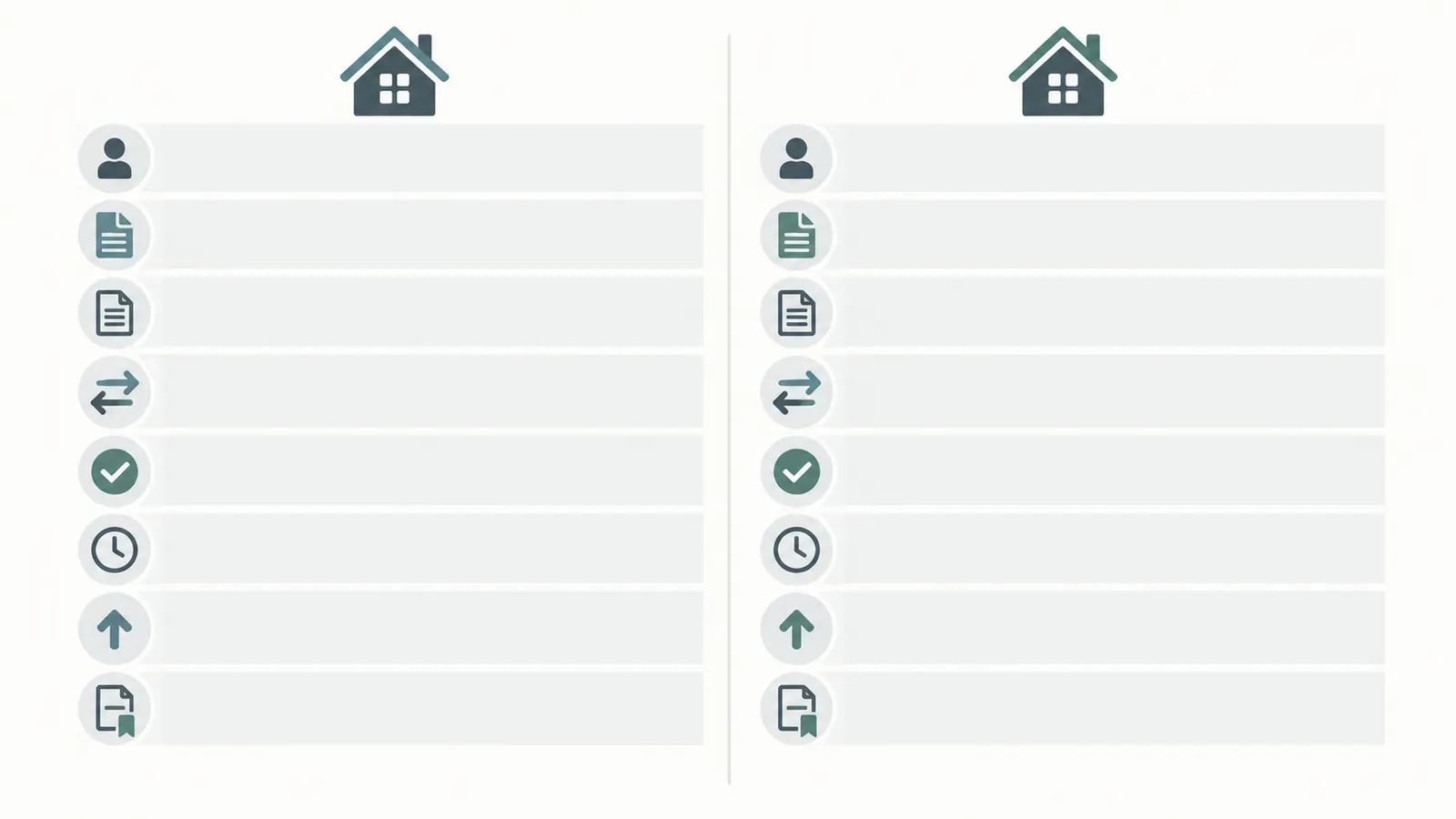
For each row, you should be able to answer seven questions:
- Who is accountable for the next action, not merely copied on the email?
- What event or condition starts the action?
- What record is created, where is it stored, and who receives it?
- What handoff follows, and what information must survive that handoff?
- What verifies completion: a drawing revision, photo record, test report, inspection result, signed approval, schedule update, or another defined item?
- How quickly must the responsible person acknowledge, decide, or escalate?
- Where is the duty located in the contract, exhibit, schedule, or written procedure?
The seventh question prevents a common false comparison. A contractor may answer every question in a meeting but leave the answer outside the agreement. A promise can still be useful evidence about the team, but it is not yet a contract mechanism. Ask the contractor to identify the exact article, exhibit, responsibility matrix, schedule note, submittal procedure, or quality-control plan where the commitment will live. If the answer is “we handle that informally,” mark the row unresolved.
Do not award points for the number of meetings alone. A weekly meeting without an agenda, decision log, open-item owner and distribution rule can create more conversation without more control. Conversely, a short meeting supported by a dependable log, current schedule, inspection record and written change path may be adequate. Compare the reliability and traceability of the system, not the contractor’s communication personality.
Prepare one comparison packet for every contractor #
Before comparing communication or quality control, give every contractor the same decision inputs and define what you, the design team, and the public authority each control. A fair comparison is impossible when one bidder prices a complete coordination service and another assumes the homeowner will schedule inspections, answer subcontractor questions, or purchase long-lead materials.
Assemble the owner-side inputs
Create one controlled packet. Number the files and keep the same revision of each file in every bidder’s package. Include, as applicable:
- The site address, municipality, county and state; parcel identifier if relevant; known access, utility, easement, soil, flood, wildfire, historic-district or neighborhood constraints; and the name of the building department or other authority having jurisdiction (AHJ).
- The owner’s availability, preferred communication channels, backup contact, time zone, language or accessibility needs, and the days when decisions cannot be made.
- The latest architectural, structural, civil, mechanical, electrical and plumbing drawings, with revision dates and a clear statement of whether they are permit, bid or construction documents.
- Specifications, finish schedules, equipment schedules, allowances, alternates, owner-furnished items and exclusions. Identify what is selected, what is merely budgeted, and what remains to be designed.
- The permit status, anticipated permit set, known plan-review comments, required inspections listed by the local AHJ, special inspections or testing known to the design team, and any lender or insurance documentation requirements.
- The owner’s target move-in date, constraints tied to financing or a lease ending, known procurement risks, and a statement that the date is a planning input rather than a guarantee.
- The desired meeting rhythm, ordinary response window, emergency definition, preferred file-sharing location, naming convention and retention period.
- The questions you want answered before signing: who pulls permits, who coordinates the design team, who schedules inspections, who maintains the master schedule, who records concealed work, who can direct a subcontractor, who may approve a change, and what the owner must never authorize in the field.
Use the same version of this packet. If a bidder receives a later drawing or an additional soil report, send it to every bidder and record the issue date. The purpose is not to force identical prices; the purpose is to ensure differences in price and responsibility are visible rather than caused by unequal information.
Separate roles before you score them
For this matrix, keep public approval, private contract performance, design responsibility, manufacturer instructions, warranty duties and workmanship review as separate verification questions. A contractor’s quality-control plan cannot take over a public building official’s authority, and an AHJ record should be treated as evidence of the inspection performed within that authority—not as a substitute for the other obligations in the private agreement. This separation is Brictale’s comparison recommendation; the local AHJ and the executed contracts determine the actual duties. AIA’s A503 guide likewise explains that project-specific requirements vary by locality and belong in identified contract locations rather than in an assumed national template. Read the A503 Guide for Supplementary Conditions.
The architect or engineer may have design responsibilities and may observe work, but the professional agreement controls the scope. Observation is not necessarily continuous inspection or a warranty of construction. The owner may have selection and timely-decision duties but should not become the uncontrolled site supervisor merely because the contractor’s plan is incomplete.
Ask every bidder to draw or list the proposed chain:
Owner → contractor’s project manager → superintendent or site lead → subcontractor foreperson → designer or engineer when a design question exists → testing or inspection agency when specified → AHJ when a public inspection is required.
Then ask who can speak for each role. “The office,” “our team,” and “the inspector” are not accountable names. A named person can change during a project, so the contract should also state the replacement and notice process. The question is not whether the contractor has a large staff. It is whether the job has a known decision path at 7 a.m. on a concrete-pour day, after a concealed condition is found, or when the owner is unavailable.
Verify the governing jurisdiction before using a rule
Put the actual project state, county and city or town on the front of the comparison packet. Ask the local building department which permit applications, inspection stages, special inspections, certificates, postings and closeout documents apply to the proposed work. Ask the state licensing or registration office how to check the contractor’s current status, classification, bond, insurance or complaint information where available. Keep a dated copy or URL of each lookup.
The following examples show why this step matters:
- California: CSLB says a written contract is required for home-improvement projects over $500 and describes specific contract content and written, signed change-order practice. Treat that as California guidance; do not copy its threshold or payment rule into another state without checking that state’s law and the project type. See the California CSLB explanation of home-improvement contracts.
- New York: The New York Attorney General says New York home-improvement contracts should include a timeline, payment schedule, and specific work and materials, and tells homeowners to check with the local building and codes office for permits. Local licensing requirements also vary within New York, so state guidance is not a substitute for the actual municipality. Read the New York AG home-improvement fact sheet.
- Oregon: Oregon CCB publishes residential contract and notice tools, recommends putting agreements and changes in writing, and has a defined complaint process with notice and timing rules. Those are Oregon processes, not a national escalation template. Review Oregon CCB contractor and consumer tools.
- Massachusetts: Massachusetts OCABR says its HIC law covers work on an existing, owner-occupied Massachusetts residential property with one to four units and explicitly excludes new construction. Therefore, the HIC written-contract, payment and permit examples are covered existing-home examples, not rules to apply to this custom new home. Check the Massachusetts HIC scope. For a new home, identify the actual Massachusetts municipality or other AHJ and confirm the applicable new-construction contract, licensing, permit, payment, lien and closeout requirements before relying on any HIC material.
Use these sources to identify questions and jurisdiction boundaries, not to make a legal conclusion about your contract. Before signature, ask a local attorney or other qualified adviser if the contract, financing, lien, insurance, arbitration, warranty or notice provisions carry consequences you cannot evaluate.
Compare the communication architecture #
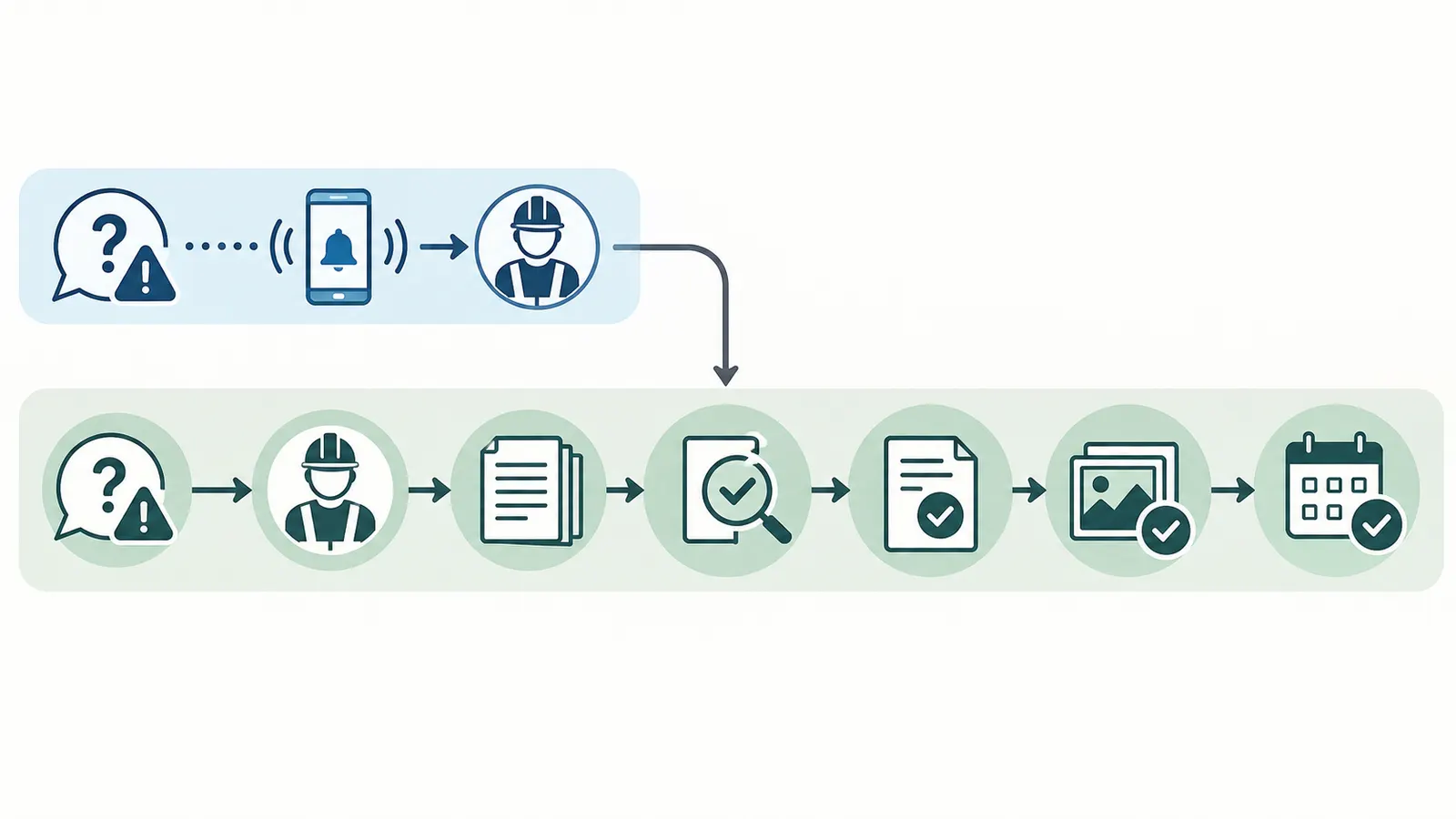
The stronger communication plan is the one that turns a question into a controlled decision with a defined recipient, record and handoff. “Weekly updates” should be only one line in the plan. Ask what the update contains, who prepares it, whether it includes schedule variance and open decisions, how quickly urgent issues are acknowledged, and what happens when no decision is made.
Use this communication matrix
Give the same table to each contractor. Ask the contractor to complete the blank cells rather than accepting a brochure or verbal summary. If a contractor leaves a duty unassigned, record that gap explicitly; it means the responsibility remains unresolved before signing.
| Event or question | Accountable person | Required record | Handoff and verification | Response or decision window | Escalation if unresolved | Contract location |
|---|---|---|---|---|---|---|
| Owner asks about a finish, allowance or selection | ||||||
| Field crew finds a drawing conflict | ||||||
| Subcontractor needs a design clarification | ||||||
| Concealed work is ready for observation or inspection | ||||||
| Public inspection is required | ||||||
| Test, report or manufacturer instruction is missing | ||||||
| Owner requests a change | ||||||
| Contractor discovers a cost or schedule impact | ||||||
| Work appears inconsistent with a drawing or specification | ||||||
| Work may affect a critical-path activity | ||||||
| An owner or designer disagrees with the contractor’s response | ||||||
| A safety, water intrusion, structural or electrical concern appears | ||||||
| A warranty or closeout item remains open |
For each row, ask the contractor to distinguish “acknowledge,” “investigate,” “decide,” and “resolve.” A 24-hour acknowledgment is not a 24-hour repair. A same-day investigation is not permission to conceal the work. A response window should state what happens if the responsible person cannot decide: the issue is escalated to a named role, the affected work pauses if safe and contractually authorized, an interim protection is installed, or the work proceeds only under a written direction.
Test channels against the information they lose
Email, text messages, project-management software, phone calls, site meetings, photographs and marked-up drawings each have strengths and failure modes. The comparison question is not which channel is fashionable; it is whether the channel preserves the information needed later.
For email, ask whether the subject line must include a project and issue number, who must be copied, how attachments are versioned, and whether the message enters the project record. For text messages, ask whether the contractor exports or transcribes decisions into the formal log. A text can alert someone quickly but can be difficult to search, distribute, authenticate or connect to a drawing revision. For a phone call, ask who writes the follow-up and by when the other party must correct the summary. For an application, ask who owns the account, whether the owner can export records, what happens if a subscription ends, and whether subcontractors have access to the current revision.
A credible plan defines a source of truth. It might be a decision log, submittal register, request-for-information log, change-order log, daily report archive, schedule file and photo record. The plan should also identify who may post, who may approve, and how a superseded document is marked. A shared folder full of files with no revision convention is not the same as a controlled record.
Compare the recurring meeting, not just its frequency
Ask for a sample agenda and sample minutes. A useful owner-contractor meeting normally has a current schedule, decisions due, unresolved questions, submittals and selections, inspection status, quality concerns, safety or access constraints, payment or change status, and a clear list of actions with owners and due dates. It should state whether minutes are informational or constitute a formal notice under the contract.
Ask who attends for the contractor and who has authority to speak for the subcontractors. If the project manager attends but cannot obtain a decision from the field superintendent, the meeting may produce a queue rather than a resolution. If the superintendent attends but cannot commit cost or schedule, the owner needs a defined route to the project manager. If the designer attends, confirm whether the designer’s role is observation, contract administration, design clarification, or something else in the agreement.
Compare the time cost to the owner. A plan that requires the owner to review 150 pages of daily reports each week may be less usable than a concise weekly dashboard linked to the complete record. Ask for the minimum owner action required: select, approve, acknowledge, supply information, or merely receive. Write a substitute process for vacations, illness, travel and lender delays.
Score accountability with a bounded method
The matrix is not a scientific rating system. It is a way to make omissions visible. For each row, use a simple 0-to-3 completeness score:
- 0 — absent: no owner, trigger or usable process is identified.
- 1 — described: the contractor describes a process but leaves the responsible person, record, timing or escalation unclear.
- 2 — named: the owner, trigger, record, handoff and response window are named, but verification or contract location is incomplete.
- 3 — contract-ready: all seven cells are named, the contractor identifies the relevant exhibit or clause, and the team demonstrates the process in a scenario.
Calculate the completeness percentage as:
sum of row scores ÷ (number of rows × 3) × 100
Illustrative example: Team A completes 10 rows at scores 3, 3, 2, 2, 2, 1, 2, 3, 1 and 2. The sum is 21. The maximum is 30, so completeness is 21 ÷ 30 × 100 = 70%. Team B scores 2, 2, 2, 2, 2, 2, 2, 2, 2 and 2, also a sum of 20, or 66.7%. Team A is not automatically the better choice: its two scores of 1 may concern concealed work or change authority, while Team B may have no critical gaps. Use a red-flag override for unassigned permit, safety, structural, electrical, concealed-work, payment or change responsibilities rather than letting an average hide them.
Do not turn the result into a fake precision such as “Team A is 3.3% safer.” Use the percentage to prompt a conversation, then read the actual rows. A single missing escalation path can matter more than several well-written routine-update rows.
Compare quality control, inspections, and records #
The stronger quality-control plan states how the contractor proposes to prevent, detect, record and correct nonconforming work, while keeping the roles assigned by the design agreement, project documents, testing plan and local authority distinct. It does not merely say “we stand behind our work.” Ask what happens before a trade covers work, what evidence is produced, who reviews it, and what happens if the work is not accepted.
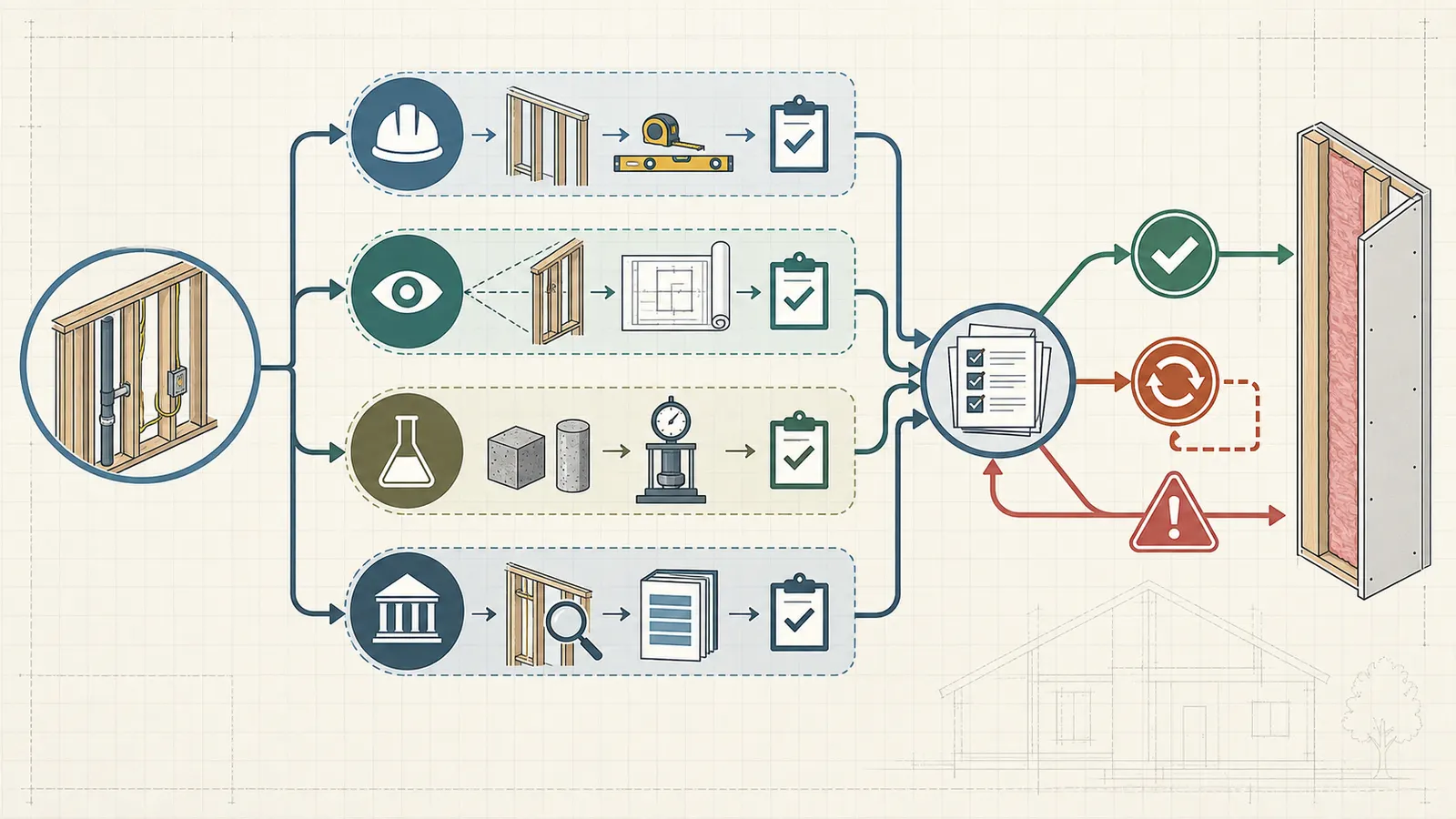
Distinguish four different kinds of verification
Use these categories when a contractor says “inspection.”
- Contractor self-check: in this comparison framework, ask how the superintendent or trade foreperson checks work against drawings, specifications, manufacturer instructions and the contractor’s own checklist. This is the builder’s proposed internal control; the contract and project documents determine what the team actually promised.
- Design-team observation or review: an architect or engineer performs the role described in that professional agreement. AIA guidance for its field-report framework describes general familiarity with observed progress and quality and says the architect is not required to make exhaustive or continuous on-site inspections unless the agreement says otherwise. See AIA’s field-report guidance on the limits of observation. Because that is a limited observation role unless the agreement says otherwise, do not use a field report as a universal acceptance record.
- Testing or special inspection: ask whether the project documents or the applicable jurisdiction require a specified test or special inspection, who the contract names to arrange it, what qualification or approval the applicable jurisdiction requires, and what report will be delivered. Do not assume that every project uses the same trigger, provider or report.
- Public inspection: ask the local building department or other authority having jurisdiction which permit inspections apply to this project, who requests and attends them, and how results and corrections enter the project record. Do not infer a national inspection scope from the label “public inspection.” A pass is evidence of the local inspection performed within that authority; it does not replace the private contract’s quality, design, warranty or closeout requirements.
These four labels are Brictale’s comparison framework, not a universal legal taxonomy or a determination that one inspection proves workmanship, design adequacy or code compliance. Use the applicable state rule, adopted code, local administrative requirements, permit, project documents and professional agreements to fill the cells for the actual home. The framework’s purpose is to expose different owners and records before signing.
If a contractor writes “we coordinate all inspections,” ask which of these four it means. “Coordinate” could mean request a time, prepare the site, attend, receive the result, correct a failure, or all five. Put the exact actions into the matrix.
Identify hold points before concealment
A hold point is a defined stage where the responsible team does not proceed to the next covering or irreversible step until a specified check, record or direction is complete. Examples may include reinforcement and embeds before concrete, framing before insulation, rough plumbing or wiring before walls close, flashing before cladding hides it, air-sealing before finishes, or equipment connections before commissioning. The correct hold points depend on the drawings, specifications, manufacturer instructions, testing plan and local requirements; this guide does not determine them for your home.
Ask each contractor to mark the proposed hold points on the schedule and describe:
- The exact work that must be ready.
- The person who declares it ready.
- The documents, checklist, photographs, measurements, test or observation required.
- Who must receive notice and how much lead time is required.
- Whether the designer, testing agency, owner or AHJ must attend.
- What happens if a reviewer is unavailable.
- Who has authority to release the hold point.
- What record proves release, conditional release, rejection or rework.
- Who pays or bears time for uncovering or rework when required.
Never infer that photographs prove compliance. A photo can show that a location was photographed at a stated time; it may not reveal hidden conditions, dimensions, materials, fastening, continuity, installation sequence or code compliance. Ask what the photo is intended to verify and what professional or public inspection remains necessary.
Compare the quality concern path
Ask both contractors to show the complete path for a concern:
Observe → protect the condition → record location and revision → notify accountable person → determine whether work should pause → compare with the controlling document → obtain qualified design or inspection input if needed → decide correction or acceptance → verify correction → close the record.
The person who notices a concern should not be expected to diagnose a structural or electrical condition. A homeowner can document what was observed and keep people away from an unsafe area; the contractor, designer, engineer, electrician, or other qualified professional must determine the technical response within their role. An owner should not direct a worker to remove, energize, enter, climb, excavate, or cover questionable work to “see what is wrong.”
Ask who can issue an immediate safe-work instruction, who decides whether to stop or protect work, and how that direction is documented. For a potential structural issue, energized electrical condition, gas concern, fall hazard, excavation hazard, confined space, contamination, active water intrusion near electrical equipment, or pressure-related condition, use the contractor’s emergency procedure and qualified professionals. Pressure-related conditions include piping, tanks, cylinders, hydronic or other pressurized systems and testing. Do not loosen fittings, open valves, operate a pressure-control device, enter a hazardous area, perform a pressure test, or infer a safe pressure or leak condition from a photograph or record. Protect people from the area when safe to do so, stop or hold affected work through the responsible site role when authorized, and escalate to the qualified professional who owns the system and test method. Do not make a remote assessment from a photograph.
A quality-control comparison table
| Quality-control topic | Minimum question for both teams | Evidence to request before signing | Unresolved-risk signal |
|---|---|---|---|
| Drawing and specification control | Which revision is in the field and who removes superseded copies? | Sample drawing register and revision procedure | Crew can rely on an old plan or verbal correction |
| Submittals | Who submits product data, samples and substitutions, and who reviews each type? | Submittal log with status, reviewer and due date | “The supplier handles it” with no owner or record |
| Concealed work | Which stages are hold points and who releases them? | Hold-point schedule, notice template and photo/report example | Covering work is left to crew judgment |
| Trade self-check | What does the foreperson check before requesting review? | Trade checklist tied to documents | “Our people know what they are doing” only |
| Testing and special inspection | Which tests or special inspections are known, who hires and pays, and who receives results? | Responsibility schedule and sample report routing | Testing is an allowance with no trigger or owner |
| Public inspections | Who requests, attends, records and responds to the AHJ? | Permit/inspection register with status fields | Contractor assumes owner will call or no one owns failed inspection |
| Nonconforming work | How is a defect or deviation logged and corrected? | Nonconformance or punch log with closure evidence | Corrections are verbal or disappear into a later invoice |
| Manufacturer requirements | Who obtains current installation and commissioning instructions? | Equipment/submittal record and commissioning checklist | Warranty conditions are discovered after installation |
| Closeout | What record is delivered at completion? | Draft closeout index: approvals, reports, warranties, as-builts, manuals | “You will get a folder” with no contents or timing |
Compare the quality plan against the actual complexity of the home. A simple repetitive scope may need fewer formal reviews than a home with structural transfers, unusual envelope details, complex mechanical systems, owner-furnished equipment, multiple jurisdictions or a tight sequence. A larger binder is not automatically safer. The right question is whether the plan catches the project’s likely irreversible decisions.
Evidence is a handoff, not a photo dump
For every record, define a minimum useful set of metadata: project and location, date and time, person creating it, work area, drawing or specification revision, related issue or inspection number, result, follow-up owner and status. A photo should have a location and purpose. A test report should be tied to the material, sample or assembly tested. An inspection result should identify the authority, stage, status and correction path. A change record should connect scope, price, schedule and approval.
Massachusetts consumer guidance illustrates why this discipline matters: its discussion of problems tells homeowners to consider contracts, receipts, communications and photos when documenting a dispute, while also explaining that a complaint process may discipline a contractor rather than produce a monetary award. Read the Massachusetts guidance on what to document when home improvements go wrong. This supports keeping records; it does not make a record a guarantee of recovery or proof that work complies with code.
Compare schedules, changes, and escalation before they become disputes #
The better plan connects communication to the schedule and contract. It identifies which decisions affect the critical path, what notice is required, who can approve a change, how cost and time are separated, and what occurs when the parties disagree. A weekly schedule with no decision register can still conceal a risk; a change-order process with no time-impact analysis can preserve price clarity while losing the completion date.
Require a schedule that can be checked
AIA Contract Documents guidance describes a detailed construction schedule as including commencement, interim milestones, substantial completion, work by construction activity and the time required for each portion, with revisions as conditions change. See AIA guidance on managing construction administration. The article is educational guidance, not a universal law. Your contract may use different terms, but your comparison should still ask whether planned and actual progress can be compared.
Request a bid-level schedule that names at least:
- Notice to proceed or commencement assumption.
- Design, permit and procurement prerequisites.
- Long-lead selections and the date by which the owner must decide.
- Sitework, foundation, framing, enclosure, rough-ins, finishes, commissioning and closeout activities appropriate to the project.
- Dependencies between activities, not only a list of dates.
- Inspection and testing activities as tasks, not invisible assumptions.
- Owner decisions and designer responses as activities with durations.
- Allowances, alternates and owner-furnished materials with responsibility and delivery dates.
- Weather or site assumptions, with a clear distinction between a contingency and an entitlement to extra time.
- Substantial completion, final completion, occupancy or certificate milestones as the contract defines them.
Ask who updates the schedule, how often, what file is controlling, and how the contractor reports variance. If the schedule changes, require the old and new dates, changed logic or cause, affected activities, mitigation options, owner decision required, and any notice required by the contract. The point is not to demand an impossible prediction. It is to make the consequence of a decision visible while there are still options.
Separate a question, a request for information, a change, and a claim
These terms are often mixed together, creating disputes:
- A question asks what an existing document means.
- A request for information is a controlled request for clarification or missing information, with a response owner and due date.
- A change modifies scope, material, sequence, price, time or another contract term.
- A notice tells the other party that an event may affect rights or duties under the contract.
- A claim is a demand for an adjustment or other relief under the agreement.
Your plan can use one software platform for all of them, but it should not allow a casual text to be mistaken for a signed change order or formal notice when the contract requires something else. A contractor may need to proceed with an emergency protective action before a full change is priced; write the emergency route and the later documentation path rather than leaving it to improvisation.
California CSLB says a change to price or scope in the California home-improvement context must be a written change order signed by customer and contractor before the changed work, and that it becomes part of the contract. See CSLB’s change-order guidance. Massachusetts OCABR similarly says modifications to a covered contract must be in writing and agreed by both parties. See the Massachusetts sample contract guidance. These state-specific statements show why “we will sort it out on the invoice” should be a comparison red flag; they do not tell you which rule governs your project.
Make schedule impact explicit
For every proposed change, require the same minimum fields:
- Change identifier and date.
- Trigger: owner request, design clarification, concealed condition, code or AHJ direction, material unavailability, contractor means and methods, error or another defined cause.
- Existing contract requirement and proposed revised requirement.
- Affected drawings, specifications, selections and subcontracts.
- Added or deleted cost, with assumptions, unit prices or allowances.
- Added, deleted or unchanged calendar days.
- Affected activities and whether any are on the current critical path.
- Mitigation options, including resequencing or alternate materials, with tradeoffs.
- Approval authority and signatures required before work.
- Updated schedule, payment schedule, inspection plan and closeout record.
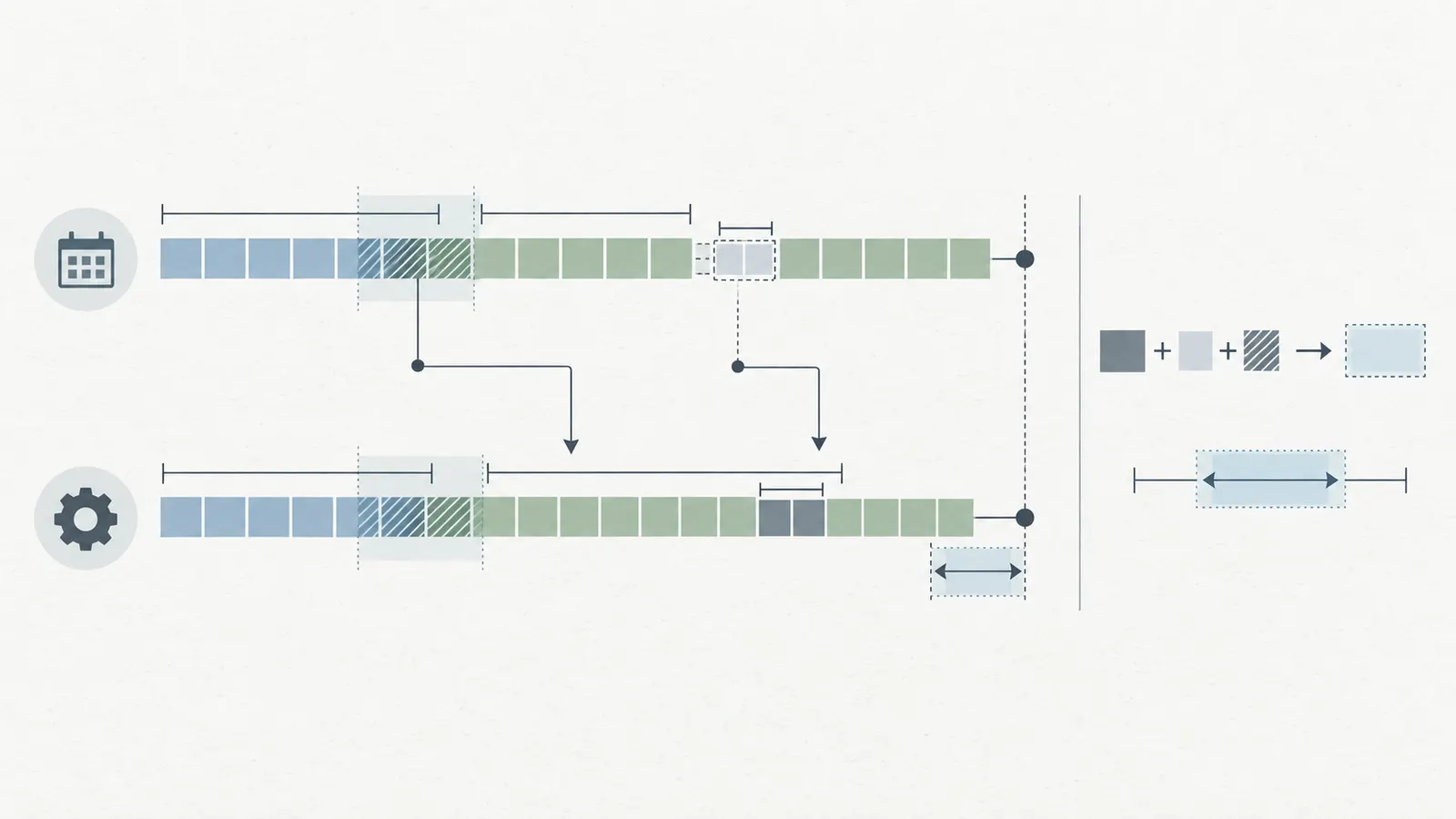
The schedule effect is not always equal to the number of extra workdays. Let direct duration be the added work duration, overlap be the portion that can occur during existing work, and critical-path effect be the resulting completion change after dependencies and available float are considered. An illustrative formula is:
completion change = direct duration − overlap − usable float + dependency effects
This is a planning model, not a contract formula. Example: a selected tile change adds 8 calendar days of procurement. If 5 days overlap with framing and the finish activity has 2 days of usable float, a simple estimate is 8 − 5 − 2 = 1 day of completion effect. If the tile is on the only bathroom path and cannot be resequenced, the dependency effect may increase the actual impact. The contractor should show the logic, not merely assert “no impact” or “two weeks.”
Sensitivity: if the owner decides 4 days later than assumed, the same example becomes 8 − 1 − 2 = 5 days before considering additional dependencies. If the contractor can install a compliant, approved alternate with a 3-day procurement duration, the estimated effect may become 3 − 0 − 2 = 1 day, but only if design, owner, supplier, warranty and AHJ requirements permit the alternate. The example is illustrative. It does not determine entitlement, compliance or a contractor’s actual productivity.
AIA guidance on construction delays explains that accurate schedule relationships help identify the critical path and warns that missing a contractual notice deadline can affect a party’s ability to seek additional time or compensation even when a delay may be legitimate. Read the AIA discussion of delays, notices and critical-path records. Ask each contractor to identify the actual notice method and deadline in the proposed contract rather than copying an AIA deadline into your agreement.
Compare escalation as a ladder
Escalation should be progressive and proportionate, not a threat that every disagreement goes directly to litigation. A pre-signing plan might use this ladder:
- The person who observes the issue records the facts and protects the condition.
- The superintendent or project manager acknowledges it and identifies the immediate action.
- The contractor, designer or qualified consultant determines whether the issue is a technical clarification, nonconformance, change, safety matter or potential delay.
- The responsible decision-maker issues written direction or explains what information is missing.
- The owner and contractor review cost, time, quality, access and contract implications.
- A senior contractor representative and owner representative review unresolved material issues.
- The contract’s notice, cure, mediation, arbitration, termination or court route is used only as the agreement and applicable law provide.
Put time windows on the first four steps and a different deadline for senior review. State that emergency safety actions are not delayed by an administrative meeting, but are documented as soon as practical. State which communications are ordinary project records and which must be delivered by a formal method to preserve a contractual right.
Oregon shows why a written escalation plan needs jurisdictional precision. For covered residential complaints, Oregon CCB says a homeowner generally must send a pre-complaint notice by certified mail to the contractor’s address of record at least 30 days before filing, keep proof, and observe applicable filing limits. Review Oregon CCB’s complaint and pre-complaint notice guidance. That process is not a national step and is not a substitute for the contract’s notice provisions, a safety response, a demand for correction, or advice about a live dispute.
Run two scenario tests on every proposed team #
Do not choose a plan from its description alone. Give each contractor two short scenarios based on the same drawings and schedule. Ask the contractor to walk through the first 24 hours, the first seven days, the records created, and the person with authority at each handoff. Record the answers in the matrix. A team that cannot demonstrate the process before signing is asking you to discover it during construction.
Scenario one: concealed-work concern before cover
Illustrative facts: The framing crew is ready for insulation. The homeowner’s site photograph appears to show a duct passing through a location that may conflict with a structural member or an approved drawing. The work is not yet covered. The homeowner is not qualified to decide whether the installation is acceptable.
Ask the contractor:
- Who receives the homeowner’s notice, and what is the emergency contact if the work is about to be covered?
- What should the owner say without diagnosing the condition? A factual message might identify the room, grid or wall, photo time, drawing revision and observation: “Please confirm the duct location relative to the current structural drawing and mechanical-plan revision before this area is covered.”
- Who tells the crew to hold, protect or proceed, and under what authority?
- Who checks the current architectural, structural and mechanical documents?
- If a design clarification is needed, who sends it to the architect or engineer, and who pays or schedules that review under the proposed contract?
- Is a site observation, special inspection, testing or AHJ inspection required? Who requests it?
- What record is created: RFI, nonconformance report, field report, marked-up drawing, photo log, change order or another document?
- What evidence closes the issue: written design response, corrected installation, inspection result, photo set, updated as-built or a combination?
- How is the schedule updated if insulation or downstream work is delayed?
- How does the contractor prevent a different crew from covering the same condition elsewhere?
Illustrative pass: The superintendent acknowledges within the agreed window, records the location and revision, directs safe protection without asking the homeowner to enter or manipulate the work, confirms the current documents, obtains written design direction where needed, requests any required inspection, logs the disposition, verifies correction and updates the schedule if affected. The owner receives the record through the agreed channel.
Illustrative weak answer: “Send a text to the foreman and we will look at it.” That may be a reasonable first alert, but it omits whether the foreman can pause or direct work, what document controls, who decides technical acceptability, what evidence is delivered, and how a missed response escalates.
What not to infer: A photograph cannot prove the duct is safe, the structural member is undamaged, the installation meets code, or the contractor is responsible for a design error. A public inspection pass, if one exists, does not necessarily answer a private contract or design question. Ask the qualified person who owns the determination.
Scenario two: owner change with schedule impact
Illustrative facts: The owner wants to replace a specified window package after the contractor says the current package is already in procurement. The replacement has a different lead time and may affect flashing details, energy documentation, cost, and enclosure sequence.
Ask the contractor:
- Who receives the request and records it as a proposed change rather than an instruction to buy?
- What information is required before pricing: product, performance, dimensions, finish, warranty, supplier availability and design review?
- Who checks compatibility with drawings, structure, water management, energy requirements and manufacturer instructions?
- What price basis is used, and what already ordered material, restocking cost or cancellation exposure is included?
- How does the contractor calculate direct duration, overlap, float and critical-path effect?
- What alternate sequence could preserve the completion date, and what quality or cost tradeoff would it create?
- Which architect, engineer, lender, insurer, AHJ or supplier must approve or acknowledge the change?
- What signatures or formal notices are required before ordering or installing?
- What happens if the owner does not approve by the stated decision date?
- How will the schedule, payment schedule, submittal log and closeout documents be updated?
Illustrative sensitivity: Assume a replacement window has a 28-day quoted lead time, 10 days overlap with planned interior work, and 6 days of usable float in the enclosure sequence. A simple planning estimate is 28 − 10 − 6 = 12 days of potential completion effect. If the owner decides 7 days after the request, the estimate could become 19 days before other dependencies. If the supplier’s “28 days” excludes approval or delivery, the uncertainty is larger. The number is illustrative; require the contractor to state the source, unit, date and assumption instead of presenting it as a guaranteed result.
Illustrative pass: The contractor separates request, design review, price, procurement commitment and approval; identifies the responsible people; shows a dated schedule impact; offers a mitigation option; and does not treat a conversational preference as authorization to order or install. The contract exhibit identifies the change form and how signed approval alters price, time and scope.
Illustrative weak answer: “We can probably make it work; we will let you know if it costs more.” That answer transfers design, procurement, cost and schedule risk to the owner without a decision gate.
Compare the scenario results without pretending they are scores of performance
Use a scenario record with these columns:
| Test | Team A answer | Team B answer | Evidence promised | Unassigned decision | Pre-signing action |
|---|---|---|---|---|---|
| Concealed-work concern | |||||
| Schedule-impacting owner change |
The best result is not necessarily the longest answer. Prefer the answer that is specific enough to execute, leaves a qualified person responsible for technical judgments, preserves the owner’s rights and decisions, and identifies what will be recorded before the work becomes irreversible. If both answers contain a gap, make the gap a contract negotiation item or keep comparing contractors. Do not fill the gap yourself by promising to be available at all times or by directing trades outside the agreed chain.
Convert the comparison into contract exhibits before signing #
Choose a contractor only after the winning process is written into a contract or clearly incorporated exhibit. A proposal may describe intent; the signed agreement should identify the documents that control, the order of precedence when they conflict, the people responsible, the records delivered, the approval path and the remedy or escalation path for missing performance.
Build a pre-signing responsibility schedule
Turn the matrix into a short exhibit with one row per recurring responsibility. A useful row contains:
| Responsibility | Trigger | Contractor owner | Owner or design-team action | Record and recipient | Verification | Response window | Escalation | Contract reference |
|---|---|---|---|---|---|---|---|---|
| Maintain project schedule | Weekly and after a material change | Named project manager | Review decisions due and constraints | Revised schedule and variance log | Compare current and prior logic and dates | Proposed number of business days | Senior contractor and owner representatives | Schedule exhibit and general conditions |
| Coordinate public inspections | Before each required stage | Named superintendent | Provide access and timely owner information | Inspection register and result | AHJ record plus correction closeout | Local AHJ timing plus contract notice | Project manager | Permit responsibility clause |
| Release concealed-work hold point | Work ready before cover | Named superintendent | Receive record or arrange agreed observer | Notice, checklist, photos and result | Named reviewer or qualified inspector | Agreed lead time | Project manager and designer | Quality-control exhibit |
| Answer design clarification | Question affects work | Named contractor coordinator | Designer responds within agreed role | RFI with revision and disposition | Current drawing or written direction | Agreed acknowledgment and answer windows | Senior project manager and designer | RFI procedure |
| Approve scope or price change | Proposed change | Named contract signatory | Owner signs only after reviewing | Signed change order and schedule impact | Updated contract sum, time and documents | Before changed work except defined emergency route | Contract dispute route | Change-order clause |
| Close quality concern | Nonconforming or disputed work | Named project manager | Review evidence and engage adviser if needed | Issue log, correction and closure evidence | Reinspection, test, design response or acceptance | Agreed correction window | Senior review and formal notice route | Correction and claims clauses |
Use role names and a separate contact sheet rather than relying on a person’s continued employment. State who can appoint a replacement and how the owner is notified. Require the contractor to ensure subcontractor agreements flow down the relevant communication, inspection, record and change obligations. AIA’s flow-down guidance explains that prime-contract obligations can pass to subcontractors and recommends identifying the terms and how conflicts are resolved. Review AIA’s flow-down explanation. Do not assume a subcontractor has seen the owner-contractor agreement.
Identify contract documents and precedence
List the proposal, executed agreement, general conditions, supplementary conditions, drawings, specifications, schedules, allowances, alternates, responsibility matrix, quality-control plan, permit responsibility, inspection register, payment schedule, change-order form, warranty, closeout list and any owner-furnished-equipment schedule. For each, show revision, date and whether it is binding or informational.
Ask what happens when the proposal says one thing and the specifications say another. Ask whether a later meeting minute can change the contract, and if so, what signatures are required. Ask whether the contractor’s quality plan is a contractual exhibit or merely an internal promise. Ask how a manufacturer instruction, AHJ correction, design clarification or lender requirement enters the controlled set.
California CSLB tells California homeowners to put promised scope and changes in writing, and New York AG guidance similarly emphasizes written scope, materials, schedule and price. Compare the California contract requirements with the New York AG fact sheet. AIA’s A503 guide adds a useful contract-administration distinction: project-specific requirements may belong in bidding requirements, the owner-contractor agreement, supplementary conditions or specifications, and the guide is not a universal supplementary-conditions contract. Read AIA’s A503 guidance on where project-specific terms belong. The useful national lesson is not that California, New York and AIA documents have the same law; it is that the comparison should not depend on unwritten sales promises. The exact documents and rules still depend on the governing jurisdiction and contract.
Connect payment to observable, documented progress
Do not use a communication score to excuse weak payment controls. Compare whether each payment milestone identifies the work or materials it represents, the required supporting records, the process for disputed line items, and the relationship between a change order and the payment schedule. Ask whether the schedule of values matches the construction schedule and whether stored materials, deposits, allowances and owner-furnished items are handled explicitly.
State rules differ. For California home-improvement projects, California CSLB says the written payment schedule must be detailed and payments cannot exceed the value of work performed, except for the separately limited down payment. For covered New York home-improvement work, the New York Attorney General says an agreed progress-payment schedule must bear a reasonable relationship to work done, materials purchased or other project-related costs, and its consumer guidance advises holding final payment until completion and required inspections and certificates of occupancy are finalized. Massachusetts consumer guidance says a contractor cannot collect more than one-third of the total charge in advance for a covered home-improvement contract, except for special-order materials, and cannot demand final payment until the contract is fully performed to the homeowner’s satisfaction. Read the Massachusetts advance-payment guidance. But Massachusetts OCABR separately states that the HIC law excludes new construction, so this is a covered existing-home example—not a payment rule for this custom home. Check the Massachusetts HIC scope before using the example.
These are state-specific examples, not a national formula. Before signing, check the actual state law, local licensing or registration rules, lender requirements, lien notices, insurance and the contract with qualified advice. Keep payment, quality acceptance, public inspection, substantial completion and final completion as distinct concepts unless the contract deliberately and lawfully defines them together.
Make closeout part of the original plan
Quality control is incomplete if the owner cannot operate or maintain the home. Before signing, require a closeout index that identifies who supplies and verifies:
- Final approved drawings or as-built information to the extent required by the contract.
- Permit sign-offs, certificates, inspection reports and special-inspection reports where applicable.
- Product data, model numbers, serial numbers, installation records and manufacturer instructions.
- Warranties, start dates, exclusions, registration duties and the responsible party for warranty calls.
- Commissioning, startup, balancing, testing or performance reports required by the design or equipment instructions.
- Maintenance schedules, filters, access requirements and recommended service intervals.
- Unresolved punch items, responsible parties, due dates and withheld or reserved amounts if the contract provides for them.
- Keys, access credentials, controls, shutoff locations, safety information and emergency contacts.
- A final photo or record index that helps locate concealed infrastructure without implying that photographs replace drawings or inspections.
Ask when each item is due, not merely whether it will be delivered “at the end.” A missing equipment model number can block maintenance; an unrecorded valve or cleanout can turn a future repair into destructive investigation; an open warranty item can be lost during the move. The same owner, record and escalation logic used for construction should continue through handover.
Final jurisdiction and contract gate
Before you sign, complete this gate for the actual project:
- State: identify the governing state and read the state licensing, registration, home-improvement, payment, lien, change-order, warranty and complaint guidance that applies to the project type.
- Local authority: identify the city, county, township or other AHJ; ask what permits, inspections, special inspections, postings, certificates and closeout records apply.
- Contractor status: use the actual state and local license or registration lookup; save the status, classification, expiration and any available bond, insurance or disciplinary information.
- Contract documents: confirm the final scope, drawings, specifications, responsibility matrix, quality plan, schedule, payment milestones, change process, notice method, dispute process and closeout list are attached or incorporated.
- Names and backups: confirm the owner representative, contractor signatory, project manager, superintendent, designer contacts, testing agency and emergency route, plus how replacements are notified.
- Scenario results: make sure the concealed-work and schedule-change paths work on paper and have no red-flag unassigned responsibility.
- Advice: obtain local legal, design, engineering, insurance or construction-administration advice for issues beyond your competence. This article cannot review your contract or determine whether a clause is enforceable.
Massachusetts HIC resources tell covered existing-home owners to clarify permit responsibility, but the same Massachusetts resource excludes new construction from that HIC scope. Read the Massachusetts HIC scope and permit guidance. New York tells homeowners to check with the local building and codes office, and California CSLB identifies written permit responsibility in its California contract guidance. See New York permit guidance and California contract guidance. These links illustrate three jurisdictions; they do not answer who should pull a permit on your new custom home without the actual AHJ, project classification and contract.
Use the matrix to make the next decision #
The next decision is not “Which contractor sounds nicest?” It is “Which proposed team has a contract-ready process for the decisions most likely to become irreversible, expensive or disputed on this home?” Start with the same inputs, fill the seven cells for each responsibility, run both scenarios, and inspect the gaps that averages hide.
Choose the team that can name a responsible person without making the homeowner a de facto superintendent; connect each trigger to a record; identify the qualified professional or public authority when a technical or code decision is outside the contractor’s role; preserve a reliable handoff; define verification; provide usable response windows; and show where the promise will live in the contract. A lower price can still be the better proposal if scope is truly equivalent and the responsibility chain is complete. A higher price can still be a poor choice if “quality control” remains a slogan with no hold points, records or correction path.
If a contractor refuses to identify who owns inspections, permits, concealed-work release, design questions, changes, records or escalation, treat that refusal as information before signature. Ask once in writing, allow a reasonable response window, and compare the answer with the other proposal. If the contract remains vague on a material responsibility, pause for qualified local advice or select a team whose agreement makes the decision process visible. The purpose of the matrix is not to guarantee a trouble-free build. It is to make the next decision with fewer hidden handoffs and a better record of what each party agreed to do.
Compact pre-signing checklist
- Both contractors received the same dated drawings, specifications, site facts, permit assumptions and owner decision constraints.
- The actual state, county and city or town are recorded, with the applicable licensing register and building department identified.
- Every communication row has an accountable person, trigger, record, handoff, verification, response window, escalation and contract location.
- The communication channel has a source of truth, version convention, backup contact and export or retention plan.
- The schedule includes owner decisions, procurement, inspections, testing, dependencies and a process for planned-versus-actual updates.
- The quality plan identifies hold points before concealment and distinguishes contractor checks, design observation, testing or special inspection, and public inspection.
- The concealed-work scenario produces a safe protection, qualified determination, written record and closure path.
- The owner-change scenario produces a price, schedule, dependency, approval and mitigation record before changed work proceeds, except for a defined emergency process.
- Permit responsibility, inspection scheduling and failed-inspection correction are assigned to named roles and checked with the AHJ.
- Payment milestones and final closeout are tied to the contract and applicable state and local rules, not only to a calendar date.
- The final contract identifies the controlling documents, order of precedence, change-order form, notice method, dispute route, warranties and closeout deliverables.
- Any unresolved legal, design, engineering, insurance, safety or code question has been taken to the appropriate qualified professional.
The matrix is complete enough to use when every checked item can be traced to a written proposal answer, contract exhibit, source-supported jurisdiction question, or explicit next action. If it cannot, the comparison is not finished.
Cite this guide
Brictale. “How to Compare Contractor Communication and Quality-Control Plans Before Signing.” Published 2026-10-06; updated 2026-10-06.
https://brictale.com/build/contractors/compare-contractor-communication-quality-control-plans · Read the Markdown version
Original contribution: Contractor Communication and Quality Responsibility Matrix. An illustrative pre-signing comparison that turns broad promises about updates and quality control into named owners, triggers, records, verification gates, response windows, escalation handoffs, and contract locations.
Sources and scope
Evidence behind this page
- California requires a written home-improvement contract for projects over $500, and CSLB says the contract should describe the work and materials, payment schedule, permit responsibility, completion date, contractor identity and license number.
Learn About Home Improvement Contracts
California Contractors State License Board guidance for California home-improvement contracts; not a national rule and not a determination that a custom-home contract is governed by every cited provision.
Accessed · Link to this claim - California CSLB says a change to contract price or scope must be made with a written change order signed by the customer and contractor before the change, and the change order becomes part of the contract.
Learn About Home Improvement Contracts
California Contractors State License Board consumer guidance; apply only to the California scope described by CSLB and confirm the governing contract and local requirements for a new-home project.
Accessed · Link to this claim - For California home-improvement contracts, the California Contractors State License Board says the written payment schedule must be detailed and payments to the contractor cannot exceed the value of work performed, except for the separately limited down payment described by CSLB.
Learn About Home Improvement Contracts
California Contractors State License Board guidance for California home-improvement projects; this is not a national rule and does not establish the governing payment terms for a custom new-home contract outside the California home-improvement scope.
Accessed · Link to this claim - New York Attorney General guidance says New York home-improvement contracts should be written and include approximate start and completion dates, contingencies, a specific description of work and materials, price and a payment schedule; it also directs homeowners to check the local building and codes office for permits.
New York Attorney General consumer guidance and New York home-improvement law summary; local licensing and building-authority requirements can vary within New York.
Accessed · Link to this claim - For New York home-improvement contracts covered by the New York Attorney General's fact sheet, any agreed progress-payment schedule must bear a reasonable relationship to work done, materials purchased or other project-related costs.
New York Attorney General home-improvement guidance summarizing New York state requirements for covered home-improvement work; it is not a national payment rule, and the applicable contract, project classification and local requirements must be confirmed for a custom new-home project.
Accessed · Link to this claim - New York Attorney General guidance advises withholding final payment until work is completed and required inspections and certificates of occupancy are finalized.
New York Attorney General consumer guidance; this is not a national payment rule and does not replace the contract, lender requirements or the applicable New York local building authority.
Accessed · Link to this claim - Oregon Construction Contractors Board recommends that all agreements, including changes to the contract, be in writing and provides residential contract, notice, new-home warranty and maintenance-record tools.
Contractor Tools and Consumer Tools
Oregon Construction Contractors Board tools and consumer guidance; Oregon notices and records are not national requirements.
Accessed · Link to this claim - For covered residential complaints in Oregon, CCB says the owner generally must send a pre-complaint notice to the contractor's address of record by USPS certified mail at least 30 days before filing, and retain the notice and mailing proof; CCB also describes complaint filing time limits.
Contractor Compliance and Residential Complaints
Oregon Construction Contractors Board residential and some small-commercial complaint process; jurisdiction, exceptions, deadlines and direct-contract requirements apply as described by CCB and must be checked before relying on them.
Accessed · Link to this claim - AIA Contract Documents guidance describes a useful construction schedule as showing commencement, interim milestones, substantial completion, work by activity and durations, and says the schedule should be revised as conditions change so planned and actual progress can be compared.
Managing Construction Administration on Your Project
AIA Contract Documents educational guidance for construction administration; it describes contract-administration practice, not a universal legal requirement or a substitute for the parties' signed contract.
Accessed · Link to this claim - AIA Contract Documents guidance says accurate schedule relationships help reveal the critical path, and warns that missing a contractual notice deadline can affect a party's right to seek additional time or compensation even where a delay may be legitimate.
Construction Delays: Causes, Damages, and What AIA A201 Says
AIA educational discussion of A201-based contract administration; the actual notice period, entitlement and governing law depend on the executed contract and jurisdiction.
Accessed · Link to this claim - Massachusetts Office of Consumer Affairs and Business Regulation says home-improvement contracts over $1,000 must be in writing and its sample language identifies contract documents, parties, dates, detailed work and materials, total price and a payment schedule as required items; it also says modifications must be in writing and agreed by both parties.
Home Improvement Contract Sample Language
Massachusetts Home Improvement Contractor guidance for covered existing, owner-occupied residential properties with one to four units; the Massachusetts homeowner resource separately excludes new construction, so this is not a payment or contract rule for a custom new home without confirming the governing law.
Accessed · Link to this claim - Massachusetts homeowner resources tell homeowners to confirm that the contractor agrees to pull the building permit, and state that the permit card must be posted at the job site until completion; Massachusetts local permitting authorities still control the project-specific permit process.
Massachusetts Home Improvement Contractor homeowner guidance; Massachusetts-specific and not a national allocation of permit responsibility.
Accessed · Link to this claim - Massachusetts guidance on home-improvement disputes identifies contracts, receipts, communications and photos as documentation to consider when a dispute arises, and distinguishes complaint discipline from a monetary award.
When Home Improvements Go Wrong
Massachusetts consumer and complaint guidance; it does not establish that maintaining a record guarantees recovery or proves a defect.
Accessed · Link to this claim - Massachusetts Office of Consumer Affairs and Business Regulation says its Home Improvement Contractor law covers contracting work on an existing, owner-occupied residential property with one to four units in Massachusetts and expressly excludes new construction, buildings with more than four units, investment, vacation or secondary properties.
Massachusetts OCABR description of the HIC program's covered property and project scope; it is not a determination of which Massachusetts law governs a custom new-home contract.
Accessed · Link to this claim - Massachusetts consumer guidance says that, for a covered home-improvement contract, a contractor cannot collect more than one-third of the total project charge in advance except for the cost of special-order materials, and cannot demand final payment until the contract is fully performed to the homeowner's satisfaction.
Massachusetts Home Improvement Contractor consumer guide; the rule is an example for covered HIC home-improvement work, and Massachusetts OCABR states that new construction is excluded from the HIC law, so do not apply it to a custom new home without confirming the governing law and project classification.
Accessed · Link to this claim - AIA Contract Documents guidance for an architect's field report describes site observation as becoming generally familiar with progress and quality and states that, unless the agreement says otherwise, the architect is not required to make exhaustive or continuous on-site inspections.
FAQs: G711 Architect's Field Report
AIA Contract Documents guidance describing the AIA B101/G711 construction-observation framework; the executed owner-architect agreement and applicable law control the actual role.
Accessed · Link to this claim - AIA Document A503 says its guide provides guidance and model language for preparing or supplementing construction contracts, explains that project-specific information varies with the project and locality, and identifies bidding requirements, the owner-contractor agreement, general-condition supplements and specifications as locations for that information.
A503 Guide for Supplementary Conditions
AIA A503 guide for A201-2017 and related owner-contractor or construction-manager-as-constructor agreements; it is model guidance, not a universal contract or legal requirement.
Accessed · Link to this claim - AIA Contract Documents explains that flow-down provisions pass obligations from the owner-contractor prime contract to subcontractors, should identify the terms and how conflicts are resolved, and can carry scheduling, insurance, indemnification and dispute-resolution obligations through the project tiers.
Flow-Down Provisions in Construction Contracts Explained
AIA Contract Documents educational guidance about flow-down provisions and AIA A401/A201 relationships; the actual subcontract, prime contract and governing jurisdiction determine enforceability and scope.
Accessed · Link to this claim