How to Verify a Cost-Plus Custom Home Contractor Invoice Before Payment
A contract-aware process for checking cost-plus, time-and-materials, and GMP home invoices against backup, changes, prior payments, retainage, credits, and notice deadlines.
The short answer
Approve an invoice only when its pricing basis, billing period, source records, fee calculation, approved changes, prior payments, retainage and credits reconcile to the executed contract. If a row lacks proof, classify it as awaiting backup or contractually unclear; if it is an unauthorized change or duplicate, hold that row and give written notice under the contract. Pay undisputed amounts only when your contract and local rules permit.How to Verify a Cost-Plus Custom Home Contractor Invoice Before Payment
Approve a cost-plus, time-and-materials, or GMP invoice only after you can trace each requested dollar to the executed contract, the billing period, a cost code, a source record, an approved change, a prior-payment balance, a retainage rule, or a credit. If a row is unsupported, classify it and request backup in writing. Hold only the disputed or contractually unclear amount when your contract and applicable state process allow that approach.
This is a United States homeowner process. Construction payment rights, notice deadlines, lien exposure, licensing rules, and contract requirements are jurisdiction-specific. Utah, California, and Oregon examples below illustrate how public authorities describe particular contract language; they do not create a national rule. This guide does not decide whether a particular invoice is legally payable, whether work is complete, whether a cost is reasonable in your market, or whether a lender will fund a draw.
Start with the payment decision, not the invoice total #
The correct first decision is whether to approve the whole application, approve the undisputed portion and identify the balance, request missing support before approval, or escalate a contract or legal question. A large invoice is not automatically wrong, and a neat invoice is not automatically supported. Your test is whether the requested amount is both calculated under the executed pricing terms and supported by records that the contract makes relevant.
The four possible outcomes
Use four outcomes so that “I do not understand this line” does not become an unsupported accusation of fraud.
| Outcome | What you have established | Immediate action | What you have not established |
|---|---|---|---|
| Approve | The pricing basis, period, records, fee, changes, prior payments, retainage and credits reconcile | Sign or transmit approval using the contract’s process; save the evidence packet | That the work is defect-free or that future costs will stay within budget |
| Approve undisputed amount; hold or reserve the disputed row | Most rows reconcile, but a specific amount is unsupported or disputed | State the exact row, amount and reason in writing; follow the contract’s notice and payment mechanics | That the contractor has breached the contract or that withholding is legally safe in every jurisdiction |
| Request backup | You cannot test a row because a receipt, labor record, approval, calculation or period is missing | Send a focused written request and deadline based on the contract | That the cost is excessive or invalid merely because backup was not attached |
| Escalate before approving | The issue involves interpretation, lien risk, a threatened suspension, a disputed change, suspected duplicate billing, or a legal deadline | Ask a construction attorney, accountant, architect, owner’s representative or other qualified professional to review the defined issue | That a remote document review can determine the whole dispute |
The distinction between a documentation gap and a proven overcharge protects the project. A missing supplier invoice is evidence that you cannot yet verify the row; it is not proof that no material was delivered. A duplicate invoice number appearing in two applications is a stronger anomaly, but you still confirm whether one entry is a reversal, a corrected invoice or a separate delivery. Write the observation, not the accusation.
The owner’s approval gate
Before you open the spreadsheet, write one sentence that describes the gate:
“For this payment application, I will approve only the amount that is within the executed pricing basis, attributable to the stated period or authorized cumulative balance, supported by the required records, and correctly reduced by prior payments, retainage and credits.”
That sentence prevents three common errors. First, it stops you from judging a cost against an internet estimate when the contract permits an actual cost plus a stated fee. Second, it stops you from paying a cumulative application as though it were a current-period invoice. Third, it keeps a signed change order, a credit memo, or a previous payment visible instead of letting it disappear inside a new total.
Originality brief
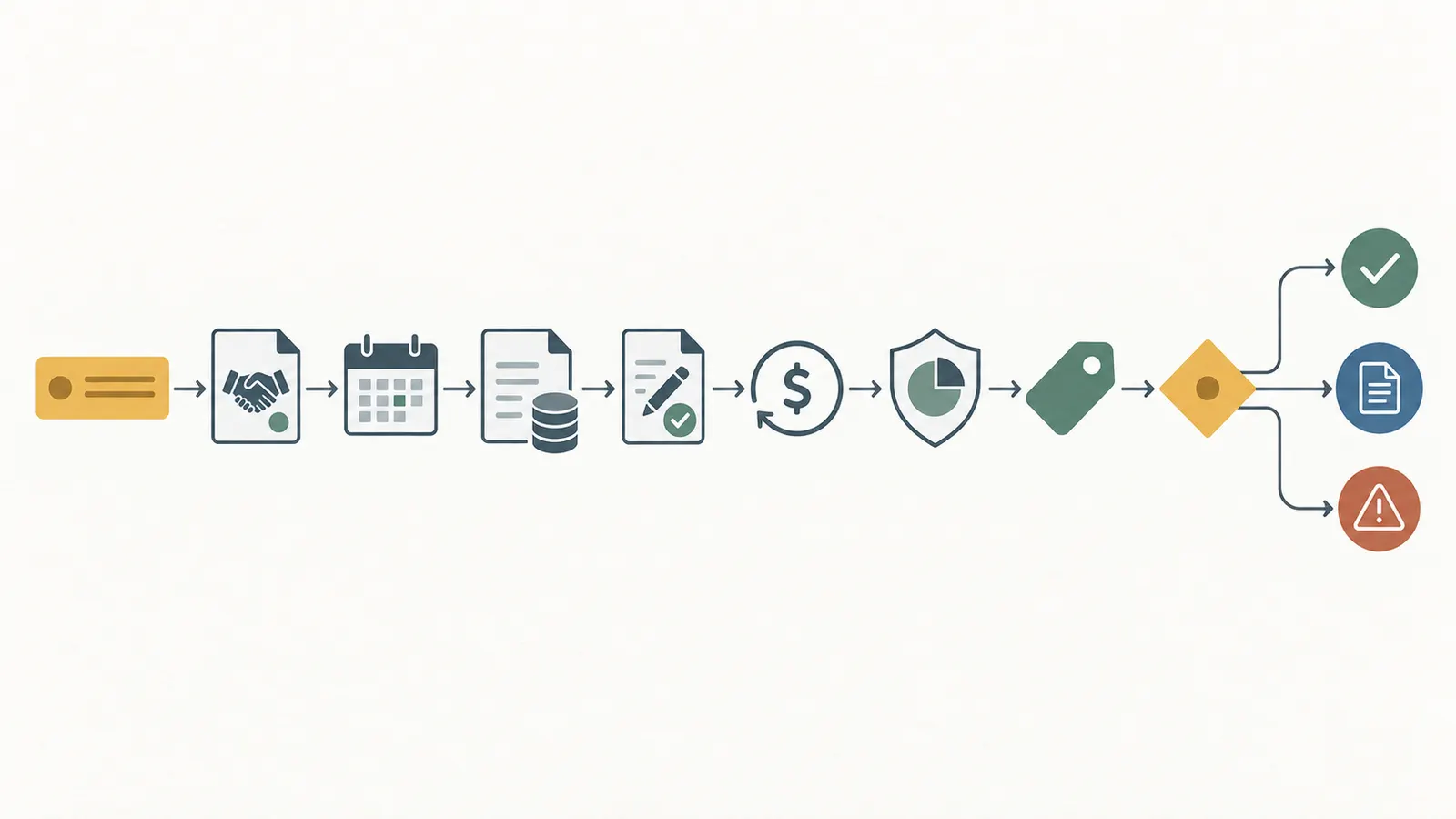
Unverified editorial hypothesis—not a measured finding: current guidance may commonly explain construction draws, lien waivers, change orders, or household budget tracking as separate subjects. Check that hypothesis against the AIA payment-application instructions, AIA continuation-sheet instructions, Utah DOPL construction-contract guidance, California CSLB contract guidance, and Oregon CCB contractor tools, which expose different pieces of the payment, records, change and jurisdiction questions. The missing decision is how a homeowner can connect one invoice line to the contract, source record, approval, prior payment, retainage or credit, discrepancy notice, and next handoff before authorizing money. This guide’s original contribution is the Contract-to-cash invoice audit worksheet: a reusable row-level classification and modeled calculation. You can check it by tracing every sample row to a stated input, formula, source-record requirement, and limitation; the evidence IDs in the package identify the public sources used for its fields.
Contribution method. Translate the contract pricing basis into a worksheet, reconcile cumulative and current-period totals, test the fee base and approved changes, then classify each row as supported, contractually unclear, changed-but-unapproved, duplicate, or awaiting backup. The worked numbers are illustrative only.
Contribution limitations. The worksheet does not determine whether a particular contract is enforceable, whether a lien or payment notice is timely, whether a cost is taxable, or whether work is complete or defective. The executed contract, applicable state law, lender requirements and qualified legal, accounting or construction professionals control.
Set the boundary before reviewing
The assigned scope is a United States custom single-family new home before the first payment process is established. It covers cost-plus, time-and-materials, and guaranteed-maximum-price administration. It excludes construction-loan draw procedures, lien-waiver law, tax advice, and conclusions about a particular invoice. A lender may have a separate process for deciding whether to disburse construction funds. Ask the lender for its current requirements and keep that process separate from the owner’s contract audit; this guide does not establish what any lender requires.
The review also does not replace an architect’s observation, a structural engineer’s analysis, an electrician’s evaluation, or a building official’s inspection. If a line concerns excavation, temporary shoring, structural work, a live electrical system, fall exposure, an unstable area, or a confined space, do not enter or test the work to prove the invoice. Ask for records and use qualified professionals under the project’s safety plan. Paperwork can establish what was billed; it cannot remotely establish that hidden work was installed correctly.
Make the executed contract the source of truth #
The executed contract, incorporated exhibits, approved schedule of values, amendments, and signed change orders define what can be billed; an invoice template or a familiar industry form does not. Start by assembling that contract set and highlighting the pricing basis, cost definitions, fee base, billing period, backup requirements, payment clock, retainage, credits, dispute notice, certification role, and suspension language.
Build the contract register
Create a one-page register before checking amounts. Give each document a stable filename and version date.
| Contract item | Question to answer | Record to locate | Owner’s verification |
|---|---|---|---|
| Agreement | Is the job fixed-price, cost-plus, time-and-materials, GMP, or a hybrid? | Signed agreement and amendments | Quote the exact section and page |
| Cost definition | Which labor, material, subcontract, equipment, insurance, supervision, overhead and permit costs are eligible? | Cost-of-work definition and exclusions | Mark included, excluded or unclear |
| Fee | Is the fee a percentage, fixed amount, tiered fee, or separate general-conditions charge? | Fee clause and schedule | Identify the exact fee base |
| GMP | What is capped, and what is outside the cap? Are savings shared? | GMP exhibit and allowances | Separate cap, forecast and allowance |
| Schedule of values | Are line items tied to cost codes or only broad phases? | Approved schedule of values | Check whether it controls billing detail |
| Billing period | Is the request current-period, cumulative-to-date, milestone-based or a mixture? | Invoice instructions | Record start, end and receipt dates |
| Backup | What must accompany an application? | Contract, general conditions, owner instructions | List receipts, labor logs, sworn statements or other records |
| Changes | What makes a change billable and who must sign? | Change-order clause and forms | Link each billed change to its authorization |
| Retainage | Is it a percentage, a holdback by line, or not permitted? | Payment clause | Record the base and release condition |
| Credits | How are returns, refunds, allowances, rebates and unused contingencies handled? | Contract and change log | Require a credit entry rather than an informal promise |
| Notice and cure | How and where must a discrepancy be sent? | Notices clause and payment clause | Record address, email, deadline and recipient |
| Certification | Who checks or certifies the application? | Architect, owner representative or contract administrator clause | Confirm whether certification is advisory or required |
Do not assume that “cost-plus” means every cost is reimbursable. The contract may exclude builder-owned equipment, unapproved overtime, financing charges, home-office overhead, markup on subcontractor markup, warranty callbacks, penalties, or costs caused by the builder. It may also use different fee bases for direct labor, subcontractors, reimbursable purchases, general conditions and approved changes. Your worksheet should preserve those categories rather than flattening them into one percentage.
Use public examples without importing their rules
The Utah Division of Professional Licensing publishes a model fixed-price residential construction agreement. It says the model’s monthly invoice itemizes costs, labor charges and supply expenses incurred to date, identifies previous payments, and supports a homeowner request for subcontractor and supplier invoices. That is useful evidence for the fields a contract can require, but the page describes a Utah model fixed-price agreement, not a nationwide cost-plus rule. Read the Utah DOPL construction contract guidance as a model to compare with your signed documents, not as a replacement for them.
AIA’s public instructions show the same idea in a different administrative vocabulary. AIA describes G702CW-2021 and G702GMP-2021 for cost-of-the-work applications, and says the cost-plus versions are designed to show actual costs against estimates and movements between line items. The AIA cost-of-work payment-application instructions are a description of AIA documents, not a requirement that your builder use those forms.
Separate three pricing structures
Cost-plus, time-and-materials, and GMP are related but not interchangeable.
Cost-plus. The owner pays eligible cost of the work plus a fee or markup calculated under the contract. The audit question is whether the cost is eligible, incurred or properly billable, within the period, and included in the fee base exactly once.
Time-and-materials. The owner pays labor time at stated rates plus materials and any agreed markup, equipment charge or service fee. The audit question is whether the hours, rates, workers, task descriptions, material quantities and markup match the contract. A time sheet without a rate schedule is incomplete; a material receipt without allocation to the project may be incomplete.
GMP. The contract may use cost records to calculate progress but imposes a guaranteed maximum price subject to defined exclusions, allowances, owner changes, escalation clauses or other exceptions. The audit question is both “is this current request supported?” and “does the forecast remain within the contractual cap?” A GMP is not proof that every invoice line is correct, and a forecast over the cap is not automatically a current invoice error. It is a signal to examine the contract’s notice and change mechanisms.
Confirm the administrative role
If the contract assigns an architect or owner’s representative to certify payment, the homeowner should not silently replace that role with a personal spreadsheet. AIA’s G702 instructions describe a process in which the contractor submits an application and continuation sheet, the architect reviews it, and the architect may certify a different amount with an explanation before the owner pays the certified amount. See the AIA G702 application instructions for that document-specific sequence.
Your contract may assign no independent certifier, may make the architect’s review advisory, or may require the owner to approve directly. Put that role in the register. The next handoff changes accordingly:
- The builder prepares the application and backup.
- The architect or owner representative checks progress and contract administration if assigned.
- The homeowner checks the payment decision, unresolved exceptions and cash consequence.
- The bookkeeper or accountant checks arithmetic and coding if engaged.
- A construction attorney reviews rights, notices, liens, suspension threats or disputed interpretation when needed.
Do not treat a professional’s certification as a warranty that the work is defect-free. Certification is a contract-administration step with the scope given by the contract.
Build the invoice evidence chain #
Every invoice row should have a visible chain from contract basis to amount: contract section or cost code, billing period, source record, physical or administrative status, change authorization if applicable, fee treatment, prior-payment treatment, and next action. If any link is missing, the correct status is an evidence gap or contract question—not an invented conclusion.
Request a complete application packet
Before recalculating, save the packet exactly as received. Ask for a consistent set of files, tailored to your contract:
- signed payment application or invoice cover sheet;
- continuation sheet, schedule of values, or cost-code ledger;
- current-period detail and cumulative-to-date detail;
- subcontractor invoices and payment applications;
- supplier invoices, purchase orders, delivery tickets and credit memos;
- labor time records with worker or crew, date, task, hours and contract rate;
- equipment logs and the contract basis for any rental or internal-equipment charge;
- approved change orders, owner directives and any written price or time estimate;
- stored-material records, location, title or risk-of-loss terms if the contract permits billing before installation;
- fee calculation and the exact base to which the fee is applied;
- prior applications, approvals and proof of previous payments;
- retainage calculation, release conditions and credits;
- certifications, sworn statements, waivers or releases only if the contract or applicable jurisdiction requires them;
- forecast against the GMP or budget when the contract requires it.
The packet is not a demand for every document on every project. Use the executed contract to decide what is required and use a narrower request where the issue is narrow. For example, if a $3,600 change lacks authorization, ask for the signed change record and the cost/time basis for that change; do not delay the entire review by demanding unrelated payroll records.
Map each row to a cost code
The row is the unit of review. “Framing: $42,000” is too broad if the agreement separates lumber, framing labor, equipment and subcontractor fee. “Cabinetry: $18,000” is too broad if $4,000 is an allowance, $8,000 is a supplier deposit, and $6,000 is installation labor with a different markup rule.
Use a code structure that mirrors the contract. It might be a schedule-of-values item such as 03-Concrete, a subcontract package such as S-07-Electrical, or an internal code such as LAB-ROUGH. Do not invent a new code merely to make an exception disappear. If the contract uses broad line items, keep the broad item and add a detail column; that preserves traceability to the signed document.
The evidence-chain worksheet
The following is the article’s reusable worksheet. Copy it into the project’s records, but adapt the fields to the contract and local professional advice.
| Row ID | Contract basis / cost code | Period | Amount requested | Source record | Change or approval | Prior payment / credit | Retainage | Status | Next handoff |
|---|---|---|---|---|---|---|---|---|---|
| 01 | Direct cost; 03-Sitework | Sep 1–30 | $18,400.00 | Supplier invoice INV-284 and delivery ticket | Included scope | $0 | Contract rate | Supported if delivered and not previously billed | Builder confirms allocation; owner approves with packet |
| 02 | Direct labor; LAB-ROUGH | Sep 1–30 | $9,840.00 | Dated time records and rate schedule | Included scope | $0 | Contract rate | Awaiting backup until hours and rates reconcile | Builder supplies labor detail |
| 03 | Owner change; CO-04 | Sep 1–30 | $6,200.00 | Supplier invoice only | No signed change found | $0 | Contract rule | Changed-but-unapproved | Owner and builder resolve authorization before billing |
| 04 | Direct cost; 01-General conditions | Sep 1–30 | $1,250.00 | Dumpster invoice INV-119 | Same invoice appears in August application | $1,250 | Contract rate | Duplicate candidate | Builder issues correction or proves separate charge |
| 05 | Builder fee | Sep 1–30 | $3,538.80 | Fee schedule and reconciled eligible base | 12% of provisional eligible base in model | $0 | Usually separate rule | Supported only after fee base is confirmed | Accountant or owner representative checks formula |
| 06 | Credit; CM-02 | Sep 1–30 | $(2,400.00) | Supplier credit memo | Applies to returned material | — | Contract rule | Supported credit if allocated to this project | Builder carries credit to current application |
The sample amounts are illustrative, not construction-market data and not a claim about a typical home. Replace each number with an actual record. The worksheet deliberately leaves a row “awaiting backup” instead of estimating the labor from a photo, a site visit, or an assumed crew size.
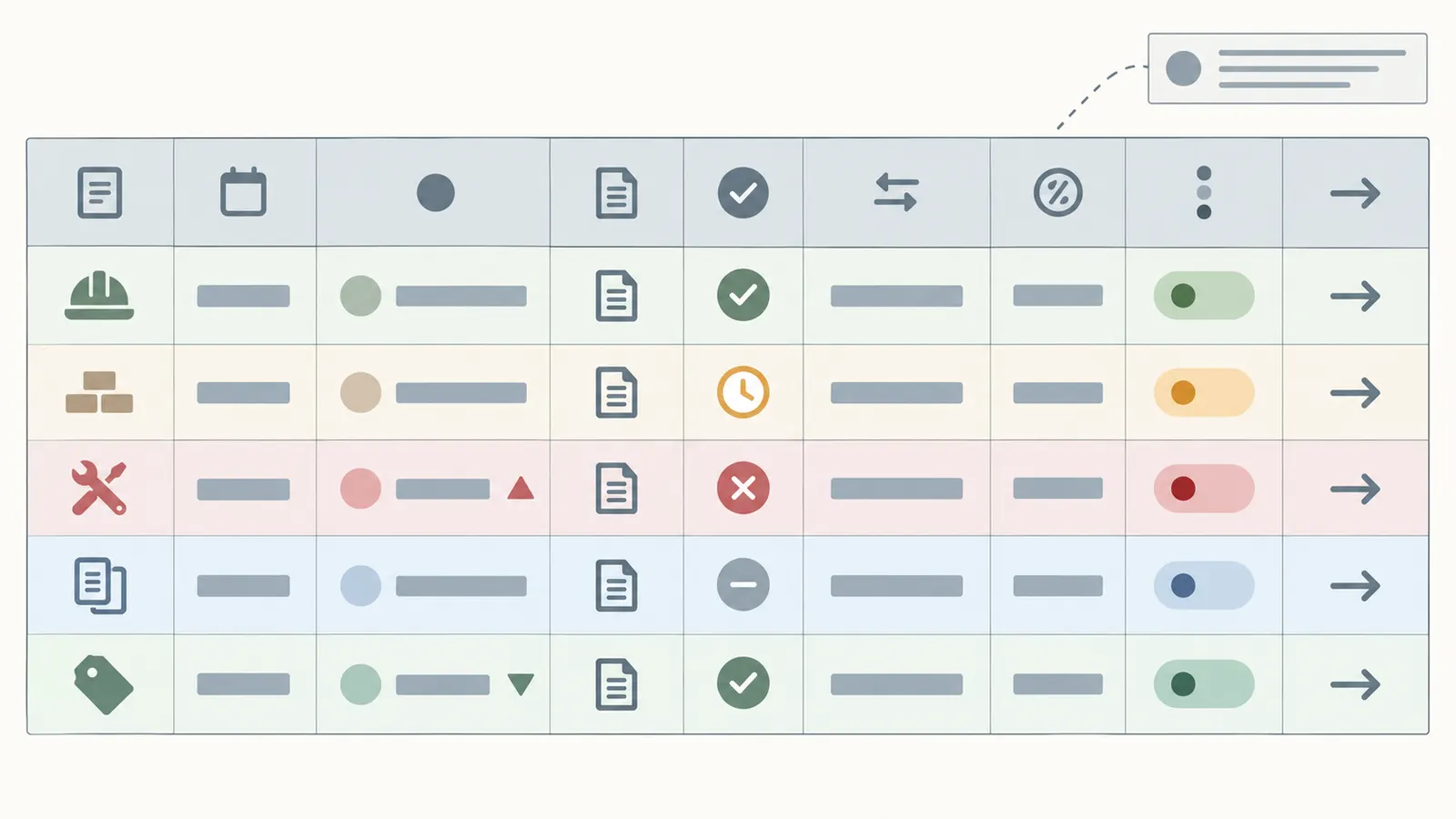
To make row 05 reproducible, this illustrative worksheet treats rows 01, 02 and 04 as the provisional eligible direct-cost base while row 03 is excluded because its change is not authorized in the records shown: $18,400 + $9,840 + $1,250 = $29,490. The modeled fee is therefore $29,490 × 0.12 = $3,538.80. That is a worksheet input and formula, not a conclusion that row 04 is payable: if the duplicate candidate is removed, the base becomes $28,240 and the fee becomes $3,388.80, a $150.00 difference. If row 03 is later approved and the contract applies the fee to approved changes, the base becomes $35,690 and the fee becomes $4,282.80. This sensitivity shows why the builder’s stated fee percentage is not enough; the contract’s eligible-base definition and each row’s status control the amount.
What counts as a useful record
A useful record answers at least four questions: who supplied or performed the work, what was supplied or performed, when it occurred, and how the amount was calculated. A document can answer more. For a supplier invoice, also check project address or purchase-order reference, quantity, unit, extensions, tax or freight treatment, invoice date, payment status and credits. For labor, check person or crew, date, task, regular or overtime rate, hours, and whether the contract permits that rate and markup.
For a subcontractor, the invoice should be connected to a scope, a period, a progress description and the subcontract’s payment basis. A subcontractor’s invoice can prove what the subcontractor requested from the builder; it does not by itself prove that the owner’s contract permits the builder to pass through every amount or apply the builder fee to it. For stored material, verify the contract’s permission, ownership or risk terms, storage location, delivery evidence and whether the material has already appeared in an earlier application.
An internal spreadsheet is useful for arithmetic but is not a substitute for source records. A builder may legitimately consolidate several receipts, but the consolidated amount should remain traceable to the underlying records when the contract allows or requires review. If a single vendor invoice covers multiple jobs, ask for the project allocation method rather than assuming the entire invoice belongs to the home.
Protect the record while preserving the relationship
Name files consistently: 2026-09-pay-app-03_received, 2026-09-pay-app-03-backup, 2026-09-pay-app-03-audit. Preserve the original PDF and the date received. Do not overwrite a builder’s revised application; save it as a new version and keep a change note. Maintain a log with request date, recipient, response date, missing items, decision and next handoff.
Use neutral language: “The $6,200 cabinetry line is not linked to a signed change order in the records provided. Please identify the authorizing document and the contract section that permits billing before approval, or remove the line from this application.” That is more useful than “You are overcharging us.” It also makes a later professional review faster.
Recalculate cost-plus, time-and-materials and GMP amounts #
Recalculate the invoice from the contract basis in two passes: first reconcile the current-period rows, then reconcile the cumulative-to-date balance. Use the same units, rates, fee base and rounding convention as the contract. AIA’s public descriptions illustrate this structure: payment applications show work completed or stored, retainage, previous payments, change-order information and the current request, while the continuation sheet breaks the work into portions tied to a schedule of values. See the AIA G703 continuation-sheet instructions for the form’s described fields.
Establish the units before the dollars
The unit is often the hidden error. Record whether the input is:
- dollars per invoice, not dollars per month unless the contract says so;
- labor hours multiplied by a contractual hourly rate;
- quantity multiplied by a contractual or documented unit cost;
- a subcontractor’s progress percentage applied to a scheduled value;
- stored material dollars permitted by the agreement;
- a fee percentage applied to a specified base;
- a retainage percentage applied to a specified base;
- a cumulative amount less prior cumulative payments, not a fresh current-period total.
Do not use a percentage complete as a substitute for evidence. A statement that rough framing is “75% complete” may be a progress input if the contract’s schedule of values and certification process permit it, but it does not automatically establish the value of lumber delivered, labor performed, stored materials, or the correct fee base. Ask what the percentage is measured against and who is responsible for confirming it.
The worksheet formula
For a cumulative application, use this model:
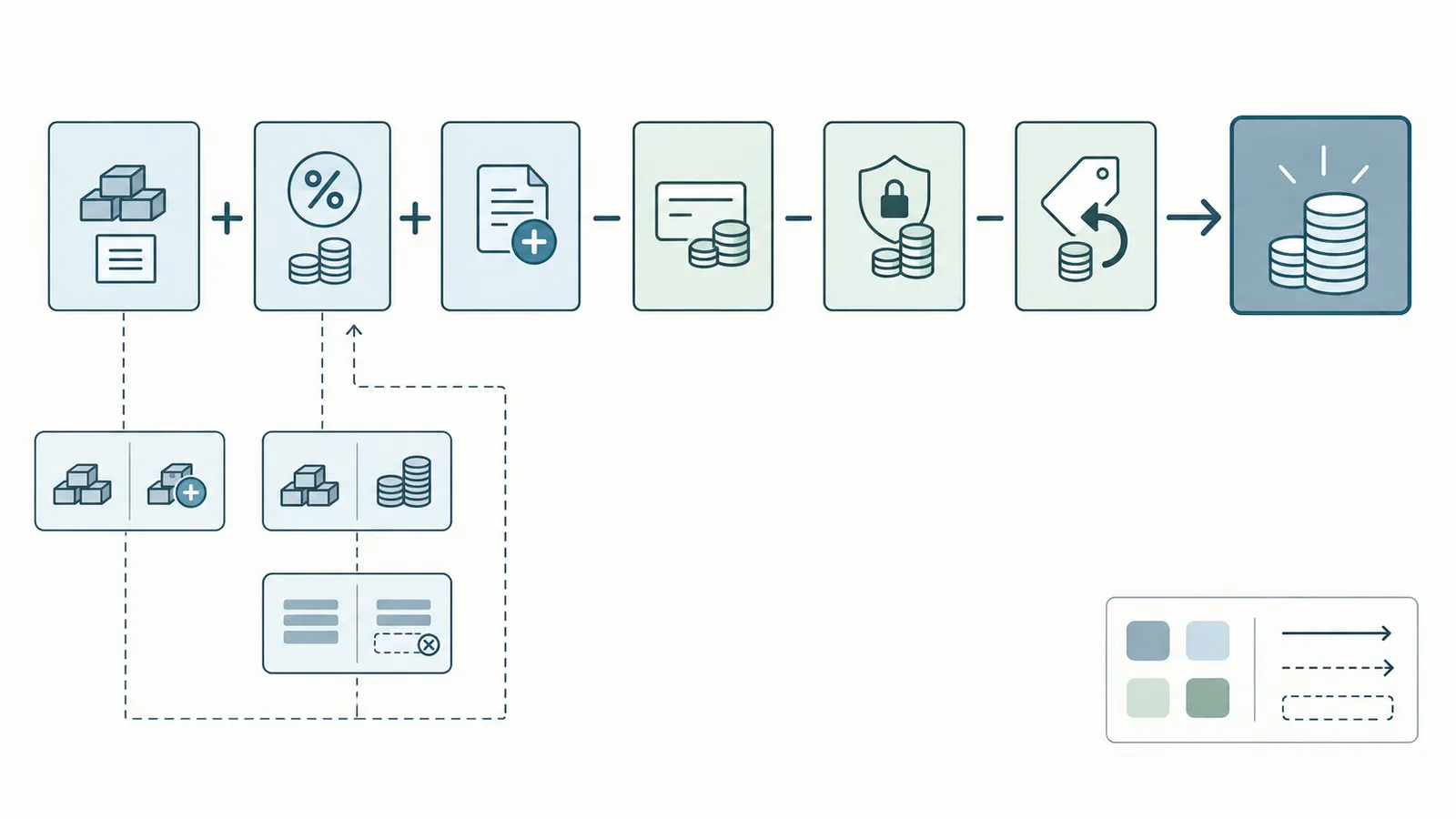
Net amount due now
= eligible costs and approved changes to date
  + earned fee under the contract
  - prior payments applied to those costs
  - retainage required by the contract
  - credits and other allowed deductions
For a current-period application, define the cost base before doing the arithmetic. In the model below, C is eligible current-period cost excluding approved current-period change costs, and A is approved current-period change cost. Keeping those inputs separate prevents the same approved change from being included in the cost base and added again. Define F_C as the fee on C under the contract, and define F_A as the fee on A only when the contract permits a fee on approved changes; otherwise F_A = $0.
Current-period net request
= C + F_C + A + F_A
  - payments or credits already applied to these rows
  - current-period retainage
This is a presentation model, not a universal payment rule. If the contract includes approved changes in the fee base, calculate F_A separately and show it rather than silently folding A into C. If the contract’s retainage base excludes changes, calculate retainage on the permitted base rather than on C + A. If the contract reports a cumulative application, use the cumulative formula and subtract the prior cumulative amount once; do not subtract every historical payment again from a current-period request. Label the application type in your worksheet before entering amounts.
Corrected current-period example
The following is an illustrative current-period calculation using the six worksheet rows above. It assumes the contract says the 12% fee applies to eligible direct costs but not to approved changes, and that 5% retainage applies to eligible direct costs plus approved changes. These are modeled contract inputs, not a claim about a typical agreement.
C = eligible current-period cost excluding approved changes
  = $18,400 + $9,840 + $1,250
  = $29,490

A = approved current-period change cost
  = $6,200

F_C = $29,490 × 0.12
    = $3,538.80

F_A = $0 because the modeled contract excludes changes from the fee base

Retainage = ($29,490 + $6,200) × 0.05
          = $1,784.50

Current-period net request
= $29,490 + $3,538.80 + $6,200 + $0
  - $0 prior payments or credits applied to these rows
  - $1,784.50 retainage
= $37,444.30
The corrected result is $37,444.30 in this modeled example. The $6,200 change is counted once as A, not once inside C and again as A. If the contract instead permits a 12% fee on approved changes, F_A would be $6,200 × 0.12 = $744, and the modeled request would be $38,188.30 before any different credit, prior-payment or retainage treatment. If the $6,200 change is not actually approved, remove it from A and classify it as changed-but-unapproved rather than treating it as payable. The executed contract controls each base and deduction.
Worked example: modeled cost-plus application
The following is an illustrative model, not observed project data and not a price estimate. Assume the executed agreement says:
- direct eligible costs to date: $186,400;
- builder fee: 12% of eligible direct costs, excluding approved changes;
- approved changes to date: $8,500;
- prior payments credited against the application: $162,000;
- retainage: 5% of eligible direct costs plus approved changes;
- credits: $2,400;
- no tax, lender, lien or legal conclusion is being modeled.
Step 1: calculate the fee base.
Fee base = $186,400 direct eligible costs
Fee = $186,400 × 0.12 = $22,368
Step 2: calculate the retainage base under the modeled assumption.
Retainage base = $186,400 + $8,500 = $194,900
Retainage = $194,900 × 0.05 = $9,745
Step 3: calculate the net request.
Net amount due now
= $186,400 + $22,368 + $8,500 - $162,000 - $9,745 - $2,400
= $43,123
The result is $43,123 in the modeled example. It becomes an approval candidate only after each input is supported and the contract actually uses those bases. The $8,500 of approved changes must be connected to signed or otherwise contractually valid authorizations. The $2,400 credit must be allocated to this project and not already credited in a prior application. The $162,000 prior-payment figure must be tied to cleared or contract-recognized payments, not merely checks prepared.
Sensitivity: what changes the answer
Sensitivity shows which contract terms deserve attention. It does not create a market forecast.
| Scenario | Fee calculation | Retainage assumption | Modeled net due |
|---|---|---|---|
| Lower fee | $186,400 × 10% = $18,640 | 5% of $194,900 = $9,745 | $39,395 |
| Base case | $186,400 × 12% = $22,368 | 5% of $194,900 = $9,745 | $43,123 |
| Higher fee | $186,400 × 15% = $27,960 | 5% of $194,900 = $9,745 | $48,715 |
| Base fee applied to changes too | $194,900 × 12% = $23,388 | 5% of $194,900 = $9,745 | $44,143 |
| Base case, no retainage permitted on this category | $22,368 | $0 | $52,868 |
The difference between $43,123 and $44,143 is not a rounding issue; it is a fee-base interpretation. The difference between $43,123 and $52,868 is not a small discrepancy; it is the retainage rule. If the contract is unclear, classify the row or calculation as contractually unclear and ask the contract administrator or construction attorney for an interpretation before treating one scenario as the answer.
Reconcile the schedule of values
For each cost code, compare at least five columns:
- original scheduled or estimated value;
- approved change amount;
- revised value;
- completed or incurred to date;
- previous applications and current request.
AIA describes the continuation sheet as breaking the contract sum into portions according to a schedule of values and tracking completed and stored work, retainage, change orders and calculations. That is why a row-level schedule is valuable even when your contract uses a different form. It exposes a line that has reached 100% but continues to receive charges, a line whose budget moved without an approved change, or a line with a negative credit hidden in a different category.
Use this reconciliation:
Revised line value
= original line value + approved change additions - approved change credits

Unbilled balance
= revised line value - eligible cost or progress billed to date

Current request check
= cumulative eligible amount to date - prior cumulative approved amount
The words “billed to date” and “paid to date” are not interchangeable. A contractor may have billed an amount that the owner has not yet paid; a payment may have been made without a corresponding approved application; a credit may be issued after a payment. Maintain separate columns for requested, approved, paid, credited and outstanding.
Check a GMP separately from a cost calculation
Under a GMP, run a forecast test in addition to the invoice test. Start with the contractual GMP, then list approved changes, allowances, owner selections, exclusions, escalation provisions and contingency rules. A line may be eligible for current payment but still forecast a cap problem. Conversely, a forecast may exceed an early budget while the contractual GMP has not been exceeded because the agreement treats an owner change or allowance differently.
Ask the builder to show:
- GMP or cap amount;
- original cost-of-work estimate;
- approved changes and their effect on the cap;
- actual eligible costs to date;
- committed but unpaid costs;
- forecast remaining cost by code;
- remaining contingency and allowances;
- projected final cost;
- explanation for material variance from the prior forecast.
Do not call an allowance an overcharge solely because the final selection costs more than the allowance. The contract may put that difference on the owner. Do not call it a valid overrun solely because the builder labels it an allowance. Check the selection, written authorization, price basis and fee treatment.
Test labor, materials, subs, fee, retainage and credits #
Test each category with the record that can actually prove it, and stop at the contract’s scope. A site photograph can help you identify a question, but it does not prove labor hours, supplier payment, title to stored material, contract eligibility, or hidden installation quality. The responsible person should supply records; the owner should verify the relationship between the record and the invoice.
Labor
Labor review is a rate-and-time exercise. Request dated time records, worker or crew identifier, task or cost code, hours, regular or overtime designation, hourly rate, and any burden or payroll treatment that the contract allows. If the builder bills a crew as a unit, request the unit definition. If the contract permits a labor burden percentage, record the percentage and its base separately from the fee.
Test for:
- hours outside the billing period;
- the same worker or crew billed to two cost codes at overlapping times;
- a rate different from the signed schedule;
- overtime without contractual or owner authorization where required;
- supervision or general conditions included both in labor and in a separate fee;
- labor billed for work that a subcontractor invoice already includes;
- round-number hours repeated every day without the level of detail the contract requires.
An anomaly is a request for clarification, not proof of intentional double billing. The builder may use a legitimate weekly payroll allocation or a correction process. Ask for the allocation method and the correction record.
Materials and equipment
For material lines, match invoice, purchase order, delivery ticket, quantity, project allocation, unit price, freight, tax and credits. If the contract permits stored materials, add storage location, condition, ownership, insurance or risk-of-loss information if the agreement calls for it. Do not enter a construction area to inspect stacked material merely to approve the invoice. Ask the builder or qualified site representative to document it under the project’s safety rules.
For equipment, distinguish a third-party rental invoice from a builder-owned equipment charge. The contract may allow one, both, or neither. Check rental dates against the work schedule, equipment identity, daily or weekly rate, mobilization, fuel, operator and demobilization. A machine’s presence on site does not prove the full invoice is allocable to your home.
Subcontractor progress
Match the subcontractor’s request to the subcontract scope, payment period, schedule of values and progress evidence required by the contract. Review previous subcontractor applications so a front-loaded deposit does not become a second charge when installation begins. Separate approved stored material, completed work, retainage and credits. If the builder has paid the subcontractor, proof of payment may matter under the contract; if the contract only requires a subcontractor application, do not invent a broader requirement.
Where lien waivers, sworn statements or releases are required, use the form and timing specified by the contract and the law where the property is located. This guide does not provide lien-waiver law or construction-loan draw advice. Ask local counsel or the project’s qualified payment administrator when the consequence of a missing release could affect title or payment rights.
Builder fee and markup
The fee is often the highest-leverage calculation because a small base error propagates. Write the formula explicitly:
Fee = contract percentage × contract-defined fee base
Then list what is inside the fee base: direct labor, materials, subcontractors, equipment, approved changes, general conditions, permits, insurance, taxes and credits. If the contract is silent, do not choose the interpretation that produces the lower amount merely because it favors the owner. Classify it as unclear and seek a contract interpretation.
Check whether markup is applied once or twice. A subcontractor may have its own overhead and profit inside its price, while the builder may be entitled to an additional general-contractor fee. That may be permitted or excluded by the contract. The invoice should show the basis clearly enough for the owner to test it. Ask for an explanation of an unfamiliar “coordination,” “project management,” “procurement,” or “handling” charge rather than deleting it unilaterally.
Retainage
Retainage is not a generic percentage that every homeowner can impose. Locate the contract clause, identify the base, and record release conditions. The base may exclude materials, apply only to certain work, or change at substantial completion. AIA’s public G702 and G703 descriptions show retainage as a payment-application field, but that does not tell you what percentage or release condition your contract uses.
Test:
- whether the claimed percentage matches the agreement;
- whether retainage was calculated on the right base;
- whether an earlier retainage balance was carried forward;
- whether a release was approved or due under the contract;
- whether a credit or change altered the base;
- whether retainage is being shown both as a deduction and as a separate payable amount.
Do not use retainage to punish a quality concern unless the contract and applicable law allow that remedy. A workmanship concern may require a notice, inspection, correction process or professional assessment separate from invoice arithmetic.
Credits and negative entries
Credits should be visible and attributable. Look for returned material credits, allowance underruns, vendor rebates that the contract requires the owner to receive, canceled work, duplicate payment corrections, insurance recoveries if contractually relevant, and unused deposits. A credit memo issued to the builder may not appear in the same billing period; track the date received, the amount, the related cost code and the application where it is carried.
Negative entries can conceal an error as easily as they can correct one. Compare the credit to the underlying purchase or change. A “budget credit” is not self-explanatory. Ask whether it is a true reduction in cost, a transfer between line items, a contingency release, or a forecast adjustment. The fee may or may not change when the cost changes; the contract controls.
Classify discrepancies and decide what to pay #
Classify each exception before choosing a payment action. The five useful classifications are supported, contractually unclear, changed-but-unapproved, duplicate, and awaiting backup. Add “not in scope” or “arithmetic error” as sublabels when helpful, but do not collapse different problems into one vague “dispute” category.
The five-row decision matrix
| Classification | Test result | Example | Written response | Payment posture |
|---|---|---|---|---|
| Supported | Contract basis, period, record and math reconcile | Supplier invoice matches delivery and cost code; fee base agrees | “Approved row 01” with packet reference | Approve if the application as a whole is otherwise ready |
| Contractually unclear | Record exists but the agreement does not clearly answer eligibility, fee base or timing | Builder fee applied to an allowance with no stated treatment | Ask for the clause and interpretation; do not silently rewrite the contract | Escalate or reserve the row according to contract process |
| Changed-but-unapproved | Cost relates to changed scope without the required written authorization | Cabinet upgrade billed after a conversation only | Identify missing change order, scope, amount and signature | Hold or reserve only as contract and local rules permit |
| Duplicate | Same invoice, quantity or prior payment appears twice or has no reversal | Dumpster invoice billed in August and September | Cite both entries and ask for correction or proof of separate charge | Do not approve the duplicate amount |
| Awaiting backup | The contract may permit the cost, but required support is absent | Labor total with no dates, hours or rates | Request the specific records and preserve receipt date | Request support; avoid calling it an overcharge |
This matrix is the original contribution’s decision surface. It is not a legal test and it does not establish that a contractor has acted wrongfully. It makes the next handoff explicit so a missing document does not get buried inside a payment approval.
Draft a focused discrepancy notice
A useful notice contains:
- project name and invoice/application number;
- date received and billing period;
- exact row, cost code and amount;
- contract clause or exhibit being applied;
- record reviewed;
- factual gap or arithmetic discrepancy;
- support or correction requested;
- amount you can approve, if any;
- deadline and delivery method required by the contract;
- reservation that the notice is not a waiver of other rights, if your attorney recommends that language.
Example:
Application 03, row 03, CO-04, $6,200: the packet includes supplier invoice 4451 but no signed change order or other contract-authorized directive. Please identify the authorization, revised scope, price calculation and fee treatment, or remove the row from Application 03. Rows 01, 05 and 06 are being reviewed separately. Please respond through the notice method in Section 12 by [contract deadline].
Do not use the example as legal notice language without checking the contract and the property’s jurisdiction. The notice period may run from receipt of the invoice, receipt of backup, rejection, certification, or another event. Record both the date you received the invoice and the date you received missing documentation.
Utah example: a model discrepancy clock
Utah DOPL’s model agreement gives a concrete example of why dates matter: it says the owner may request support for invoiced costs and then must notify the contractor of discrepancies within 30 days of receiving the documentation. The model also says a payment delay caused by that request is not treated as failure to pay, and it describes a three-year detailed-record period after completion with a written review request to be answered within 30 days. See Utah DOPL’s invoice-verification language for the exact Utah model scope.
Do not transplant “30 days,” “three years,” or “30 days to respond” into another project. Instead, use the example to create a contract register field called discrepancy clock starts when. If your agreement incorporates that model or your Utah counsel confirms the rule applies, set the clock accordingly. If the home is in California, Oregon, or another state, check the executed contract and local law; the Utah model does not answer that question.
When to hold a row versus the whole invoice
Holding the entire invoice may be justified by the contract’s certification or condition-precedent language, but it is not automatically safer than paying an undisputed amount. Paying everything can waive leverage or make records harder to reconcile; withholding everything can trigger suspension, late fees, relationship damage or legal exposure. The correct action depends on the contract, the amount in dispute, the notice process and applicable law.
Ask counsel or the contract administrator before making a high-consequence decision when:
- the builder threatens to stop work or terminate;
- the disputed amount is material to payroll or subcontractor payment;
- the contract requires payment as a condition of continued work;
- a lien, bond, waiver or title concern is raised;
- the issue is a defective or incomplete work claim rather than documentary support;
- the state has a payment statute or notice requirement you have not verified;
- the agreement contains a dispute, mediation, arbitration or attorney-fee clause;
- you are considering offsetting an unrelated claim against the invoice.
Utah DOPL’s model agreement, for example, describes written notice and a 14-day payment cure period before suspension for nonpayment under that model. That is a reminder to check consequences, not permission to disregard a notice. See the Utah model’s suspension language and then consult the law and contract for the property’s actual jurisdiction.
Distinguish a document dispute from a work-quality dispute
A document dispute asks, “Can the amount be traced and calculated under the contract?” A work-quality dispute asks, “Was the work installed in compliance with the plans, specifications, code, warranty or standard of care?” They can overlap, but the evidence and responsible professionals differ.
For a document dispute, gather invoices, time records, changes, applications, credits and payment history. For a work-quality dispute, preserve photographs or reports without entering an unsafe area, notify the responsible party under the contract, and engage the architect, engineer, inspector or qualified trade professional needed to evaluate the work. Do not reduce a payment solely because an image looks wrong, and do not approve hidden work solely because the builder’s spreadsheet is tidy.
Run the handoff with notice, records and professional review #
The review is complete only when the right person receives the right exception, the next deadline is recorded, and the approval or hold is communicated through the contract’s process. A spreadsheet without a handoff is an unfinished audit; a phone call without a written follow-up is a weak record for a consequential payment decision.
Assign responsibilities before the first invoice
Use a responsibility matrix before the project begins.
| Task | Homeowner | Builder | Architect / owner representative | Bookkeeper / accountant | Attorney or other qualified professional |
|---|---|---|---|---|---|
| Preserve executed contract and changes | Accountable | Supplies copies | Confirms administered documents | Files payment records | Interprets when needed |
| Prepare invoice and backup | Receives | Responsible | May set format | May assemble | Not normally responsible |
| Confirm work progress | Observes safely and asks | Responsible for reporting | Observes if assigned | Not normally responsible | Not normally responsible |
| Recalculate math and fee | Reviews | Explains | Checks if assigned | Can test arithmetic | Interprets disputed clause |
| Approve payment | Decides under contract | Requests | Certifies if assigned | Processes | Advises on high-risk decision |
| Send discrepancy notice | Sends or directs | Responds | May administer | Logs | Drafts or reviews when material |
| Check lien, waiver or state rights | Provides records | Provides required forms | May administer | Files | Gives jurisdiction-specific advice |
The builder remains responsible for the truth and contract compliance of its application. The homeowner remains responsible for not approving blindly and for following the contract’s notices. An architect’s review, where assigned, is neither a substitute for owner judgment nor a blanket guarantee.
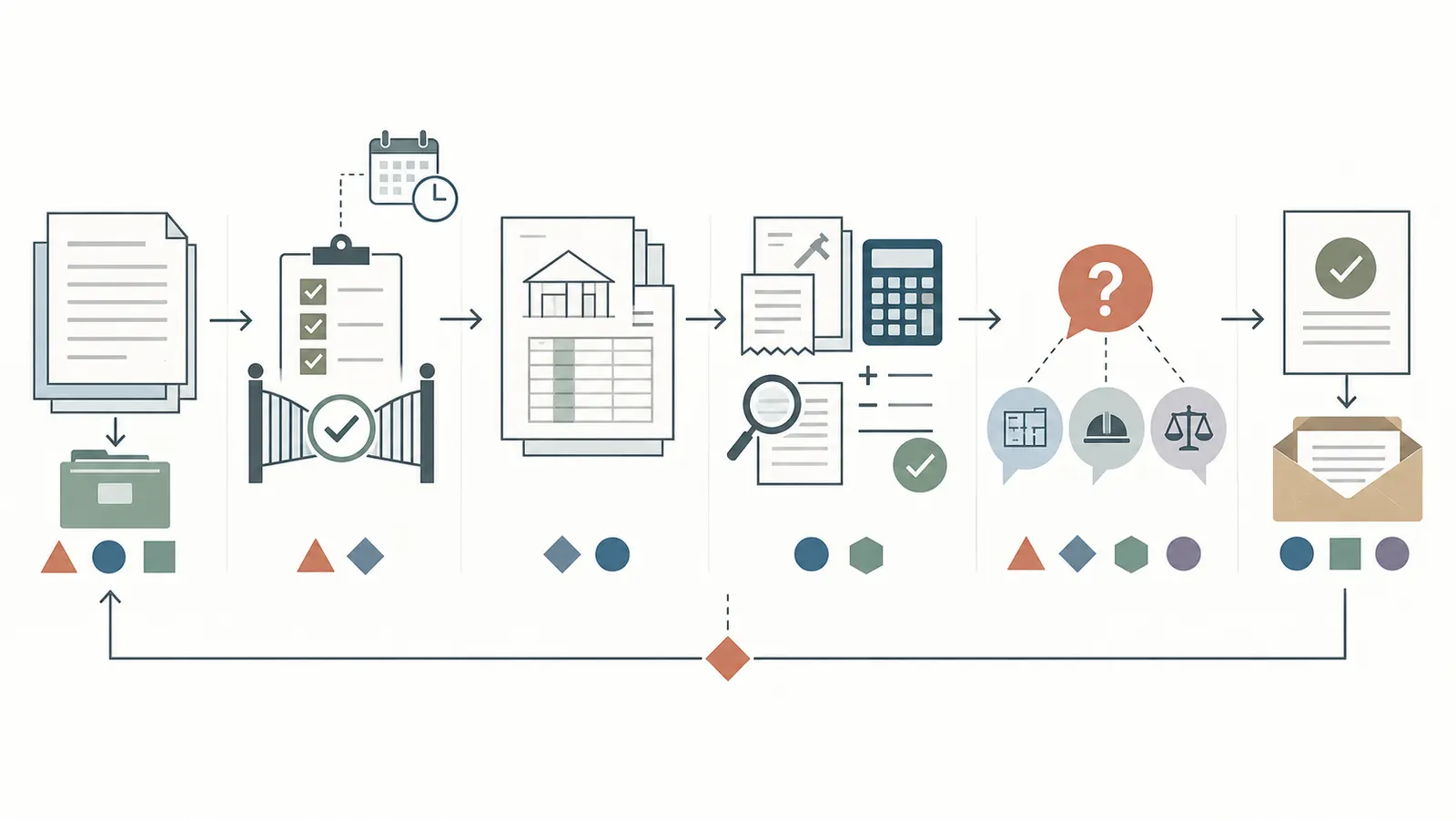
A six-day review sequence
The exact deadline comes from the contract; the sequence below is a repeatable process, not a legal timetable.
Day 0: Receive and freeze. Save the invoice, attachments, delivery time and sender. Record the billing period and whether the request says current-period or cumulative. Do not begin by editing the builder’s file.
Day 1: Gate check. Confirm the application uses the agreed form or required fields, identifies the project, period, previous payments, changes, retainage and requested amount. If essential fields are missing, send a focused request while continuing any review that does not depend on them.
Day 2: Contract map. Open the register. Confirm pricing basis, fee base, cost eligibility, change authorization, notice method, certification role and payment deadline. Mark any rule you cannot locate as contractually unclear.
Day 3: Evidence and math. Populate one row per cost code or document. Test source records, units, extensions, fee, retainage, credits, prior payments and cumulative balance. Flag duplicates separately from missing backup.
Day 4: Site and professional questions. Send safe, specific questions to the builder or assigned administrator. If progress, structural quality, electrical safety, excavation or hidden work is material, ask the qualified professional responsible for that determination. Do not use an invoice audit as a remote inspection.
Day 5: Decision. Approve, approve the undisputed amount, request backup, or escalate. Draft the written record with exact rows and amounts. If you cannot decide because the contract is unclear, say that plainly.
Day 6: Handoff and calendar. Send approval or notice through the contract method, save the sent record, set the response and payment dates, update the cumulative ledger, and list what must be checked on the next application.
If your contract gives you fewer days, compress the sequence. If the package arrives incomplete, record the receipt of the incomplete package and the receipt of later support separately. Do not quietly treat an incomplete application as though the clock started on a later date unless the contract or qualified legal advice says so.
Use written sources for state-specific baselines
State rules can change the contract review. California CSLB says a written contract is required for California home-improvement projects over $500; within that home-improvement context, a price or scope change must be in a written change order signed by the customer and contractor before the change. The California CSLB contract guidance is state-specific and does not establish a rule for every California custom-home contract or every new-home contract in the United States.
Oregon CCB says residential contracts must include specified identification, scope, price and payment terms, and it states a written-contract threshold for residential structures exceeding $2,000 under Oregon rules. Its Oregon contractor-tools page also points to required notices and contract records. Again, the threshold and notices belong to Oregon; they do not set the requirement for a home in Utah, California, or another state.
Oregon CCB’s sample change order is especially useful as a document-design example: it says an alteration or deviation involving extra cost is performed only after a written change order and that the change order becomes part of the original contract. See the Oregon sample change order. Use the idea—scope, price, signatures and contract integration—not the form as a substitute for local legal review.
Lender and draw boundary
A construction lender may use a separate process for deciding whether to disburse funds. The assigned scope excludes construction-loan draw procedures, so do not assume the owner’s invoice worksheet satisfies that process. Ask the lender for its current checklist and ask the builder which documents are supplied for the lender versus for the owner’s contract approval. Keep the two channels cross-referenced without merging their deadlines or standards; this guide does not state or imply a uniform lender document list.
Likewise, a waiver or release may serve a lien-related purpose, while a receipt proves a purchase. They are not interchangeable. A bank’s approval of a draw is not proof that the builder calculated its fee correctly under your contract. An owner’s approval of an invoice is not proof that a supplier has been paid. Keep each evidence purpose visible.
Professional escalation packet
When escalation is warranted, do not send a professional 400 pages without a question. Send:
- one-page decision summary;
- executed agreement and relevant exhibits;
- invoice and all versions;
- worksheet with disputed rows highlighted;
- exact source records for the disputed rows;
- change-order log;
- prior-application and payment ledger;
- notice clause, payment clause, retainage clause and dispute clause;
- date timeline;
- your proposed decision and the question you need answered.
Examples of precise questions are: “Does Section 8 permit the 12% fee on approved owner changes?” “Does the notice clock run from invoice receipt or backup receipt?” “May the owner pay rows 01, 02 and 05 while reserving row 03?” “Does this stored-material charge meet the contract’s title and delivery conditions?” A professional can answer those questions more efficiently than a general request to “review the invoice.”
Prevent the next invoice from becoming a dispute #
The best invoice audit is a project routine established before the first payment: a shared cost-code structure, a change log, a records packet, a cumulative ledger, a notice calendar, and a short coordination meeting. Prevention does not eliminate disagreement, but it makes the disagreement visible while the records and responsible people are still available.
Establish the payment protocol at kickoff
Write a payment protocol that the contract administrator and builder accept. It should state:
- invoice due day and billing period;
- required file naming and submission location;
- current-period and cumulative columns;
- cost-code and schedule-of-values format;
- fee base and markup presentation;
- labor record fields;
- supplier and subcontractor backup;
- stored-material requirements;
- change-order reference format;
- retainage and credit presentation;
- who certifies, who approves and who processes payment;
- notice address and acceptable delivery method;
- expected response time, without overriding the contract;
- how revised applications are versioned;
- how lender requests are separated from owner requests.
This protocol is administrative. It cannot amend the contract unless the parties execute an amendment as required. If a protocol conflicts with the contract, stop and resolve the conflict in writing.
Keep three ledgers, not one
Maintain three linked ledgers:
Commitment ledger. Original scope, approved changes, allowances, revised line values, committed subcontract and supplier amounts.
Application ledger. Current-period requested, cumulative requested, current-period approved, cumulative approved, retained and credited.
Cash ledger. Payment date, payment reference, amount cleared, payee, application applied to, and any unapplied balance.
The three ledgers answer different questions. The commitment ledger answers “what has the project agreed to spend?” The application ledger answers “what has been requested and approved?” The cash ledger answers “what has actually been paid?” If you use a single total, a payment can be counted as both approved and paid, or a credit can be mistaken for a budget reduction.
Close every change before it becomes a bill
The change workflow should be:
- identify the requested change and reason;
- state whether it is an owner request, unforeseen condition, design correction, code issue, builder proposal or emergency;
- describe scope, exclusions, assumptions and schedule effect;
- estimate cost, fee treatment and time effect;
- identify funding source, allowance or GMP consequence;
- obtain required signatures or written directive;
- assign a change number and cost code;
- update the schedule of values and forecast;
- attach the change number to every later invoice row;
- close or revise the change when final cost is known.
California CSLB’s state guidance and Oregon CCB’s sample both illustrate the importance of written scope and price changes. The reason this matters to an invoice is mechanical: without a change number, the reviewer cannot tell whether a new cost is a valid variation, an allowance adjustment, a transfer, a duplicate or an unauthorized charge.
Common failure cases and the next decision
| Failure case | Why it happens | What to observe | Safest next step | Next decision |
|---|---|---|---|---|
| Builder submits one total with no detail | Informal process or broad schedule | No cost codes, period or prior-payment column | Request the contract-required fields and preserve the due date | Is a compliant application required before approval? |
| Current and cumulative amounts are mixed | Template copied from another project | Prior payment deducted twice or not at all | Rebuild both columns from the ledger | What amount is actually payable now? |
| Fee base changes between months | Contract language is unclear or spreadsheet drift | Fee applied to credits, changes or subcontract markup inconsistently | Ask for formula and clause; recalculate scenarios | Is interpretation needed before approval? |
| Verbal change appears in invoice | Work moved faster than paperwork | New scope, no authorization number | Identify the directive and signed approval path | Hold or reserve the specific row if permitted |
| Duplicate supplier invoice | Rebilling, correction or split allocation | Same invoice number, amount or delivery date | Ask for reversal, allocation or proof of separate delivery | What corrected amount belongs in the application? |
| Stored material billed early | Cash-flow pressure or permitted procurement billing | No delivery, location, title or risk record | Apply contract’s stored-material test and safety boundary | Can it be billed now, or when installed? |
| Retainage disappears at closeout | Spreadsheet omitted the balance | Cumulative retained amount drops without release event | Reconcile retained ledger and release condition | Is release due, disputed or unsupported? |
| Credit is promised but not shown | Vendor credit arrives later | Builder says “next invoice” without a memo | Log promise, request credit record and set follow-up | Which application receives the credit? |
| Owner pays despite an open exception | Fear of delay or relationship pressure | No written reservation or row classification | Pause and get contract-specific advice | Pay, reserve or escalate? |
| Owner withholds everything automatically | Frustration with one row | Undisputed labor or material also unpaid | Obtain contract and legal advice before broad hold | Can undisputed amount be paid safely? |
| Lender approves the draw | Bank package is treated as owner approval | Different totals or different backup standards | Reconcile channels without merging them | Which approval controls the contract payment? |
| Site work looks incomplete | Invoice and field status diverge | Progress percentage lacks responsible certifier | Ask assigned architect or qualified professional | Is this documentation or performance dispute? |
Safety and remote-assessment limits
Invoice review is usually desk work, but the home is an active construction site. Falls from ladders or framing, excavation collapse, electrical shock, struck-by hazards, unstable temporary work, moving equipment, silica or dust exposure, and confined-space hazards can arise depending on the stage. Do not climb, enter an excavation, open energized equipment, disturb shoring, move materials, or inspect concealed work to validate a bill. Do not pressurize a pressure system, open a pressurized vessel or line, disturb suspected contamination, or take a contamination sample as a remote invoice check. Stop and route pressure-system, suspected-contamination, site-access and other safety questions to the qualified professional responsible for that condition, the builder’s safety process, and the actual jurisdiction’s requirements.
The Utah DOPL optional model residential construction agreement assigns the contractor responsibility for a safe job site for employees, personnel, subcontractors, equipment and materials, calls for safety and personal protective equipment as applicable under safety laws, and requires prompt written notice to the owner of a safety hazard, violation or injury under that model. See the Utah DOPL construction contract guidance. This is evidence of one Utah model’s allocation and notice language, not a universal safety plan or a project-specific determination. For the actual site, the executed contract, builder’s safety plan, OSHA requirements, local authority requirements and qualified professionals control.
A reusable pre-approval checklist
Before pressing approve, mark each item yes, no, or not applicable and record the supporting file.
- I have the executed agreement, current amendments and incorporated exhibits.
- I identified the pricing basis: cost-plus, time-and-materials, GMP or hybrid.
- I know whether this application is current-period, cumulative or milestone-based.
- The billing period and receipt date are recorded.
- Every row has a contract section, cost code or schedule-of-values reference.
- Direct costs are supported by the records the contract requires.
- Labor hours, rates, tasks and period match the contract and do not duplicate subcontract scope.
- Supplier and subcontractor charges are allocated to this project and period.
- Stored-material charges meet the contract’s documentation and timing conditions.
- Every change has the required authorization, amount, time effect and fee treatment.
- The fee base and percentage are written as a formula and recalculate.
- Previous requested, approved and paid amounts are separate columns.
- Retainage is calculated on the correct contractual base and prior retainage is carried forward.
- Credits, returns, allowances and corrections are visible and allocated.
- The GMP or forecast has been updated when the contract requires it.
- Exceptions are classified as unclear, changed-but-unapproved, duplicate or awaiting backup.
- I checked the contract’s notice method, timing and response requirements.
- I am not treating a missing document as proof of an overcharge.
- I am not treating a lender draw decision as owner contract approval.
- Any site, structural, electrical, excavation, code or safety question has gone to the responsible qualified professional.
- The approval, partial approval, request or hold is written and saved with the packet.
- The next response, payment and escalation dates are on the calendar.
If any required item is “no,” the next decision is not necessarily “reject the invoice.” It is to identify whether the missing item prevents arithmetic, contract eligibility, progress certification, legal compliance, or only a better project record. Send the narrowest useful request, protect the contractual notice position, and do not expand a documentation question into a factual allegation.
What to carry into the next payment cycle
Close the cycle with a one-page carry-forward:
Application number and period:
Amount requested / approved / paid:
Rows held or awaiting backup:
Outstanding change orders:
Fee-base interpretation pending:
Retainage balance and release event:
Credits due and expected application:
GMP forecast variance:
Notice sent and response deadline:
Responsible next person:
Next decision date:
The next invoice should open from this carry-forward, not from a blank spreadsheet. That is how the process catches a duplicate, an unclosed change, an unapplied credit or a growing fee-base error before the amount becomes difficult to reconstruct.
Decide, document and escalate with the right jurisdiction in view
The final approval decision should be a short, traceable statement tied to the contract, the evidence packet and the property’s actual jurisdiction. Approve only what the records and terms support; request backup where the issue is incomplete evidence; hold or reserve a changed, duplicate or disputed row only through the contract and applicable law; and escalate interpretation, lien, suspension, safety and workmanship questions to the responsible professional.
Four concise decision statements
Approve: “Application 03 is approved for $43,123. Rows 01, 02, 05 and 06 reconcile to the attached records and the fee, retainage, prior-payment and credit calculations in Worksheet v3. No approval is given for unlisted or future costs.”
Request backup: “Application 03 is not ready for approval as to row 02, $9,840. Please provide dated labor records, worker or crew identifiers, rates, task allocation and the contract basis for any burden or markup. This request does not state that the cost is invalid.”
Hold a changed row: “Row 03, CO-04, $6,200 is not approved in this application because the submitted packet does not identify the required written authorization. Please provide the signed change, directive or contract-based authorization and revised fee treatment.”
Escalate: “The contract does not clearly state whether the builder fee applies to approved changes and whether the disputed amount may be withheld separately. We are sending the clause, worksheet and application to the contract administrator and construction counsel before choosing a payment posture.”
Each statement says what was decided and what was not decided. That precision is valuable if the builder responds with a revised application, if the project changes hands, or if a professional must reconstruct the decision later.
Final limits
This worksheet is a homeowner decision aid, not an official inspection, legal notice, accounting opinion, lender checklist, lien-waiver form, engineering report or construction certification. The examples are modeled and illustrative; they are not market data. No source used here proves what a particular builder charged, whether a particular cost is reasonable, or whether a particular invoice is legally payable.
Before approving a material or disputed payment, verify the executed contract, the state and local rules for the property, the lender’s separate requirements, the project’s notice deadlines, and the role of any architect or owner’s representative. Bring the contract register, evidence-chain worksheet, payment ledgers, change log and date timeline to the professional who owns the unresolved question. That handoff is the next decision—and it is the point at which a careful document review becomes a project-specific determination.
To continue across homeowner decisions, use the Brictale blog.
Cite this guide
Brictale. “How to Verify a Cost-Plus Custom Home Contractor Invoice Before Payment.” Published 2026-09-25; updated 2026-09-25.
https://brictale.com/build/contractors/audit-cost-plus-custom-home-contractor-invoices-before-payment · Read the Markdown version
Original contribution: Contract-to-cash invoice audit worksheet. A reproducible row-by-row method for connecting each requested dollar to the executed contract, a period, a source record, an approval, a prior payment, a retainage rule, or a credit.
Sources and scope
Evidence behind this page
- Utah DOPL's model construction agreement says the contractor's monthly invoice should itemize costs, labor charges and supply expenses incurred to date and identify previous payments; on request, the contractor must provide supporting documentation including subcontractor and supplier invoices.
Construction Contract - Utah Division of Professional Licensing
Utah DOPL model fixed-price residential construction agreement; used here as a Utah-specific example of contract language and an invoice-support process, not as a national rule or a cost-plus contract template.
Accessed · Link to this claim - Utah DOPL's model agreement says the homeowner must notify the contractor of discrepancies within 30 days after receiving supporting documentation, and that a payment delay due to that request is not treated as failure to make payment under that model agreement.
Construction Contract - Utah Division of Professional Licensing
Utah DOPL model fixed-price residential construction agreement; the 30-day timing and payment-delay language must not be generalized to another state or an executed contract that does not contain it.
Accessed · Link to this claim - Utah DOPL's model agreement says the contractor must keep detailed records of billed and invoiced items for three years after project completion and comply with a written records-review request within 30 days.
Construction Contract - Utah Division of Professional Licensing
Utah DOPL model fixed-price residential construction agreement; this is an example of an agreed records process, not a nationwide retention requirement.
Accessed · Link to this claim - Utah DOPL's model agreement describes written notice and a 14-day cure period before the contractor may suspend work for nonpayment under that model agreement.
Construction Contract - Utah Division of Professional Licensing
Utah DOPL model fixed-price residential construction agreement; do not treat this notice sequence as a general rule for other jurisdictions or contracts.
Accessed · Link to this claim - Utah DOPL's optional model residential construction agreement assigns the contractor responsibility for providing a safe job site for employees, personnel, subcontractors, equipment and materials, requires safety and personal protective equipment as applicable under safety laws, and requires prompt written notice to the owner of a job-site safety hazard, violation or injury.
Construction Contract - Utah Division of Professional Licensing
Utah DOPL model residential construction agreement for Utah home construction projects; the page identifies the form as optional and customizable. This records the model's allocation and notice language, not a nationwide safety rule, a substitute for OSHA or local requirements, or a project-specific safety determination.
Accessed · Link to this claim - AIA describes G702CW-2021 and G702GMP-2021 as payment-application forms for cost-of-the-work projects, with G702CW for projects without a guaranteed maximum price and G702GMP for projects with one; the forms are designed to show how actual costs differ from estimates and how funds move between line items.
AIA public description of its proprietary payment-application forms; it explains document structure and distinctions, not a requirement that a homeowner use AIA forms.
Accessed · Link to this claim - AIA's G703 instructions describe a continuation sheet that breaks the contract sum into work portions and tracks work completed, stored materials, retainage, change orders and payment calculations against a schedule of values.
Instructions: G703-1992 Continuation Sheet - AIA Contract Documents
AIA public instructions for a standard continuation sheet; used as a source-derived model for the fields in Brictale's worksheet, not as a substitute for the executed contract's form or schedule.
Accessed · Link to this claim - AIA's G702 instructions describe payment applications that show work completed, retainage, previous payments and current requests; in the AIA process, the architect reviews the application and may certify an amount different from the amount applied for, with an explanation.
Instructions: G702-1992 Application and Certificate for Payment - AIA Contract Documents
AIA G702-1992 process description; only applies when the project contract assigns those roles and uses that or a comparable administration process.
Accessed · Link to this claim - California CSLB says a written contract is required for California home-improvement projects over $500; in that home-improvement context, a price or scope change must be made through a written change order signed by the customer and contractor before the change, and the change order becomes part of the contract.
What Is a Contract? - California Contractors State License Board
California home improvement contract guidance; cited as a jurisdiction-specific baseline for the importance of signed scope and price changes, not as a rule for every U.S. custom-home contract.
Accessed · Link to this claim - Oregon CCB says residential contracts must include contractor and customer identification, a description of work, price and payment terms, and certain consumer rights and dispute provisions; Oregon requires written contracts for residential structures exceeding $2,000 under the cited state rules.
Contractor Tools - Oregon Construction Contractors Board
Oregon residential construction requirements and consumer guidance, including the stated $2,000 threshold; not a national threshold or a substitute for the law where the home is located.
Accessed · Link to this claim - Oregon CCB's sample change order says an alteration or deviation involving extra cost is performed only after the parties enter a written change order, which becomes part of the original contract.
Contract for Construction Work - Oregon Construction Contractors Board
Oregon CCB sample contract/change-order form; used as a concrete example of documenting scope, price and signature, not as a universal form or legal conclusion.
Accessed · Link to this claim