How to Get and Verify New-Home Inspection Records When the Builder Controls the Permit
A homeowner process to obtain, verify, and reconcile official new-home inspection records when a builder controls the permit—before the next phase is covered.
The short answer
Request the permit, inspection ID, plan revision, exact status, and open-item list, then verify them in the AHJ's portal or written record. A builder checklist, photo, or verbal pass is supporting evidence, not official closure. If a record is missing or open, hold the affected phase. The permit holder or authorized professional may request or upload evidence; the AHJ or program that owns the status records closure before the next trade proceeds.How to Get and Verify New-Home Inspection Records When the Builder Controls the Permit
If the builder controls the permit, request the permit number, inspection ID, plan revision, exact status, and open-item list, then verify them in the authority having jurisdiction’s portal or written record. A builder checklist, photo, or verbal “pass” is supporting evidence, not official closure. If a record is missing or open, hold the affected phase. The permit holder or authorized professional may request or upload evidence; the AHJ or program that owns the status records official closure.
Originality brief. Current answers usually explain a city’s inspection menu, a builder’s quality checklist, or a high-performance verification program. The missing decision is how a homeowner reconciles those different records when another person controls the permit and decides whether a wall, roof, system, or finish should be covered. This guide contributes the Inspection-record control worksheet: a phase-release decision surface. You can check it by tracing every worksheet row to an authority record, professional report, correction artifact, or clearly labeled unresolved item. It is a project-control method, not a code sign-off.
The decision is whether the next phase is released, not whether a file exists #
The homeowner decision is to release, hold, or escalate a construction phase based on evidence that is both authoritative for its purpose and tied to the actual work. The question is not simply “Did an inspection happen?” It is “Which requirement was checked, what was the official result, what remains open, who supplies the correction, who records or accepts closure, and what work becomes harder to inspect if the next operation proceeds?”
Access and closure are local questions. Seattle’s construction-inspection guidance assigns each request to the permit holder, while New York City’s DOB NOW: Inspections FAQ lets anyone search records and lets an owner, licensed professional, or delegated filing representative take additional actions after registration and association. Those named workflows are examples, not a nationwide rule. Start with the actual address and identify the AHJ, the permit holder, the authorized requester, and the person or office that records official closure. A builder’s control of the permit does not turn its checklist into the AHJ’s record. Seattle’s construction-inspections guidance and NYC DOB’s inspection FAQ
For the wider sequence of construction decisions, permits, handoffs, and closeout, continue with Brictale’s construction journey.
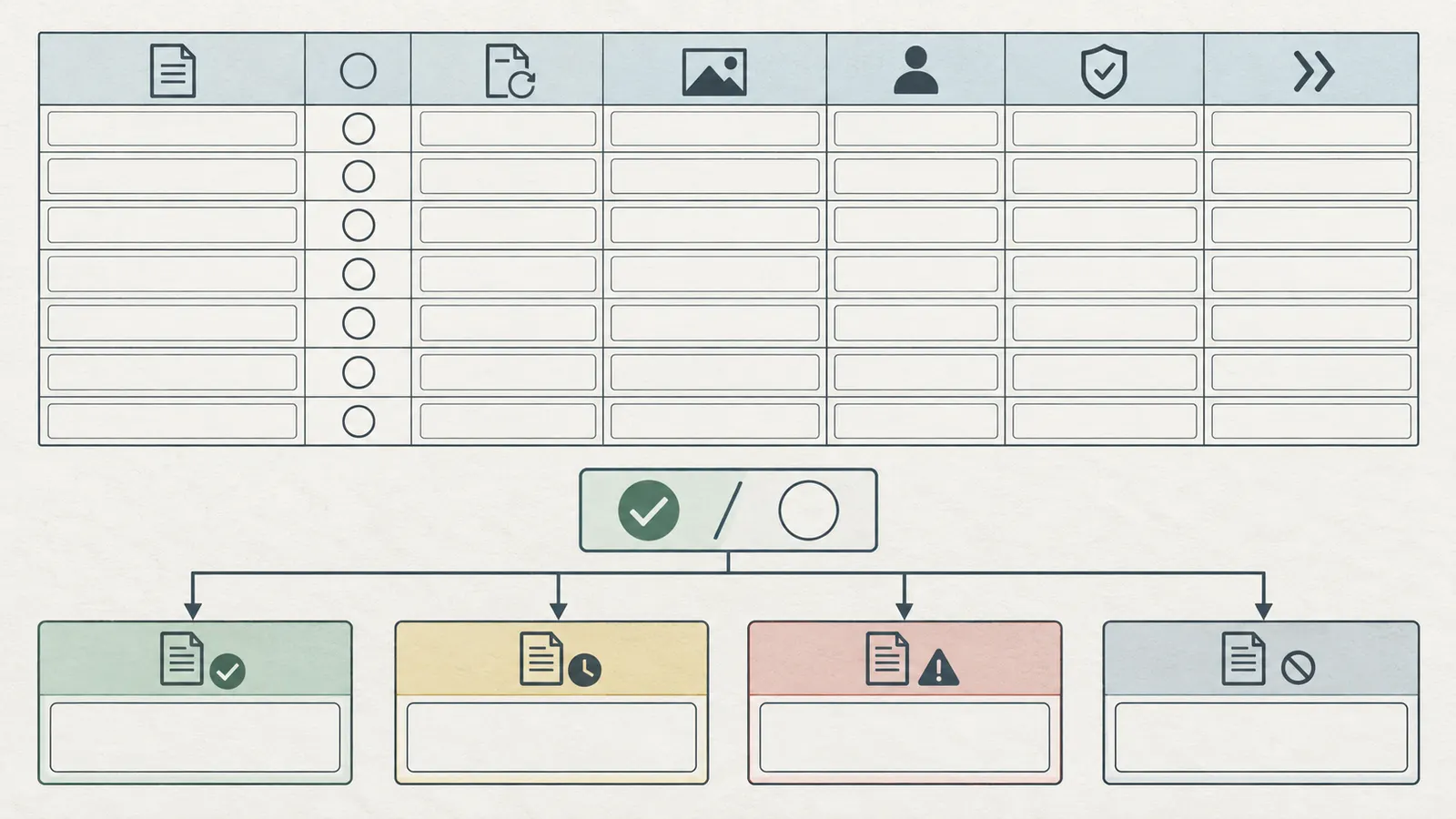
The practical decision has four possible outcomes:
| Outcome | What it means | What the homeowner can do next |
|---|---|---|
| Release | The required official result is verified, its scope matches the work, no related objection or hold is open, and correction evidence is complete where applicable. | Authorize or accept the next trade handoff, subject to the contract and the professional’s release. |
| Conditional hold | The result is pending, preliminary, limited, or dependent on a named correction or attachment. | Keep the affected work exposed, assign the missing action, and set a deadline before the covering operation. |
| Stop and escalate | The record conflicts with the visible work, an objection is open, a required inspection was skipped, or the permit/plan identity is uncertain. | Do not let the next operation conceal the disputed work. Ask the permit holder and the AHJ or qualified professional for the resolution path. |
| Not applicable | The item is not required for this permit, phase, program, or jurisdiction, and the responsible authority or qualified professional has documented why. | Record the reason and source. Do not treat an unexplained blank as “not applicable.” |
Seattle illustrates why the distinction matters for the right building type. For a Seattle single-family house, duplex, or townhouse of no more than three stories with separate entrances, the applicable municipal code is the Seattle Residential Code, not the Seattle Building Code. Its 2021 Chapter 1 requires permitted work to be inspected, kept accessible and exposed until approved, and not advanced beyond successive inspection points without written approval; it also requires final inspection and approval before occupancy. These are Seattle Residential Code rules, not a national template. Read the code and permit scope for the address before applying the same gate elsewhere. Seattle’s residential-code scope and 2021 Seattle Residential Code, Chapter 1
New York City illustrates a different access pattern. NYC Department of Buildings says anyone may search DOB NOW: Inspections for records and inspection details such as results, objections, and upcoming appointments, while an owner, licensed professional, or delegated filing representative can take additional actions after account and record association. That gives an owner a useful way to inspect the public record even when a professional handles requests, but it does not make NYC’s workflow a nationwide rule. NYC DOB’s inspection FAQ
The first handoff is therefore not “builder to homeowner.” It is:
- Homeowner identifies the current phase and the decision needed.
- Builder or permit holder supplies the permit, inspection, plan, and contact identifiers.
- The AHJ or program authority records the official result for its scope; a special inspector or licensed professional supplies a report or certification within the assigned scope.
- Builder or trade supplies correction evidence and as-built documentation; the authorized requester uploads or submits it where the local system allows.
- Homeowner, owner’s representative, or qualified professional reconciles the set without treating submission as closure.
- The next responsible trade receives a written release, hold, or explicit question.
An official pass is not a warranty that every construction defect is absent. A private quality-control record is not proof that an AHJ approved the work. A photo can show a condition at a moment in time, but it cannot by itself establish which permit item it relates to, whether the photo was taken before concealment, or whether the authority accepted the condition. The decision surface must keep those meanings separate.
What “builder controls the permit” should mean in practice
Ask the builder to identify the exact role they hold. They may be the permit holder, the applicant’s authorized agent, the general contractor, the filing representative, or merely the person who coordinates the work. Those roles can have different permissions. In some places the owner can request an inspection directly; in others the permit holder or professional must make the request. A contract may require the builder to provide records even when the portal gives the builder the login.
Request these items in writing:
- Permit number or numbers, including separate building, electrical, plumbing, mechanical, fire, grading, septic, or other trade permits.
- Legal project address, parcel or tax-lot identifier where used, and the AHJ name.
- Name and role of the permit holder, applicant of record, licensed professional, filing representative, and special-inspection agency.
- Approved plan set and revision identifier that governed the current work.
- Inspection request IDs, scheduled dates, inspection dates, results, report attachments, objections, correction certifications, and reinspection IDs.
- The builder’s internal checklist, photographs, test reports, manufacturer installation records, and subcontractor signoffs.
- The contract clause that defines record delivery, notice, change orders, concealment, and owner access to the site or documents.
If the answer is “the builder has it,” turn that into a record request with a due date and a requested file name. “Please send the final framing inspection report for permit BLD-123, inspection INSP-456, including any objection page and the applicable approved plan revision” is actionable. “Please send inspection documents” is not.
What you can decide without pretending to be the inspector
You can confirm the identity of a record, compare dates and identifiers, check whether a status is final or preliminary, locate open objections, observe whether work has been concealed, and ask which qualified person owns the next action. You can compare a visible installation to the approved drawing at a high level and flag a question. You cannot turn a remote photo review into a code inspection, certify structural adequacy from a picture, authorize unsafe site access, or direct a trade to alter structural, electrical, gas, fire-protection, or other regulated work.
Build a record map before asking for “all inspection records” #
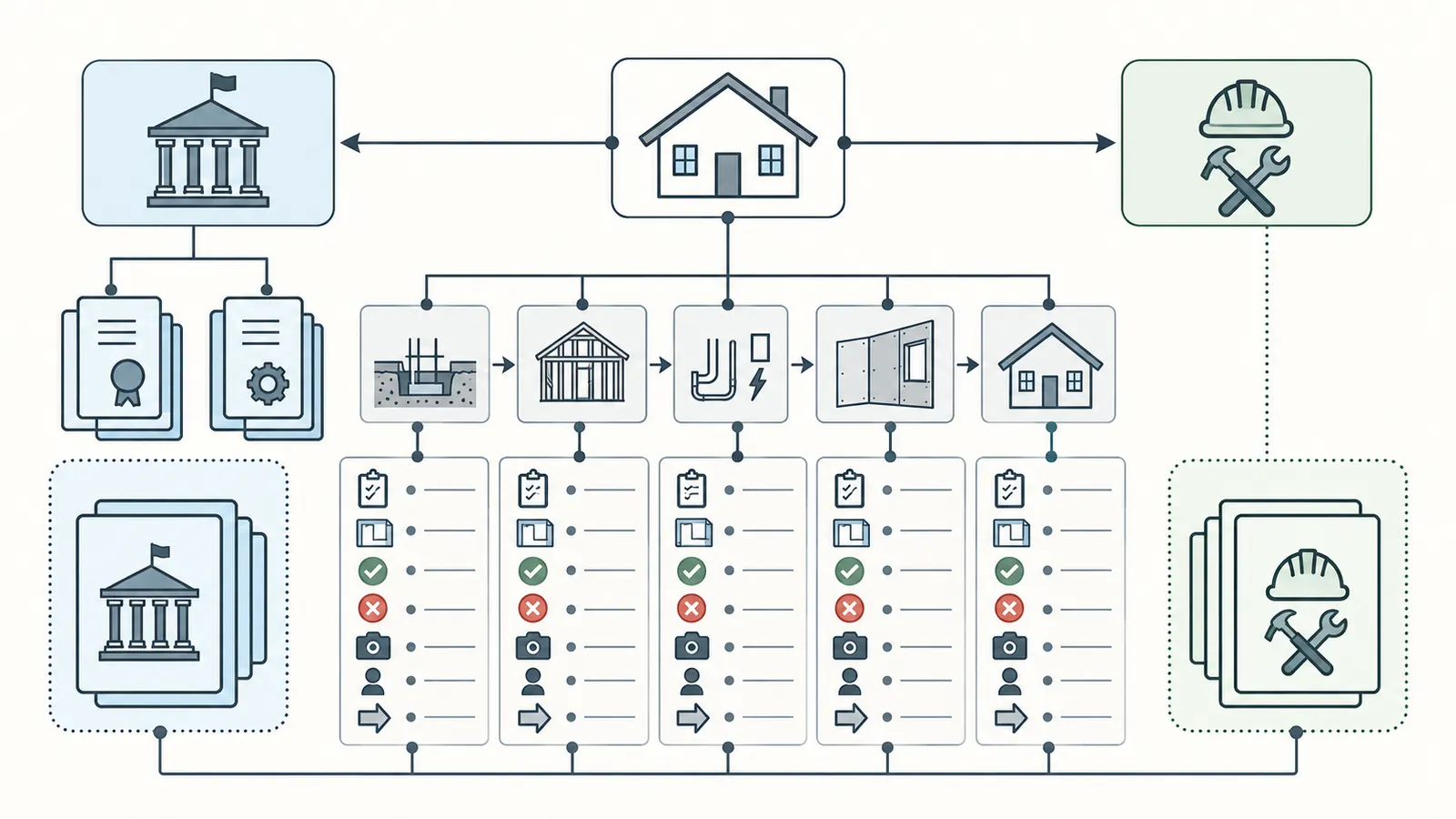
Build a record map first so that every request has a jurisdiction, phase, responsible requester, record ID, status, evidence location, and next action. Without that map, a homeowner can receive a large folder of photographs and PDFs and still not know whether a required inspection occurred or whether the file belongs to the current permit.
The minimum record map
Create one row for each item that could affect the current release. Do not assume that one building permit covers every trade. A new home can have separate records for the building shell, electrical service, plumbing, mechanical equipment, fire systems, site work, utility connections, energy certification, and special inspections. The exact list is jurisdiction-specific.
| Field | What to enter | Why it matters |
|---|---|---|
| Project identity | Address, lot or parcel, owner, builder | Prevents mixing records from another lot or phase. |
| Jurisdiction | City, county, state agency, utility, program verifier | Establishes which rule and portal apply. |
| Permit family | Building, electrical, plumbing, mechanical, grading, fire, energy, special inspection | Separates parallel approval paths. |
| Permit ID and status | Exact number, active/expired/closed if shown | A result on the wrong or expired record may not release current work. |
| Approved plan revision | Sheet or file revision and approval date | Lets the team compare the inspected work to the governing design. |
| Phase gate | Foundation, under-floor, framing, rough systems, enclosure, insulation, drywall, final, or local equivalent | Connects the inspection to the operation that could conceal it. |
| Inspection ID | Request, appointment, report, or field-report number | Makes the request auditable. |
| Official result | Pass, pass-final, approved, failed, pending, cancelled, objection, not found, or local equivalent | Preserves the authority’s words instead of paraphrasing them. |
| Status date | Request, site visit, result, correction, and finalization dates | Shows whether a result is current and whether preliminary status changed. |
| Objection or correction | Exact item, location, responsible trade, and closure path | A pass in one area may not close an open item elsewhere. |
| Evidence link | Portal URL, report filename, attachment name, or written response | Allows another person to reproduce the check. |
| Responsible requester | Permit holder, owner, agent, licensed professional, special inspector, or program verifier | Assigns the next action to someone with the right authority. |
| Trade handoff | Who needs the result before proceeding | Prevents a correction from being lost between trades. |
| Release decision | Release, hold, escalate, or not applicable | Makes the homeowner’s decision visible. |
| Revision and reviewer | Worksheet revision, date, and person who reconciled it | Stops a stale copy from being reused. |
The record map should contain both official and supporting documents, but label their source class. A useful source-class field is:
- AHJ record: permit status, inspection result, objection, correction certification, certificate, or final approval issued by the jurisdiction.
- Special-inspector record: field report or final letter from the designated special-inspection agency.
- Licensed-professional record: report, certification, test, or observation signed by the architect, engineer, energy rater, or other professional within their scope.
- Builder or trade record: internal checklist, daily report, photograph, delivery ticket, test sheet, or subcontractor signoff.
- Homeowner observation: dated note, question, or photograph taken from a safe, authorized location.
The labels are not a ranking of people. They are a way to avoid asking one document to prove something it was never designed to prove. An AHJ record may establish a municipal status but not confirm a hidden manufacturer installation detail. A trade checklist may show that a crew says it performed a test but may not establish that the AHJ accepted it. A special-inspection report may cover only the listed special-inspection items.
Prerequisites before the request
The homeowner needs five inputs before making a useful request:
- Address and jurisdiction. Confirm the actual municipality or county, because a mailing address can be served by a different permitting authority.
- Permit inventory. Ask for every permit number, not only the main building permit.
- Current phase. Name the operation that is about to occur: pour, backfill, cover, insulate, close walls, energize, commission, or request final approval.
- Decision deadline. State when the next trade intends to proceed and what would become inaccessible.
- Contract path. Identify who owes delivery, notice, correction, or approval under the agreement.
If the builder will not provide the permit inventory, document that fact separately from the technical question. The missing inventory is itself a stop condition for a reliable reconciliation. You may be able to search an AHJ’s public database, but a search result should not be assumed to include all private, special, trade, or program records. Ask the AHJ what the public search covers and what owner or authorized-agent access requires.
The “one phase ahead” rule
Maintain the map one phase ahead of the crew. Before concrete, verify foundation and under-floor prerequisites. Before insulation or drywall, verify the rough and framing records that the local authority requires before concealment. Before commissioning or occupancy, verify final inspections, open items, required certificates, and separate trade closeouts.
For a Seattle home within the Seattle Residential Code scope, the 2021 Residential Code provides a local example of the logic: foundation inspection is before concrete, under-floor work is inspected before concrete or subfloor, framing is inspected after roof, framing, fire-blocking, bracing, and rough systems are complete, and insulation is inspected before gypsum board or plaster. The sequence on a different project may differ, but the homeowner should always ask which operation will make the next evidence point inaccessible. Seattle’s 2021 Residential Code inspection provisions
Get the authority record through the right access path #
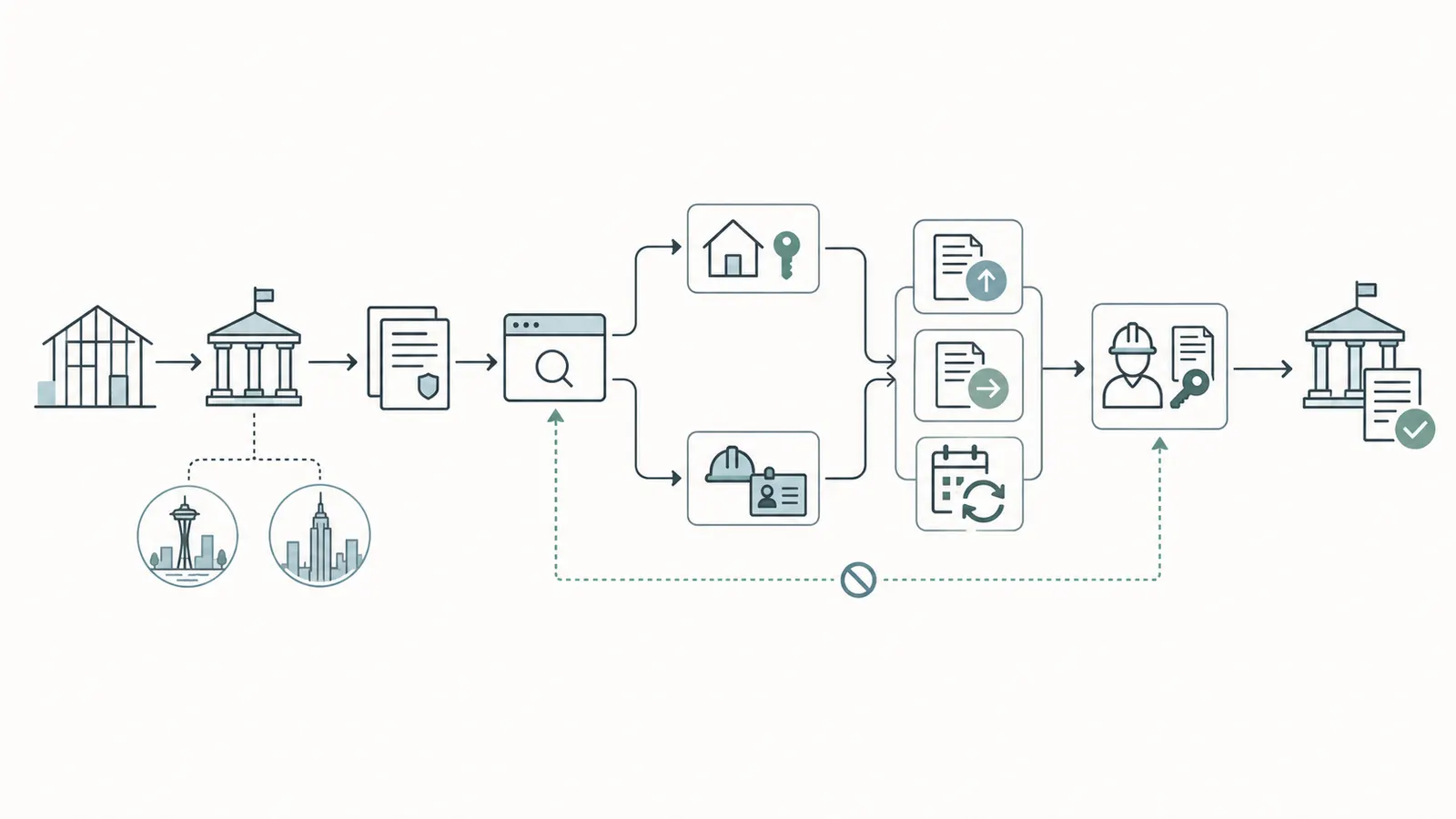
The right way to get a record is to identify the AHJ’s access route, search the public record where available, and then route any action or missing attachment to the person that the jurisdiction recognizes. A builder’s control of the permit is a coordination problem, not permission to substitute a private summary for the official record.
A jurisdiction-first workflow
Use this as a Brictale coordination sequence, then replace every generic role and status with the actual local instructions for the project address:
- Name the AHJ. Start with the city or county building department and ask whether trade permits, special inspections, energy programs, and fire or utility approvals are separate records.
- Collect the identifiers. Get permit number, address, parcel or job number, applicant, owner, and professional identifiers. Search by address only as a discovery step; confirm the exact permit before relying on a result.
- Check public viewing. Look for inspection history, open permits, correction notices, status dates, and final or occupancy documents. Record what the portal does not show.
- Create or link the owner account if the AHJ allows it. Use the email and identity information that the authority requires. Do not ask the builder to share a password. Ask for delegated access or an owner-linked account where available.
- Send a targeted written request. Ask for the exact missing report, status explanation, or access procedure. Include the permit number and phase.
- Route action to the authorized person. A homeowner may be able to view a record but not request a reinspection, upload a correction, schedule a trade inspection, or certify an objection. Assign that action to the permit holder, owner’s authorized agent, licensed professional, or other person named by the AHJ. Treat that person as the requester or submitter, not automatically as the official closer.
- Save the authority’s response. Record date, unit, contact method, case or ticket number, and the exact answer. A phone call can be useful for direction, but a written record is easier to reconcile.
- Compare the official record to the work. Check permit, phase, plan revision, result, location, date, and whether an objection or hold remains open.
Do not assume that a public portal is a complete project file. Do not assume that a permit status labeled “issued” means a rough inspection passed. Do not assume that a final building inspection closes electrical, plumbing, mechanical, fire, grading, or special-inspection records. Ask the AHJ what each status actually represents.
Seattle, Washington: permit-holder requests and successive approvals for SRC-scope homes
For a project in Seattle, the City’s construction-inspections guidance says the permit holder is responsible for calling and requesting each inspection. The page describes a common sequence including site inspection, foundation, subfloor, structural, framing, insulation, and final inspection, while noting that special inspections may also be required. Seattle’s construction-inspections guidance
For the homeowner, the useful request is not “Can you tell me whether the builder passed?” It is:
“For project address [address], please provide the permit number(s), the current inspection history, and the inspection report or notes for [phase]. The builder says [work] was approved on [date]. Please confirm whether the authority’s record shows an approval, a failed or incomplete inspection, an open correction, or no inspection record, and tell me which account or authorized person must request the missing action.”
For a Seattle home within the Residential Code scope, the code also says the permit holder and the person requesting inspections must provide access and means for proper inspection, and the work must remain accessible and exposed until approved. That means a homeowner should not accept “we covered it before the inspector came” as a harmless scheduling detail. Ask the permit holder and inspector what the local correction or special-investigation route is. Do not direct a worker to demolish or expose work without coordinating with the responsible professional and the AHJ. Seattle’s Residential Code on access, inspection records, and concealment
Where Seattle requires special inspections, the City says the owner selects and pays the special-inspection agency, the agency writes a field report after each site visit and uploads it to the Seattle Services Portal, and the City must accept the final letter before the permit can be completed. That is a separate evidence path from an ordinary building-inspector entry. Ask for the special-inspection authorization letter, each field report, unresolved concerns, and the accepted final letter when the phase or closeout depends on them. Seattle’s special-inspections guidance
The Seattle example teaches three portable questions, even where the answers differ elsewhere:
- Who is responsible for requesting the inspection?
- What work must stay accessible until written approval?
- Which report or letter closes the item, and who accepts it?
Only the local AHJ can answer those questions for another address.
New York City: public search, owner association, and objections
For a project in New York City, begin with DOB NOW: Inspections. NYC DOB says anyone can search for and view records and inspection details such as results, objections, and upcoming appointments. An owner, licensed professional, or delegated filing representative can request, cancel, and view inspection results after the required registration and record association. NYC DOB’s inspection FAQ
The owner-access step is specific. NYC DOB says owners register using the email listed on Section 26 of the PW1 so the system can link the owner to the properties. If the builder or applicant-of-record has not connected the owner, ask the builder and the NYC DOB support path which record association is missing. Do not accept a screenshot that omits the record number, inspection type, result, objection status, or attachment list.
If a result is a failure or objection, identify whether the item is certifiable or non-certifiable under NYC’s workflow. NYC DOB says a certifiable objection can be addressed by uploading documentation, while a non-certifiable objection requires the issue to be corrected and another inspection requested. The FAQ also says an updated inspection report is generated after the last objection certification is approved. NYC DOB’s objection and result guidance
The NYC manual adds an important status distinction: registered users associated with the record receive preliminary results that may change during supervisory review and final results, and the inspection report is available in the record’s attachments. Therefore, record the result label exactly. “Preliminary” is not the same as “final,” and “Pass/Final” in one NYC workflow may still require a separate filing status or closeout item. NYC DOB’s inspection-results manual
A request template that works across jurisdictions
Adapt this message rather than copying local terms into a different city:
Subject: Inspection record and phase-release request — [address] — [permit ID]
We need to decide whether [specific work] can be covered or whether the next trade may proceed on [date]. Please provide or identify:
- The governing permit number and AHJ;
- The inspection type, request or report ID, site-visit date, and exact result;
- The approved plan revision or scope reviewed;
- Any open objection, correction, reinspection, stop, hold, or required attachment;
- The person authorized to request, upload, certify, or schedule the next action; and
- The evidence and date required to release [specific phase].
A builder checklist or photo may be attached as supporting evidence, but please identify the authority record separately. If the record is not available, please state whether it is pending, not required, inaccessible to this account, or missing and give the official route for resolving that status.
The request is designed to force a decision. It does not demand that an AHJ disclose information it does not release, and it does not ask the homeowner to make a technical certification.
Verify the record against the work, not against the builder’s confidence #
Verification means reconciling the authority’s record, the approved design, the visible or documented work, and the responsibility for correction. A “pass” is meaningful only when the record belongs to the right project and phase, is final when finality is required, and has no related open item that still blocks the release.
A five-part identity check
For each record, check:
- Project identity: Does the address, parcel, job number, or record ID match this home?
- Permit identity: Does the inspection attach to the permit and trade that govern the work?
- Phase identity: Does the inspection cover the operation that is about to be concealed or handed off?
- Time identity: Did the inspection occur after the work was ready and before it was covered or altered?
- Document identity: Does the report reference the right plan revision, location, result, objection, or correction?
If any identity check fails, mark the row unreconciled. Do not silently choose the document that supports the builder’s preferred schedule.
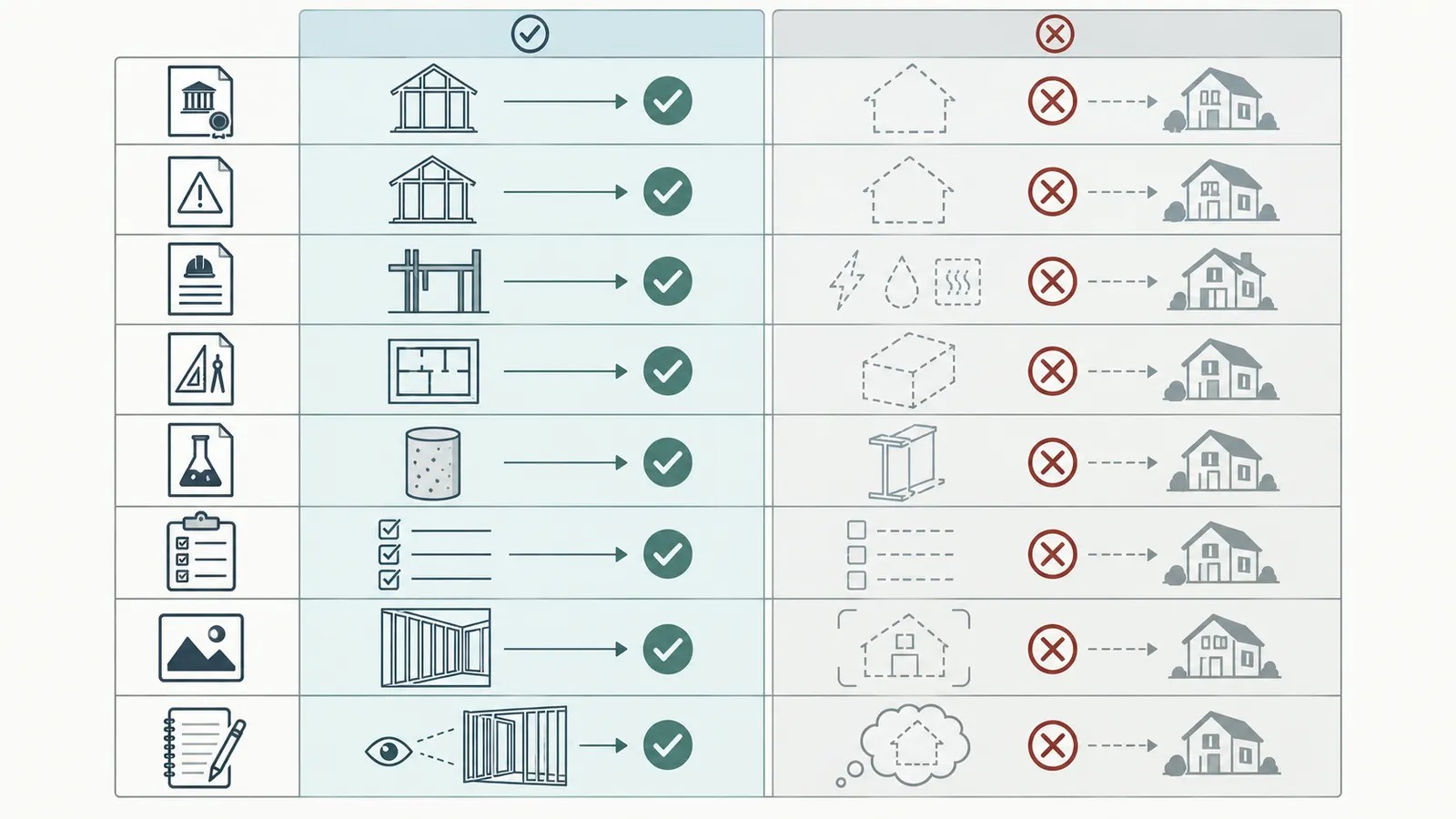
The evidence ladder
Use the following ladder as a meaning check, not as a universal legal hierarchy:
| Evidence | Can support | Cannot prove by itself |
|---|---|---|
| AHJ result or final report | What the authority recorded for that inspection or filing | That every private contract promise or hidden detail is satisfied |
| AHJ objection, correction, or closure record | What remained open and how the authority marked it closed | That a different trade’s work is acceptable |
| Special-inspector report or accepted final letter | The listed special-inspection scope and reported observations | Ordinary building-inspection approval outside its scope |
| Licensed professional certification | The professional’s signed opinion or certification within scope | A jurisdiction’s unrelated inspection status |
| Test report | The test value, method, equipment, date, and stated acceptance criteria if complete | A permit pass unless the AHJ or program accepts it |
| Builder or trade checklist | What the builder or trade says was done or checked | An official AHJ approval |
| Photograph | A visual condition at a stated time and location | Concealed compliance, code status, or future performance |
| Homeowner note | A question, discrepancy, or observation | A technical determination |
DOE’s current Efficient New Homes Single Family quality-assurance checklist is a useful example of record discipline, but it is a program-specific layer. It calls for file and field review, records rater names and inspection dates, and compares accessible installed conditions with the energy-rating file and checklist. It does not replace the local building department’s inspection record. DOE Efficient New Homes QA checklist
The same DOE checklist says that an item not visible, accessible, or testable should be marked Not Verified with an explanation, and that items not yet installed at a pre-drywall review should be marked N/A with an action or explanation summary. This gives the homeowner a useful question for any quality-control package: does the document distinguish “verified,” “not verified,” and “not yet applicable,” or does it turn an inaccessible condition into an unqualified pass? DOE’s QA instructions for Not Verified and N/A
Preliminary, pending, failed, passed, and closed are different decisions
Translate the authority’s exact status into the homeowner’s next question:
- Requested or scheduled: Has the inspection occurred? If not, no result exists yet.
- Pending: Is the authority waiting for the visit, supervisory review, a document, or an account action?
- Preliminary: Can the result change? What event makes it final?
- Pass or approved: What scope passed, and are there related objections or permit items?
- Pass-final or equivalent: Does the AHJ treat this as a final inspection result, or is a separate filing completion still required?
- Failed or objection: Is the correction certifiable from documents, or is a return inspection required?
- Cancelled or no access: Why was it cancelled, and must the permit holder reschedule?
- Closed or complete: Does “closed” mean the inspection, the permit, the trade permit, or the whole project?
NYC’s inspection manual explicitly distinguishes preliminary results that are subject to supervisory review from final results. Its FAQ also says that if a homeowner disagrees with an inspection result, the homeowner should contact the unit that issued it. That is a better escalation route than asking the builder to reinterpret a status. NYC inspection-results manual and NYC DOB FAQ
Compare the work without entering an unsafe site
Make a comparison list from approved plans, the builder’s schedule, safe exterior observations, authorized site photographs, and professional reports. Do not enter an active construction area to inspect a trench, roof, open floor edge, energized panel, confined space, excavation, or other hazard. Ask the builder or qualified professional for a controlled walk-through if one is needed.
Compare:
- Location: room, elevation, grid, floor, wall, equipment pad, or site area.
- System: structure, enclosure, electrical, plumbing, mechanical, fire protection, drainage, or energy feature.
- Phase: installed, tested, inspected, corrected, covered, commissioned, or final.
- Design basis: approved plan, specification, change order, manufacturer instruction, or program checklist.
- Evidence date: whether the evidence predates the covering or change.
- Responsible person: who can answer a technical discrepancy and who can act in the AHJ system.
When a photograph shows insulation but the official report refers only to framing, you have two separate facts, not a combined approval. When a builder says a correction was fixed but the authority’s objection remains open, mark the correction as privately reported and the official issue as open until the authority or other status owner records closure. A qualified person may interpret the discrepancy or supply a report, but that report does not by itself change an AHJ status.
Use the inspection-record control worksheet as a phase-release decision surface #
The Inspection-record control worksheet: a phase-release decision surface is the reusable tool in this guide. It connects each required item to an official or professional record, its responsible requester, correction evidence, trade handoff, and release decision. It is useful because the same home may have several record systems operating at once, and because “pass,” “builder says fixed,” and “ready for the next trade” are different statements.
Method
The method is:
Manifest method: Map each required permit, inspection, special inspection, quality-control check, objection, correction, and release to its source record; identify the authorized requester and the authority or program that owns official closure; reconcile identifiers and dates; calculate a project-control completeness ratio as verified required records divided by required records; then apply explicit stop conditions before covering work or releasing the next trade.
- List the required or potentially required item for the current phase.
- Name the jurisdiction, permit, professional, or program that owns the record.
- Record the exact inspection, report, objection, or checklist ID.
- Capture the status and status date in the source’s own words.
- Attach the evidence location and approved plan revision.
- Record correction evidence separately from official closure.
- Assign the requester, correcting trade, verifier, and next handoff.
- Apply the stop conditions below.
- Calculate a project-control completeness ratio for visibility only.
- Issue a release, hold, escalation, or documented not-applicable decision.
The worksheet uses two related but separate documentation references. Building Science Corporation’s quality-control checklist describes a guide for high-performance home building and a simplified on-site quality-control tool. Separately, the DOE-hosted Building America construction-documentation guideline recommends documenting design intent and field execution so the people responsible for the work can coordinate them. Both references are advisory; neither becomes an AHJ result simply because the homeowner uses similar worksheet fields.
Worksheet
Copy the table into a spreadsheet or project log. Use one row per inspection, special-inspection item, objection, program check, test, or release dependency. Do not combine unrelated permits into one row.
| Record-control field | Homeowner entry |
|---|---|
| Worksheet revision and review date | Example: R03 — September 8, 2026 |
| Project address and parcel | Exact legal or permit address |
| AHJ and other record owners | City/county building department; trade AHJs; special-inspection agency; energy program verifier |
| Official status owner / closure authority | The AHJ, program authority, or other record owner that records or accepts final status for this item |
| Permit family and permit ID | Building, electrical, plumbing, mechanical, fire, grading, energy, special inspection |
| Approved plan revision | Drawing/specification revision and approval date |
| Phase gate | Exact operation at risk of being covered or released |
| Required item | Foundation, under-floor, framing, rough electrical, air barrier, insulation, equipment start-up, final, or local equivalent |
| Inspection/report/request ID | Exact authority, professional, or internal identifier |
| Source class | AHJ; special inspector; licensed professional; builder/trade; homeowner observation |
| Requester and access role | Permit holder, owner, authorized agent, licensed professional, delegate, special inspector |
| Site-visit or observation date | Date and time where available |
| Official result in source words | Requested, pending, preliminary, pass, pass-final, fail, objection, closed, or local label |
| Open objection, correction, or hold | Exact item, location, and whether return visit is required |
| Correction evidence | Report, photo, test, change record, certification, or response; label as private or official |
| Official closure evidence | Final report, accepted letter, updated status, or written AHJ response |
| Trade responsible for action | Builder, concrete, framing, electrical, plumbing, HVAC, envelope, fire, or other |
| Professional responsible for interpretation | Architect, engineer, inspector, energy rater, special inspector, or AHJ unit |
| Next trade or handoff | Who needs this result and what they are allowed to do |
| Release decision | Release; conditional hold; stop/escalate; not applicable |
| Next action and owner | One action, one responsible person, one due date |
| Evidence location and revision | Portal path, attachment name, file hash or controlled filename, worksheet revision |
Stop conditions
Mark stop/escalate for the affected scope when any of these is true:
- The permit ID, address, or inspection ID cannot be reconciled.
- The required inspection is not found, was cancelled, or is only scheduled.
- The record is preliminary where the phase requires final or written approval.
- An objection, correction, stop, hold, or required attachment remains open.
- The builder’s correction evidence conflicts with the authority’s record.
- The work has been covered before the required inspection and no authority-approved path is documented.
- A plan change or field change may have moved the work outside the approved scope.
- The record covers a different trade, floor, unit, system, or phase.
- The next operation would make the disputed condition inaccessible.
- A person without the required authority is being asked to request, certify, sign, or release the item.
“Stop” here means stop the affected covering or release decision and escalate the record question. It does not mean the homeowner should confront workers, enter the site, alter construction, or issue a technical order.
Project-control completeness ratio
For visibility, calculate:
Completeness ratio = verified required records ÷ total required records × 100
This is not an AHJ threshold and cannot convert an unsafe or illegal project into a safe one. It merely shows whether the document set is complete enough to discuss. A row counts as verified only when its identity, scope, status, and closure condition are known. A builder promise, unlabelled photograph, or unexplained blank does not count.
Illustrative example — not a code decision. Suppose a homeowner identifies six required release rows before wall close-in:
- building framing inspection;
- electrical rough inspection;
- plumbing rough inspection;
- mechanical rough inspection;
- special-inspection field report;
- correction closure for a plan revision.
If five rows have matching IDs, dates, scope, and closure status, the ratio is:
5 ÷ 6 × 100 = 83.3%
That 83.3% does not mean the homeowner may cover the walls. If the missing row is the electrical rough inspection, it is a critical stop despite the high ratio. A 4-of-6 set after discovering that the special-inspection report also lacks a final letter is not merely “a little less complete”; it reveals that two different responsible parties still have work to do.
Sensitivity. With six required rows, one missing row changes the ratio by 16.7 percentage points. With twelve rows, one missing row changes it by 8.3 points. The ratio becomes less visually dramatic as the list grows, which is why the worksheet also requires criticality and stop conditions. A ratio can summarize documentation completeness; it cannot rank the importance of a missing inspection.
Limitations
Manifest limitations: This is an illustrative homeowner control method, not a code sign-off, legal opinion, engineering review, inspection report, or substitute for the local authority having jurisdiction, licensed design professional, special inspector, or contract remedies. Local record-access rules and phase requirements vary.
This worksheet is an illustrative homeowner control method. It is not a code sign-off, legal opinion, engineering review, special-inspection report, official AHJ form, or substitute for the contract, the permit documents, the local building official, or a licensed professional. It does not establish that a phase is safe to enter, safe to operate, or compliant. Its status labels must be adapted to the actual jurisdiction. If the AHJ or professional uses a different record system, preserve that system’s exact terminology and add the source URL or written response.
The worksheet also cannot resolve a disagreement by arithmetic. If a record says “fail,” an 83.3% completeness ratio does not soften it. If an owner has a signed professional report but the local code requires a separate AHJ inspection, the professional report does not erase that requirement. The tool helps the homeowner ask a narrower, better-identified question.
Decide what may proceed after a pass, gap, or conflict #
Release the next phase only when the required record is verified for the actual scope, all blocking corrections have closure recorded by the authority or program that owns the status, and any required professional acceptance is documented. The handoff must tell the next trade what remains open. A pass can release one operation without releasing every related trade or every private contract obligation.
A phase-gate decision matrix
| Observed state | Interpretation | Safest next action | Role split and handoff |
|---|---|---|---|
| Official final or written approval matches permit and phase; no open blocker | Authority-side release appears documented for that scope | Save the record and issue a limited release for the named operation | AHJ or record owner records the result; builder hands the named scope to the next trade |
| Builder checklist says complete; authority record is missing | Private evidence exists but official status is unverified | Hold covering or release; permit holder requests or locates the authority record | Builder supplies support; permit holder or authorized person requests; AHJ owns official status |
| Inspection requested but not performed | No inspection result yet | Keep work accessible and reschedule through authorized requester | Permit holder requests; inspector or AHJ records the result |
| Preliminary result says pass; final result not posted | Status may change | Treat as pending unless the AHJ confirms preliminary status is sufficient for that operation | Registered account holder follows up; issuing authority records the final status |
| Failed or objection with document-only closure path | Correction may be reviewed without a return visit under local rules | Correct, have the authorized person upload the required evidence, and wait for the issuing authority to approve or record closure | Trade supplies correction; authorized requester submits; issuing AHJ updates status |
| Failed or objection requiring return visit | A document alone is not enough | Correct, keep the affected work accessible, and request reinspection | Trade corrects; permit holder or professional requests; AHJ reinspects and records result |
| Correction photo exists; objection remains open | Private evidence and official status conflict | Hold; ask the issuing unit or authorized account holder for the closure route | Builder supplies photo; authority decides whether its status changes |
| Special-inspection report exists; final letter not accepted | Special-inspection closeout is incomplete | Do not treat the field report as final acceptance; the special inspector supplies the final letter and the AHJ accepts or rejects it | Special inspector submits; AHJ reviews and records acceptance |
| Work differs from approved plan | Scope or revision may be wrong | Stop the disputed release and ask the design professional/AHJ about change or amendment path | Professional advises or documents; AHJ approves any required change |
| Record is not applicable with written reason | Requirement is excluded or different for this project | Store the reason and source; revisit if scope changes | AHJ, program authority, or qualified professional documents the reason within scope |
For a Seattle home within the Residential Code scope, written approval is required before proceeding beyond successive inspection points, while NYC’s current FAQ distinguishes certifiable objections from issues requiring reinspection. Those examples show why the matrix uses local status words and does not create one national pass rule. Seattle Residential Code and NYC DOB objection workflow
The difference between “ready for inspection” and “approved”
Builders often need to declare that work is ready before an inspector visits. That is a scheduling or readiness statement. It is not the inspection result. A complete internal checklist may justify calling the inspection; it does not replace the authority’s observation, report, or approval.
Likewise, a report that says “correction completed” may be a trade’s completion note, a professional’s verification, or an authority’s closure. Write the source class beside the words. Ask:
- Who wrote it?
- Under what role?
- For which permit or program?
- What exact condition did they check?
- What acceptance criterion did they apply?
- Does another inspection or approval remain?
This is particularly important for performance programs. DOE’s QA checklist records rater names, dates, signatures or initials, and as-built comparisons, but the program scope and the local code scope remain separate. A homeowner can use the DOE record to improve handoff confidence while still asking the AHJ for its own inspection status. DOE Efficient New Homes QA checklist
Trade handoff language
Use a narrow handoff:
“The [authority or professional] record for [permit and inspection ID] shows [exact status] as of [date] for [scope]. [Open item] remains [open/closed/not applicable]. The next trade may [specific operation] only after [condition], and [person] owns the next action by [date].”
Avoid:
“Inspections are good; proceed.”
The narrow version preserves scope, date, and responsibility. It also makes it harder for a downstream trade to assume that a building framing approval released electrical, plumbing, energy, fire, or manufacturer-specific commissioning.
Handle missing, conflicting, or stale records as distinct failure cases #
Treat a missing record, conflicting record, stale record, and inaccessible record as different problems because each has a different owner and resolution path. The goal is to identify the next authoritative action, not to pressure the builder into producing a document with the right-looking words.
Case 1: The builder says “the inspector passed,” but no report appears
First ask whether the inspection was requested, performed, and finalized. A verbal statement may refer to a site visit, a preliminary result, a builder’s internal quality check, or an inspector’s informal comment. Request the inspection ID, permit number, date, result label, and attachment.
If the local portal is public, search by address and permit. If no record appears, ask the AHJ whether the record is private, delayed, attached to another permit, or unavailable through public search. In Seattle, the permit holder is responsible for requesting each inspection, so the builder or permit holder is the first person to route the request; for a home within the Seattle Residential Code scope, the City’s Residential Code separately identifies access and written approval requirements. Seattle construction-inspections guidance and Seattle Residential Code
Until the authority confirms the result or the local professional supplies the required report, keep the affected scope in a conditional hold. If the work is already covered, do not open it casually. Ask the AHJ, permit holder, and qualified professional for the prescribed correction or investigation path.
Case 2: The report is for the wrong permit, lot, floor, or phase
This is an identity failure, not a minor clerical issue. Record both identifiers, mark the row unreconciled, and ask the permit holder or AHJ to explain whether the work moved under a revised permit or separate trade record. If a plan revision changed the scope, ask the design professional or filing professional which approved revision governs and whether the AHJ required an amendment.
Do not let a generic “same house” explanation replace the permit relationship. A framing record may not close a special-inspection item. An electrical result may not cover a plumbing rough-in. A report from the neighboring lot may look identical and still be irrelevant.
Case 3: The correction photo exists, but the objection remains open
Label the photo as correction evidence, not official closure. Ask the person who can act in the local system to identify whether the item is certifiable, requires a reinspection, requires a plan amendment, or is blocked by another condition. NYC DOB’s FAQ is explicit that certifiable objections can use uploaded documentation, while non-certifiable objections require correction and another inspection. That distinction belongs to NYC; elsewhere, ask the local AHJ for its equivalent. NYC DOB FAQ
If a final inspection report has not updated, the next trade should not infer closure from the uploaded file. Keep the row open until the issuing authority, special inspector, or responsible professional records closure.
Case 4: The status is Pass/Final, but closeout is incomplete
Ask what “final” applies to. It may be the inspection result while a separate permit filing, fee, certificate, correction, utility release, or required item remains. NYC DOB’s FAQ provides a concrete example: for electrical jobs, the inspection status can remain Pass/Final in DOB NOW: Inspections while the filing status in DOB NOW: Build becomes Complete after the stated conditions are met. A homeowner should therefore record both the inspection status and the filing or permit closeout status where the jurisdiction separates them. NYC DOB FAQ
Do not generalize that exact label behavior to another jurisdiction. Ask the local authority which status controls the next decision.
Case 5: The special inspector has a field report, but no accepted final letter
A field report records a visit and scope; it may not close the special-inspection program. In Seattle, the City says the special inspector uploads field reports and a final letter, and that the City must accept the final letter before the building permit can be completed. Ask for the authorization letter, the listed inspection items, every field report, open concerns, the final letter, and the City’s acceptance or request for more information. Seattle special-inspections guidance
If a concern is described as resolved by the contractor but the special inspector has not accepted the resolution, keep the item open. The owner’s ability to select and pay the special-inspection agency in Seattle does not give the owner authority to self-accept the report.
Case 6: The record is inaccessible because the builder controls the account
Ask for delegated access, owner-linked access, a public search path, or an official written response. Never ask for a shared password or use another person’s credentials. In NYC, an owner may register using the email in the PW1 record, and anyone can search for inspection information without an account; an owner, licensed professional, or delegated representative can take additional actions when associated with the record. That is an example of a designed access path, not a promise that every U.S. system works the same way. NYC DOB FAQ
If the AHJ requires the permit holder or professional to act, document the request, the response deadline, and the contractual consequence of not delivering. Keep the technical issue separate from the commercial dispute. The builder may owe the record under the contract even if the AHJ controls the portal.
Case 7: The work was covered before inspection
Do not direct unqualified people to remove finishes, enter a hazardous area, or expose structural or electrical work. Notify the builder, permit holder, design professional, and AHJ through the documented project channel. Ask what local process applies: opening a limited area, special investigation, reinspection, testing, revised documents, or other remedy.
For a Seattle home within the Residential Code scope, the code says work must remain accessible and exposed until approved and says the City is not liable for the cost of removal or replacement needed to allow inspection. The cost and remedy can become a contract issue, but the homeowner should not turn that rule into a DIY demolition instruction. Seattle Residential Code, Section R106
Case 8: The builder asks for a remote approval
A video call, photo set, or drone image can help a professional triage a question, but it is not automatically a remote AHJ inspection or official sign-off. Ask the local authority whether remote inspection is authorized for that specific work and record the answer. The approved method, person, equipment, safety conditions, and record type matter.
The research scope for this guide excludes remote sign-off because a homeowner cannot infer that authority from a photograph. If the AHJ offers a remote process, follow its current instructions exactly and keep the resulting record separate from an informal video review.
Keep the site safe while records are being resolved
The safest homeowner role is document controller and decision owner, not unprotected site inspector. Stay outside restricted areas, follow the builder’s site rules, and assign falls, excavation, structural, electrical, energized-system, confined-space, and other hazardous work to qualified professionals and the responsible employer.
OSHA’s residential fall-protection guidance is focused mostly on new construction and is intended to help employers prevent falls; OSHA also states that the guidance itself is not a standard or regulation and creates no new legal obligations. The practical boundary for a homeowner is simple: do not treat the guide as permission to enter an active site or improvise a safety system. OSHA Fall Protection in Residential Construction guidance
Hazards relevant to the record decision
- Falls: Open floors, roof edges, ladders, scaffolds, and unprotected stair openings can exist specifically because work is waiting for inspection. Request photographs or a controlled, protected walk-through rather than stepping into the area.
- Excavation and collapse: A foundation, utility trench, or retaining-wall inspection can involve unstable soil, equipment movement, and buried services. Do not enter an excavation to “check whether it passed.”
- Structural instability: Framing, bracing, shoring, temporary supports, and partially connected assemblies are not homeowner inspection opportunities. Ask the structural professional or inspector to interpret the record.
- Electrical and energy: Open panels, temporary power, generators, energized equipment, and incomplete grounding or bonding can create shock and fire hazards. Do not test, energize, or remove covers unless qualified and authorized.
- Pressure, combustion, and equipment: Mechanical, gas, hydronic, and pressure tests need the responsible trade and the manufacturer’s instructions. A general inspection status does not prove a system was commissioned.
- Air quality and confined spaces: Crawlspaces, tanks, pits, and enclosed areas can contain low oxygen, fumes, dust, or contamination. Do not enter to retrieve a document or photograph.
- Contamination or water intrusion: Wet materials, mold-like growth, sewage, or construction chemicals require appropriate assessment. Do not treat a photo as a diagnosis.
A safe observation log can include the date, location, what was visible from an authorized area, who supplied the information, and the question to resolve. It should not include instructions to climb, open energized equipment, remove barriers, or enter an excavation.
The remote-assessment limit
Remote evidence can verify document identity and help identify a mismatch. It cannot reliably establish concealed fastening, continuity, torque, firestopping, structural load path, pressure integrity, leakage, air-sealing quality, or code compliance unless the responsible professional and AHJ have accepted a documented remote method. The homeowner’s decision is to route that question, not answer it alone.
Close the loop at final inspection and handover #
The record process is complete only when the current phase is released, every open issue has a named closure path, and the final handover file distinguishes authority approvals from contract, warranty, maintenance, and performance documents. Do not wait until move-in to discover that a permit record belongs to a different trade or that a special-inspection final letter was never accepted.
A closeout inventory
Before accepting a final handover package, ask for:
- Final building inspection result and any certificate of occupancy or equivalent, if required by the jurisdiction.
- Final trade-permit statuses for electrical, plumbing, mechanical, fire, grading, septic, utility, or other applicable records.
- Open-objection, correction, violation, stop-work, or required-item search and the written explanation of any remaining item.
- Special-inspection authorization, field reports, correction records, and accepted final letter where required.
- Approved plan set and change or amendment records that match the as-built work.
- Professional certifications, energy-program records, test results, commissioning records, and manufacturer start-up documents.
- Equipment serial numbers, model numbers, controls, filters, shutoffs, and maintenance requirements.
- Warranties, inspection contacts, permit contacts, and escalation contacts.
- A final revision of the worksheet showing each row as released, closed, not applicable with reason, or carried into a written post-handover action.
The local AHJ may use different terms. The point is to reconcile final status across record owners. A certificate or final building inspection is not a substitute for operating instructions or warranty records. A builder’s warranty claim is not an open code correction unless the authority says so. Keep those categories separate.
Retention and revision control
Use a stable folder or document-control system with:
- 00-project-index for address, jurisdiction, permits, and contact roles;
- 01-approved-design for stamped or approved plans and revision log;
- 02-authority-records for portal exports, reports, objections, and final statuses;
- 03-special-inspections for authorization, field reports, and final letters;
- 04-quality-and-performance for energy, testing, commissioning, and manufacturer records;
- 05-corrections for issue, owner, evidence, verification, and closeout;
- 06-handover for final inventory, warranties, and maintenance instructions.
The names are illustrative. Use the project’s existing document-control convention if one exists. Do not overwrite an earlier inspection result with a newer screenshot. Save the original, record the access date, and note the status change. If a portal changes, retain the downloaded report and the URL or record path used to retrieve it.
The next decision
After each record review, answer one sentence:
“May [named person or trade] perform [named operation] on [named scope] as of [date], or must [named responsible party] supply [named record or correction] before that operation?”
If you cannot fill in all five blanks, the record is not ready to support a release. The next step is usually not another general request for “all paperwork.” It is one targeted action:
- permit holder requests the missing inspection;
- owner links to the AHJ record;
- licensed professional interprets a plan discrepancy;
- special inspector supplies the field report or final letter; the AHJ or program authority records acceptance where required;
- trade uploads correction evidence;
- AHJ unit explains a status or objection;
- builder preserves access until approval;
- homeowner documents the contract notice separately.
Final review checklist
Before accepting a phase release, check:
- The address, parcel, permit, trade, and inspection IDs match.
- The AHJ and any separate program or special-inspection owner are named.
- The current approved plan revision is recorded.
- The result is copied in the authority’s or professional’s own words.
- Preliminary, pending, pass-final, complete, objection, and closed labels are not merged.
- Every open objection or correction has an owner and a closure path.
- Private photographs and checklists are labeled as supporting evidence.
- Work was not covered before the required approval, or the documented local remedy is underway.
- The next trade knows the exact scope that is released and what remains excluded.
- No homeowner action requires entering a hazardous area or performing regulated work.
- The worksheet revision, reviewer, date, and next action are saved.
This process gives the homeowner a defensible answer to the real question: not whether the builder sounds confident, but whether the current phase has enough official inspection status and project evidence to move forward. Where the answer is no, the worksheet makes the missing record, correction, responsible requester, and next handoff visible without pretending that a private checklist can sign off the work.
Cite this guide
Brictale. “How to Get and Verify New-Home Inspection Records When the Builder Controls the Permit.” Published 2026-09-25; updated 2026-09-25.
https://brictale.com/build/construction/get-verify-new-home-inspection-records-builder-controls-permit · Read the Markdown version
Original contribution: Inspection-record control worksheet: a phase-release decision surface. A reusable record-by-record worksheet that separates an authority result from a builder promise and connects each inspection item to correction evidence, responsibility, trade handoff, and the next release decision.
Sources and scope
Evidence behind this page
- For Seattle homes within the Seattle Residential Code's scope—single-family houses, duplexes, and townhouses of no more than three stories with separate entrances—the 2021 Seattle Residential Code makes permitted work subject to inspection, requires access and exposure until approval, prohibits proceeding beyond each successive inspection without written approval from the building official, and requires final inspection and approval before occupancy.
2021 Seattle Residential Code, Chapter 1, Administration
Seattle, Washington; Seattle Residential Code scope and Chapter 1 (Sections R106.1, R106.3–R106.8) for single-family houses, duplexes, and townhouses no more than three stories with separate entrances. The provisions are a local example, not a national rule and not the applicable code for every Seattle building.
Accessed · Link to this claim - Seattle says its Seattle Residential Code provides minimum design and construction requirements for single-family houses, duplexes, and townhouses with no more than three stories and separate entrances; other buildings are regulated under the Seattle Building Code or Seattle Existing Building Code.
Residential Code - Construction and Inspections
Seattle, Washington; municipal code applicability description for Seattle's 2021 Residential Code. Not a national rule.
Accessed · Link to this claim - Seattle's construction-inspections guidance places responsibility on the permit holder to request each inspection and lists common checkpoints including foundation before concrete, subfloor before covering floor framing, framing before insulation or covering, insulation before finishes, and final after construction and related permits are complete.
Construction Inspections - Construction and Inspections
Seattle Department of Construction and Inspections guidance for common permitted construction inspections; the actual project permit and Seattle reviewer determine applicable requirements.
Accessed · Link to this claim - In Seattle's special-inspection program, the project owner selects and pays the special-inspection agency, the special inspector writes a field report after each site visit and uploads it to the Seattle Services Portal, and the City must accept the final letter before the building permit can be completed.
Special Inspections - Construction and Inspections
Seattle, Washington; special inspections when required by the project review. Applies to special-inspection reports, not every ordinary building inspection nationwide.
Accessed · Link to this claim - New York City's DOB NOW: Inspections FAQ says anyone may search and view information about records and inspection details such as results, objections, and upcoming appointments without logging in or creating an account.
DOB NOW: Inspections FAQs - Buildings
New York City Department of Buildings DOB NOW: Inspections; public search and viewing limits described by NYC DOB, not a national public-records rule.
Accessed · Link to this claim - New York City's DOB NOW: Inspections FAQ says an owner, licensed professional, or filing representative delegated to a record can request, cancel, and view inspection results; owners must use the email listed on Section 26 of the PW1 to register so the system can link the owner to properties.
DOB NOW: Inspections FAQs - Buildings
New York City DOB NOW account and record-linking workflow; the example shows how a jurisdiction can give owners access even when a professional controls filing activity.
Accessed · Link to this claim - New York City's DOB NOW FAQ distinguishes certifiable objections from objections requiring a return inspection, allows owners, licensed professionals, and delegates to upload documentation for certifiable objections, and says the updated report is generated after the last certification is approved; non-certifiable issues require correction and another inspection.
DOB NOW: Inspections FAQs - Buildings
New York City objection workflow in DOB NOW: Inspections; do not generalize its labels or closure process to another AHJ.
Accessed · Link to this claim - The NYC DOB inspection manual says registered users associated with a record receive a preliminary result that may change during supervisory review and a final result; inspection reports and related documentation can be viewed in the record's attachments.
Inspections: Requesting, Cancelling and Viewing Results
New York City DOB NOW: Inspections user manual; status and attachment behavior in the cited system.
Accessed · Link to this claim - The DOE Efficient New Homes Single Family QA checklist requires a file and field review for covered program homes, records rater names, inspection dates and signatures or initials, and compares accessible installed conditions with the energy-rating file and checklist.
DOE Efficient New Homes Single Family Quality Assurance Checklist & Certification, Version 2 Rev. 3
DOE Efficient New Homes Single Family Version 2 Rev. 3 certification QA; program-specific quality assurance, not the local building department's code inspection record.
Accessed · Link to this claim - The DOE Efficient New Homes QA checklist says that when an item cannot be verified because it is not visible, accessible, or testable, the reviewer should mark it Not Verified and include an explanation; items not yet installed at a pre-drywall review are marked N/A with an action or explanation summary.
DOE Efficient New Homes Single Family Quality Assurance Checklist & Certification, Version 2 Rev. 3
DOE Efficient New Homes QA file and field review instructions; useful documentation model, not a universal inspection status.
Accessed · Link to this claim - Building Science Corporation describes its Building America Quality Control Checklist as a guide for high-performance home building and a simplified tool for builders' on-site quality-control procedures.
GM-0802: BSC Building America Quality Control Checklist
Building Science Corporation quality-control guidance for high-performance home building; advisory construction documentation, not code or an AHJ result.
Accessed · Link to this claim - The DOE-hosted Building America construction-documentation guideline says design intent is communicated through contract documents, drawings, and specifications, and recommends documenting design intent and field execution for high-performance housing.
Strategy Guideline: Advanced Construction Documentation Recommendations for High Performance Homes
Building America guidance prepared by Building Science Corporation for DOE; documentation practice guidance, not a local permit requirement.
Accessed · Link to this claim - OSHA's residential fall-protection guidance is intended to help employers prevent falls in residential construction, focuses mostly on new construction, and states that the guidance itself is not a standard or regulation and creates no new legal obligations.
Fall Protection in Residential Construction - OSHA Guidance Document
United States OSHA employer guidance for residential construction safety; it does not authorize a homeowner to enter an active site or replace the controlling employer's safety program.
Accessed · Link to this claim