Who Should Receive Construction Loan Draw Funds?
Compare borrower, builder, title-company, joint-check, and direct-vendor draw routes, then record the safest workable handoff.
The short answer
There is no universal safest recipient. Use the route written in your lender’s disbursement authorization and title instructions, then test it against your builder contract. A builder route can be efficient; a title-company, joint-check, borrower-reimbursement, or direct-vendor route can add control or proof. Before approving a draw, identify who authorizes, who receives, who proves payment, what inspection and lien records are required, and when the next trade can be paid.Who Should Receive Construction Loan Draw Funds?
There is no universal safest recipient. Use the route written in your lender’s disbursement authorization and title instructions, then test it against your builder contract. A builder route can be efficient; a title-company, joint-check, borrower-reimbursement, or direct-vendor route can add control or proof. Before approving a draw, identify who authorizes, who receives, who proves payment, what inspection and lien records are required, and when the next trade can be paid.
The recipient is a written-control decision, not a preference #
The safest workable recipient is the party named in the signed loan and funding instructions whose records let the next handoff be verified. A homeowner should not choose “builder” or “title company” from a generic rule of thumb. The lender controls its construction account, the title company may control escrow disbursement, and the construction contract may allocate payment responsibility differently. Resolve those documents together before the first draw.
A construction loan is normally advanced in stages as construction progresses, rather than delivered as one unrestricted lump sum. The Consumer Financial Protection Bureau’s construction-loan explanation describes a series of advances and notes that the loan may later convert to a conventional mortgage or require payoff and a new application, depending on the loan. That staged structure makes the payee a control point: money, completed work, invoices, lien documents, title status, and the project budget must continue to agree.
This article answers a narrower question than “which construction loan should I choose?” It covers a homeowner who already has, or is evaluating, construction-to-permanent funding and needs to record how a particular draw will travel. It does not recommend a lender, compare interest rates, interpret a specific construction contract, or decide lien priority or deadlines for a particular state. The default market is the United States. Any local rule mentioned below is labeled with its jurisdiction; no state’s lien or title practice is being generalized nationally.
What the decision must record
For every draw, put these fields in one shared record before anybody promises a payment date:
- Property address, loan number, draw number, requested date, and requested funding date.
- The approved schedule-of-values line items, amount requested, prior disbursements, remaining balance, and any borrower-funded overage.
- The person who may authorize the request for the borrower, the person who approves it for the lender, and the person who can release funds for a title company.
- The final recipient, including legal name, account or check payee, and whether a second signature is required.
- The proof required after payment: cleared check, wire confirmation, vendor receipt, paid invoice, affidavit, conditional or unconditional lien waiver, title update, or other document named by the lender.
- The inspection trigger, inspection result, unresolved exceptions, and the handoff date to the next trade.
The important word is “required.” A record that is useful to the homeowner may not satisfy the lender, and a lender’s document may not prove that the builder paid a particular subcontractor. Ask the lender’s construction specialist to identify the controlling form and version. Ask the builder to identify which trade or supplier is waiting on that draw. Ask the title company, if involved, when it considers its file complete and when it will issue its checks.
First Financial Bank’s published builder program illustrates why a single answer fails: it describes direct credit to a builder-related account, checks payable to the borrower and/or builder/general contractor, and wires to a builder account under a Funding Authorization Form. Those are First Financial’s stated program options, not a national entitlement. Herring Bank likewise says its borrower may authorize a direct wire to the builder, while Star Bank describes a title-company route. The route belongs to the loan’s written procedure, not to the word “draw.”
What the recipient does not prove
Receiving funds does not prove that the work is complete, that the invoice is correct, that a subcontractor has been paid, that a lien has been released, or that the next budget line is safe to open. A builder’s bank statement does not by itself prove payment down the subcontract chain. A title company’s check does not by itself prove acceptable workmanship. A borrower’s receipt does not by itself establish that the lender’s title condition is satisfied.
Treat the payment route as one link in a chain:
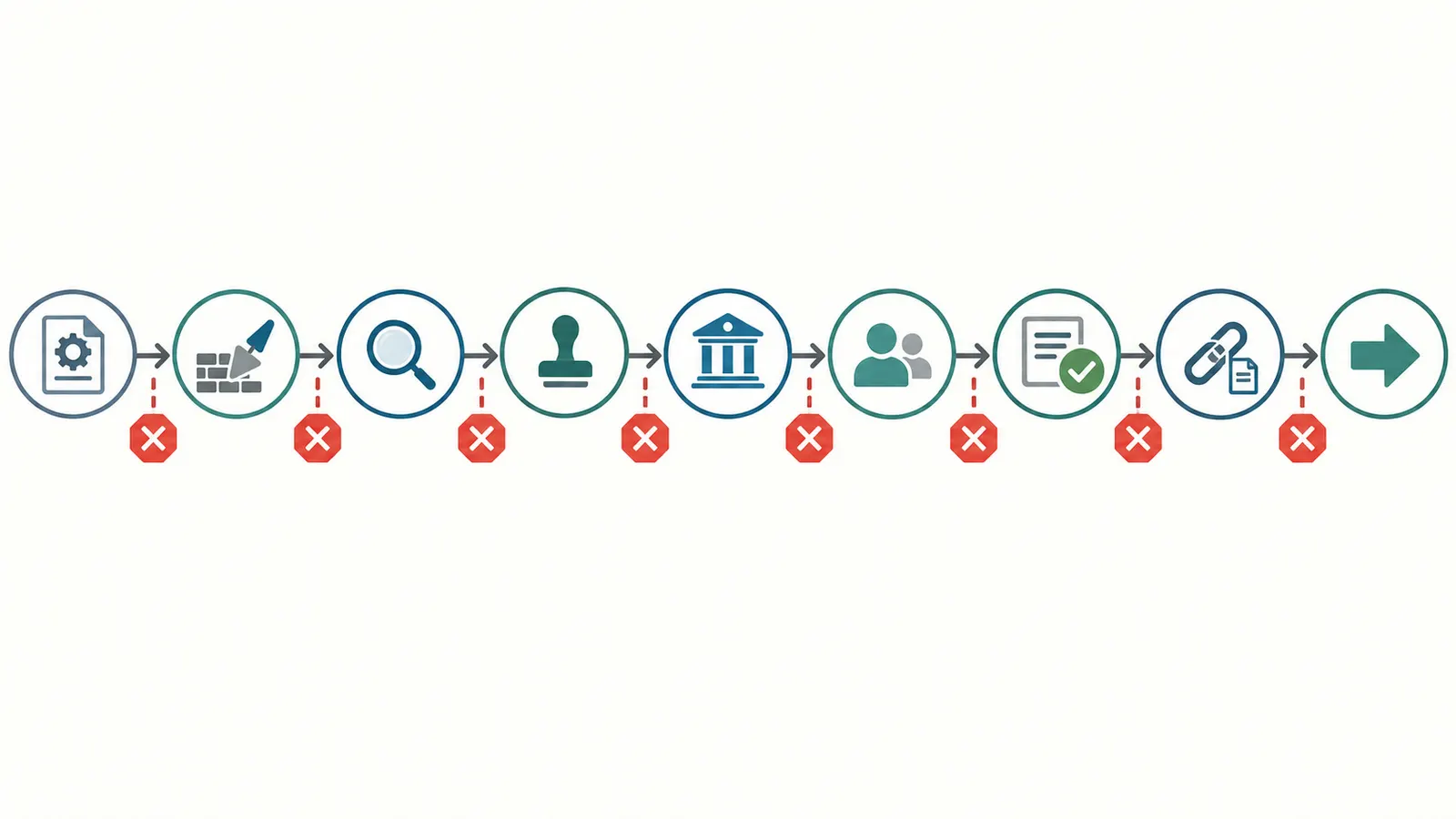
approved scope → completed work → inspection → authorization → lender/title release → recipient → proof of payment → lien/title reconciliation → next draw
If a link is missing, stop the next commitment long enough to identify the owner and recovery date. That pause is different from refusing to pay a valid draw. It is a way to keep a timing problem from becoming an undocumented advance or a dispute over who was paid.
Originality brief: what this page adds
Current lender answers usually describe their own process: the builder requests a draw, an inspection occurs, and the builder receives funds. Some also mention checks to two parties, title-company checks, borrower reimbursement, or direct vendor payment. The missing decision is how a homeowner compares those routes when control, speed, proof, and reconciliation pull in different directions.
The original contribution is the Construction draw payment-routing matrix. Its method is a source-derived comparison: published bank procedures were separated into authorization, recipient, evidence, timing, reconciliation, recovery, and next handoff; a modeled example then tests the arithmetic of a holdback. Its limitations are material: it is not a lender term, title instruction, legal opinion, or empirical performance study. The matrix can be checked by tracing every row to a cited source, comparing it with the borrower’s signed documents, and asking the lender and title company to confirm each blank.
OriginalContribution method: I extracted the recurring controls and published timing statements from the cited lender procedures, kept each bank-specific rule scoped to that bank, then mapped each route through one illustrative $42,000 completed-work request. The model records the full request as committed budget capacity, calculates a separately modeled $4,200 holdback and $37,800 current release, and keeps the $8,000 uncommitted balance separate; none of those modeled amounts is a lender rule.
OriginalContribution limitations: The matrix is a planning synthesis, not a loan term, title instruction, legal opinion, or prediction of a lender's clock. Programs, contracts, wire controls, lien documents, retention, draw fees, and state or local requirements can differ; the borrower must obtain written instructions for the property jurisdiction and loan.
The Brictale editorial method is linked here because a homeowner should be able to distinguish a published procedure from Brictale’s synthesis. The links in this guide are not endorsements, and the bank pages may change after the access date recorded in evidence.json.
Gather the documents and assign the people before closing #
Before construction starts, obtain the complete draw packet and write down who owns each handoff; otherwise the first payment dispute will be used to discover the process. The minimum inputs are the loan agreement and disbursement authorization, the builder contract and schedule of values, title instructions, inspection procedure, insurance and permit conditions, lien-document requirements, and the bank’s escalation contact.
The lender’s construction process is not just a mortgage application with a different check. Citizens says its construction-to-permanent application requires the usual financial information plus the builder contract, construction plans, and specifications. Its published construction-to-permanent overview also describes funds being released to the builder as stages are completed. Mercantile’s guide lists a construction contract, plans and specifications, a builder’s sworn statement, permits and approvals, and builder’s-risk insurance among its construction documents. These examples show why payment routing should be fixed while the scope and responsible parties are still reviewable.
Ask the lender where draw, inspection, title, and construction-fund handling fees appear in the loan disclosures. The Consumer Financial Protection Bureau’s Regulation Z guidance for multiple-advance construction loans explains that the treatment of applicable inspection and handling fees depends on the disclosure rules and transaction structure; when construction and permanent phases are disclosed as separate transactions, applicable fees are allocated to the construction-phase disclosures. That does not classify every inspection or handling fee in every loan as a finance charge, establish that your lender charges one, or cap its amount. Compare the written Loan Estimate, Closing Disclosure, note, and construction agreement for the actual transaction.
The homeowner’s input file
Create a read-only folder or ledger that contains the following, with a version date on every revised document:
- Loan and authorization documents. Keep the note, construction-loan agreement, draw or disbursement form, Funding Authorization Form if used, borrower approval rules, draw frequency limits, retention or holdback language, inspection fees, wire instructions, and final-draw conditions.
- Project scope. Keep the signed builder contract, plans, specifications, allowances, exclusions, change-order procedure, schedule of values, contingency rules, and the names of every known subcontractor and major supplier.
- Title and insurance file. Keep the title company’s written draw instructions, acceptable title-update format, required endorsements or surveys, builder’s-risk policy, general liability and workers’ compensation evidence where requested, and expiration dates.
- Evidence file. Keep invoices, delivery tickets, receipts, sworn statements, payment confirmations, lien waivers or releases, inspection reports, photographs used as project records, and a reconciliation ledger. A photograph can document visible progress; it is not a substitute for a lender-required inspection or a legally sufficient waiver.
- Contact and escalation sheet. Record the borrower contacts, builder or general contractor, lender construction specialist, third-party inspector, title-company draw officer, appraiser if relevant, and the professional who should review a contract or lien dispute in the property’s state.
Do not send account numbers, tax identifiers, or full loan documents through an unverified email address. A construction file contains information that can be used to redirect a wire. Verify new instructions through a known telephone number or secure portal already present in the closing documents. If the account name, bank, routing number, or payment route changes, treat the change as a new authorization requiring confirmation from the lender and, where applicable, the title company.
Assign responsibility using verbs
Avoid a chart that merely lists names. Use a verb for each stage:
| Stage | Homeowner | Builder/general contractor | Lender or construction specialist | Inspector | Title company, if used |
|---|---|---|---|---|---|
| Prepare request | confirms scope and available cash | prepares draw, invoices, sworn statement, and trade list | provides current form and cutoff | confirms access requirements | provides package deadline and acceptable documents |
| Authorize | signs or approves where required | signs requested costs and completed-work statement | checks loan eligibility and conditions | does not authorize money | releases only under its written authority |
| Verify progress | observes and records questions | explains line items and exclusions | orders or accepts inspection | reports observed completion | usually does not certify workmanship unless separately engaged |
| Release | receives or co-signs only if documents say so | receives or distributes only if route says so | authorizes loan proceeds | sends report to designated party | cuts checks or wires only within its escrow instructions |
| Reconcile | updates household cash and budget | confirms trades and suppliers were paid | updates outstanding conditions and balance | corrects report errors through its process | supplies cleared-check or release records |
The exact person can differ from the role. A borrower may have two co-borrowers; a builder may use a controller; a lender may outsource inspections; a title company may have a separate draw department. Record the role and the named contact. Star Bank, for example, says its borrowers and builder must sign its disbursement request for each draw and that it conducts a verbal borrower verification before disbursement. That is a Star Bank procedure, not a reason to assume every bank will call the borrower.
Reconcile three budgets, not one
Every draw should be checked against three different numbers:
- Approved loan budget: what the lender allocated to the line item or category.
- Contract commitment: what the builder and homeowner agreed to pay, including allowances, exclusions, and approved changes.
- Cash actually paid: what left the lender, title company, borrower, builder, and—where evidence is available—the subcontractor or supplier.
These can diverge without fraud. A lender may fund only completed installed material; a builder may owe a deposit to reserve a product; the homeowner may pay an approved overage; a retention may be held; or a title company may pay a different recipient than the builder expected. Your ledger should show the reason for the difference and the next document that will close it.
Mercantile says its process requires borrower authorization, an updated builder’s sworn statement, lien waivers for previous payments, a site inspection report, and a title update. It also says borrower overages must be covered before a draw is released. Those requirements make a practical point: the amount the builder requests, the amount the lender can release, and the amount a trade expects are three values that need a written bridge. See the Mercantile draw requirements before borrowing its terminology for another program.
Compare the five payment routes by control and handoff #
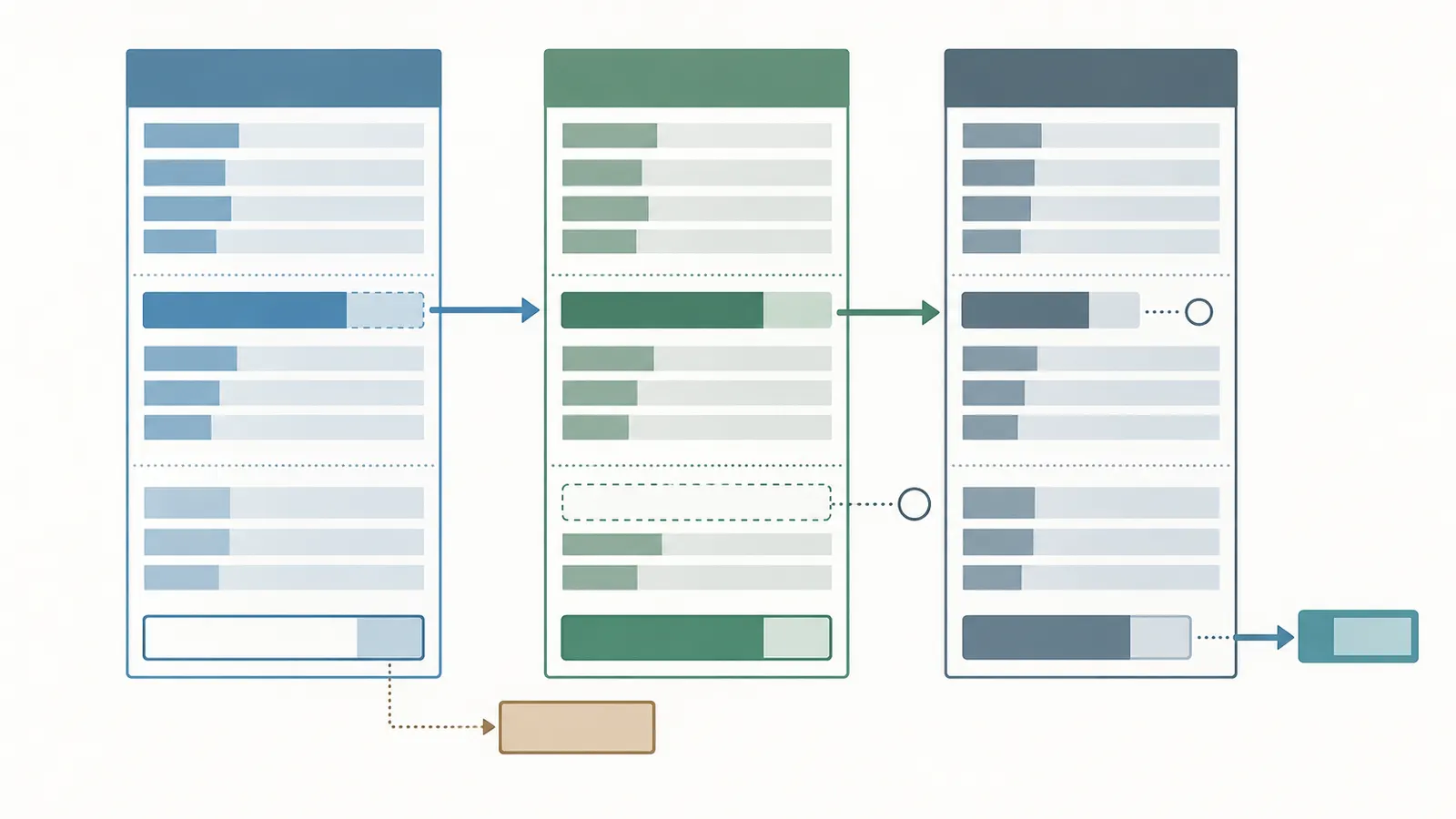
The best route is the one that satisfies the loan documents while leaving a short, auditable path from completed work to paid trade. A builder payment is often simplest when the general contractor is responsible for all subcontractors and the lender has approved the route. A title-company or borrower-and-builder joint-check route can add a useful second control when title clearance or shared payee evidence matters. Borrower reimbursement and direct subcontractor payment can solve special situations, but they increase the number of records and parties that must be aligned. The source links and evidence IDs embedded in the rows identify bank-specific support; cells labeled “planning synthesis” are Brictale recommendations, not lender requirements.
The table below is a decision surface, not a ranking. “Usually” means a common control pattern synthesized from the cited program descriptions, not a universal rule. A route is workable only if the lender, the title company where applicable, and the contract agree in writing.
| Route | Who authorizes | Who receives first | Who must prove payment | Inspection and lien evidence | Expected business-day clock | Reconciliation owner | Failure recovery | Next handoff |
|---|---|---|---|---|---|---|---|---|
Builder or general-contractor account — First Financial payment options (first-financial-payment-options, first-financial-draw-timing); Herring completed-work process (herring-completed-work-wire, herring-draw-timing) | Builder requests; borrower signs or approves if required; lender approves. Planning synthesis: exact authorizers come from the loan form. | Builder/general contractor | Builder normally proves downstream payment with paid invoices, receipts, affidavits, and waivers required by the lender. Herring’s affidavit process (herring-completed-work-wire) and Live Oak’s waiver requirements (live-oak-title-lien-waivers) support this evidence pattern; exact documents are program-specific. | Lender inspection; builder’s sworn statement and trade waivers may be required. Planning synthesis unless the loan names the exact form. | Program-specific; First Financial publishes 3–5 business days (first-financial-draw-timing) and Herring publishes an average 72 hours (herring-draw-timing) after its stated trigger. | Planning synthesis: borrower and builder compare lender release with trade ledger; lender closes conditions. | Planning synthesis: hold or correct the request, obtain missing trade proof, and notify lender if the builder conflict affects vendors. | Builder pays the named trade and returns payment/lien evidence before the next draw. Planning synthesis: confirm this handoff in the contract and lender packet. |
Borrower account or reimbursement — Star reimbursement conditions (star-borrower-reimbursement-proof) | Borrower authorizes and submits proof; lender approves. Star describes borrower proof and sworn-statement inclusion (star-borrower-reimbursement-proof); exact approval rules are program-specific. | Borrower | Borrower proves its payment with a cleared record, invoice, vendor waiver, and completed-work evidence if required. Star’s published conditions (star-borrower-reimbursement-proof) support this route-specific evidence chain. | Lender inspection and any title/lien documents still apply; recipient change does not remove them. Planning synthesis based on the program conditions. | May be longer because proof is after or alongside the borrower payment; Star publishes conditions but no universal reimbursement clock. | Planning synthesis: borrower owns the bank, personal, and project ledger; builder confirms the cost is in the sworn statement. | Planning synthesis: stop using personal cash until lender confirms eligibility; submit missing proof or obtain a written exception. | Borrower pays the approved vendor and files proof; builder updates cost-to-complete. Planning synthesis: confirm the contract credit. |
Title-company disbursement — Star title-company procedure (star-title-company-routing, star-draw-timing) | Builder and borrower sign the lender form; lender wires; title company releases under its escrow instructions. Star’s sequence (star-title-company-routing) supports the named steps. | Designated title company | Title company records cleared checks or wires; builder supplies invoices, waivers, and recipient data; borrower retains the packet. Planning synthesis: ask the title officer which records it returns. | Title search or tract check, prior waivers, inspection, and lender conditions. Star lists signatures, invoices, lien waivers, prior waivers, and inspection (star-title-company-routing). | Conditional and two-stage; Star publishes an average 24–48 business hours (star-draw-timing) only after complete signatures, tract check, waivers, and invoices. | Planning synthesis: title company closes its disbursement ledger; borrower matches it to lender and builder records. | Planning synthesis: ask which condition failed; title company corrects its file or returns funds under its instructions; lender must approve a route change. | Title company issues named check/wire; builder confirms trade receipt and waiver status. Planning synthesis: record the receipt separately from lender approval. |
Joint check to borrower and builder/general contractor — First Financial two-party-check option (first-financial-payment-options) | The borrower and builder/general contractor are the named parties; lender releases. First Financial names checks payable to the borrower and/or builder/general contractor (first-financial-payment-options). Exact signature and endorsement rules are program-specific. | Borrower and builder/general contractor jointly | Both payees preserve the cleared-check record; builder still proves downstream payment if required. Planning synthesis: First Financial’s page supports two-party checks, not a builder-and-subcontractor check. | Inspection and lien/title evidence remain lender conditions. Planning synthesis: a payment format does not waive other draw conditions. | Check delivery and endorsement add handling time beyond lender approval; no national service level. Planning synthesis. | Planning synthesis: borrower keeps a copy of the check and cleared item; builder records the trade payment. | Planning synthesis: do not alter or split endorsements; ask the issuing lender and bank about replacement or stale-check procedure. | Joint payees deposit, satisfy the named obligation, and file the cleared item. Planning synthesis: confirm how the builder credits the contract balance. |
Direct payment to subcontractor or vendor — Live Oak direct-payment policy (live-oak-method-retention, live-oak-borrower-bank-verification) | Builder identifies invoice; borrower may approve; lender decides or authorizes direct payment. Live Oak reserves the right to pay subcontractors directly (live-oak-borrower-bank-verification); this is not a universal borrower option. | Named subcontractor or material supplier | Lender or title company has payment confirmation; builder confirms scope and credit to its contract balance; borrower keeps invoice and receipt. Planning synthesis: require the lender’s exact confirmation record. | Inspection, delivery/installed evidence, and lien-document requirements still apply. Live Oak requires completed work, itemized costs, and lien waivers (live-oak-title-lien-waivers). | Often depends on vendor verification and separate payment setup; Live Oak publishes no universal clock. Planning synthesis. | Planning synthesis: borrower and builder apply payment to the correct schedule-of-values line; lender/title file stores confirmation. | Planning synthesis: verify vendor legal name and bank data; resolve duplicate, wrong-party, or disputed invoice before the next draw. | Vendor confirms receipt; builder updates paid-to-date and remaining contract balance. Planning synthesis: get the credit in writing. |

Builder or general-contractor account
A builder route is the cleanest fit when the general contractor’s contract makes that party responsible for purchasing, coordinating, and paying the trades, and when the lender’s authorization explicitly permits payment to the builder. The advantage is one commercial counterparty: the homeowner reconciles the draw against the builder’s schedule of values rather than managing every electrician, drywall supplier, and equipment vendor.
The control risk is opacity. The homeowner may know that the builder received $42,000 but not whether the framing crew, lumber supplier, or mechanical subcontractor received the allocated amount. Require a line-by-line draw, a current list of affected vendors, the builder’s certification or affidavit required by the loan, and downstream payment evidence on the lender’s timetable. Herring Bank describes a draw request form and an All Bills Paid Affidavit, and says its builder may request completed work only, not work in progress. That Herring Bank procedure is a useful question set even if your lender uses different forms.
Choose this route when:
- the builder is contractually responsible for the trade payment;
- the builder has a stable, verified account and the lender has confirmed the account through its own process;
- the lender’s inspection and lien requirements are clear;
- the builder can state when the relevant trade will be paid and when proof will return; and
- the homeowner can still see the paid-to-date balance and remaining commitment.
Do not choose it merely because the builder says every lender pays that way. First Financial’s page says wires to a builder account occur under a Funding Authorization Form and that checks can be made payable to the borrower and/or builder/general contractor. The form and the named payee control; a casual email does not.
Borrower account or reimbursement
A borrower route is workable only when the lender has authorized it and the homeowner can carry the timing and record burden. It can make sense when the homeowner directly bought an approved fixture or paid a permitted supplier, but it creates a risk of mixing personal cash, loan proceeds, and contract costs. Make the reimbursement rule explicit before spending.
Star Bank’s published guide says borrower reimbursement requires documented proof of payment, delivery and/or lien waiver, and says borrower purchases must be included in the sworn statement. It also says direct payment to the borrower can be facilitated when the borrower provides proof of payment, invoices, vendor lien waivers, and verification of completed work. Read the Star Bank reimbursement conditions as an example of a demanding evidence chain, not as permission under your own loan.
Borrower reimbursement becomes less attractive when the vendor requires a deposit before delivery or when the draw is needed to maintain household liquidity. A borrower may pay a vendor promptly and still wait for lender review, inspection, proof, and reimbursement. If the lender rejects the cost as a personal item, an unapproved deposit, an allowance overrun, or a line not in the sworn statement, the borrower owns the cash shortfall.
Before using this route, obtain written answers to five questions:
- Is the borrower an eligible payee for this exact line item and stage?
- Must the item be delivered, installed, or merely ordered before payment is eligible?
- Which proof is needed: cleared transaction, paid invoice, delivery ticket, waiver, photograph, inspection, or all of them?
- Does the builder have to sign or include the cost in its sworn statement?
- Is reimbursement a draw, a closing advance, or a separate borrower-funded amount that never returns from loan proceeds?
If those answers are not in writing, treat the purchase as borrower-funded and do not count on reimbursement in the project’s cash-flow plan.
Title-company disbursement
A title-company route is useful when the lender wants a separate disbursement office to receive funds, preserve a title file, and issue named checks or wires after its own review. It can reduce the homeowner’s need to be the payment clerk, but it adds a second organization and therefore a second cutoff, document standard, and error-recovery path.
Star Bank’s published sequence is unusually clear: the bank wires the designated title company, which disburses checks based on the draw request; the bank verifies builder and borrower signatures, reviews invoices and lien waivers, reviews title-company waivers from prior draws, inspects the property, and then wires. The Star Bank borrower guide says its average is 24–48 business hours only after all signatures, a complete tract check, lien waivers, and invoices, and notes that weather can affect inspections. The number is conditional, not a promise that money reaches the trade in 24–48 hours.
Ask the title company to answer separately:
- Does it receive the lender wire, hold it in escrow, and issue checks, or does it merely provide title evidence?
- Who is the approved payee for each category: builder, subcontractor, supplier, or borrower?
- Which title update, endorsement, survey, waiver, affidavit, or sworn statement is required before release?
- Does it require original, notarized, wet-signed, or electronically signed documents?
- What is its daily cutoff, holiday calendar, inspection dependency, and method for reporting an incomplete package?
- Does it send cleared-check evidence back to the lender, builder, and borrower automatically, or must somebody request it?
Title companies operate under the instructions and law applicable to the transaction. Do not infer a title company’s authority from its brand name or from a different property in another state. If the property is in a state whose lien-waiver or title-update practice is unfamiliar, ask a title officer and a lawyer licensed in that state to explain what document is needed. This guide does not state lien priority, waiver validity, or filing deadlines for any jurisdiction.
Joint check to the borrower and builder/general contractor
A joint check can create a visible shared-payee record when the lender’s program allows a check payable to the borrower and builder/general contractor. It does not automatically make the homeowner a party to the builder’s subcontract, nor does it guarantee that either payee can deposit the check without the other’s endorsement or that the trade will treat the builder’s payment as final.
First Financial says its program can issue checks payable to the borrower and/or builder/general contractor and advertises two-party checks if needed. That supports asking whether a borrower-and-builder joint check is available; it does not establish a lender-issued builder-and-subcontractor check. The exact names, endorsement rules, delivery address, stale-date policy, and replacement process must come from the lender. A check may be useless if one legal name is wrong or a named payee refuses to endorse. See the First Financial payment options (first-financial-payment-options).
Use a joint check only after confirming:
- every legal payee—limited here to the borrower and builder/general contractor unless the lender provides different written authority—and the obligation the check satisfies;
- who physically receives the check and who must endorse it;
- how a trade’s receipt will be documented;
- whether the lender still requires the builder’s affidavit and lien waiver;
- what happens if the amount changes, one payee disputes the invoice, or the check is lost; and
- whether the construction contract permits the proposed borrower-and-builder payment arrangement.
Joint checks are a routing control, not a cure for an unresolved scope dispute. If the builder contests a supplier’s invoice, the homeowner should not improvise an endorsement or pay twice. Send the dispute to the lender and obtain contract or legal advice in the property’s jurisdiction as appropriate.
Direct payment to a subcontractor or vendor
Direct vendor payment can shorten the distance between loan proceeds and the party that supplied the labor or material, but it transfers more identity, invoice, scope, and credit-allocation work to the lender, title company, builder, and homeowner. It is most useful when the program expressly allows it, the vendor is clearly tied to an approved line item, and the builder’s contract balance will be updated.
Live Oak’s published policy says it reserves the right to pay subcontractors directly. The same policy says deposits require an invoice documenting the deposit requirement, funds are released only for work complete, and itemized line-by-line cost breakdowns are required. Those statements should be read together: “direct” does not mean “unreviewed,” and a vendor’s urgency does not convert unfinished work into a completed draw. See the Live Oak construction payment policy.
Before selecting direct payment, match the vendor to:
- legal entity and tax or licensing identity as requested by the lender;
- contract or purchase-order scope;
- schedule-of-values line and amount already paid;
- invoice and delivery or installed-material evidence;
- builder approval or credit memo;
- required conditional or unconditional lien document; and
- verified payment destination, using a known channel for any bank-detail confirmation.
Direct payment can fail in two directions. If the lender pays a subcontractor while the builder also pays it, the project may have a duplicate payment and a budget overrun. If the lender pays the vendor but the builder treats the amount as unpaid, the builder’s remaining contract balance is wrong and the next draw may double-count it. The reconciliation entry must say whether the direct payment is a credit against the builder’s contract, an owner-purchased item, or a separate approved cost.
Follow the draw from completed work to cleared payment #
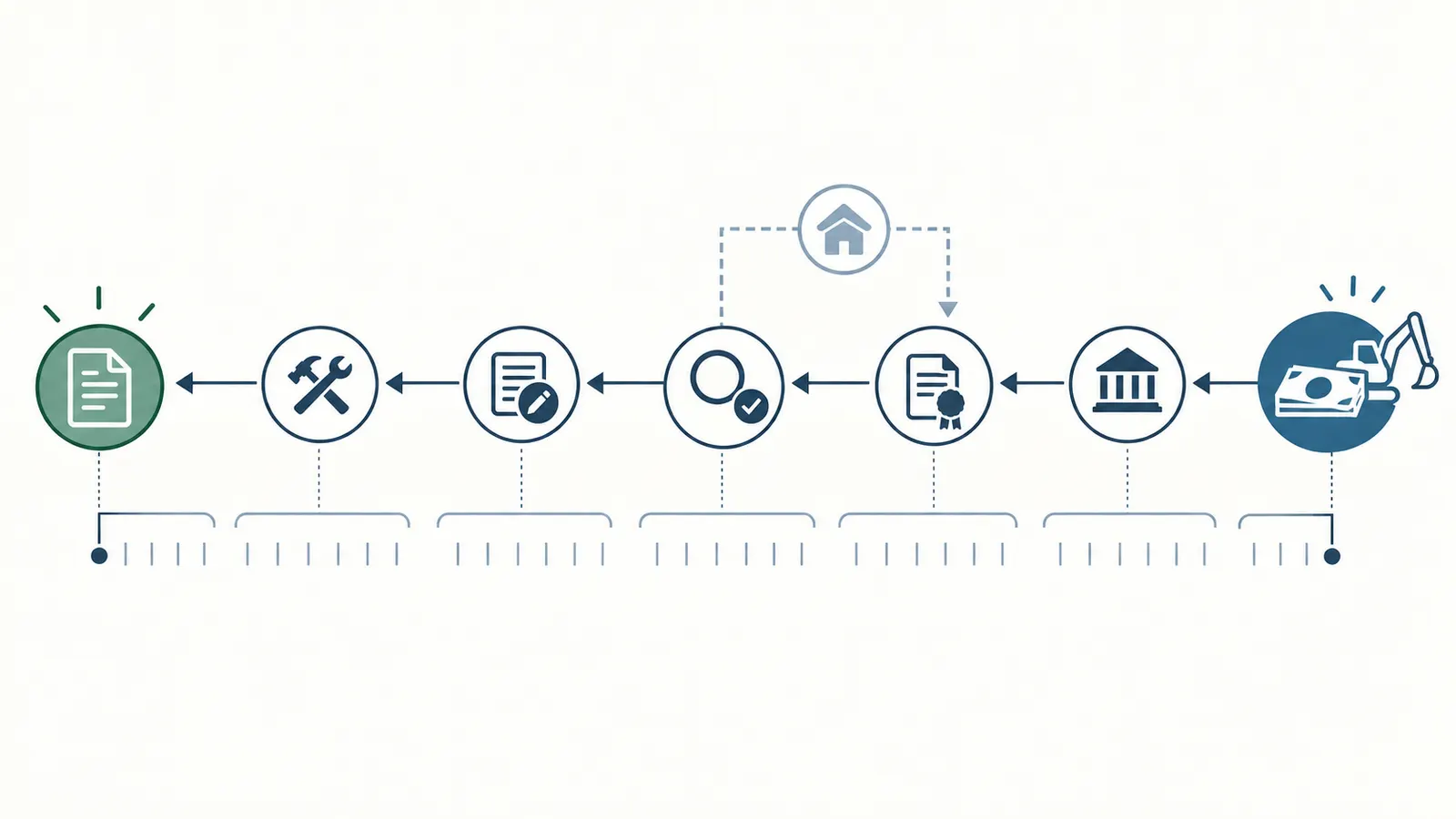
A draw is complete only when the work, authorization, release, receipt, payment evidence, and budget entry agree; lender approval alone is an intermediate event. Build the schedule backward from the trade’s needed date and include the slowest required handoff, not just the bank’s stated review time.
The recurring sequence in published bank procedures is consistent even when the recipient differs. Mercantile describes a builder milestone, itemized draw and supporting documents, bank review, possible inspection, borrower payment of overages, and release to the builder or through title. Citizens says the lender orders an inspection to verify completed work before disbursing to the builder. Piedmont says its draws cover completed work and installed materials, works directly with the builder, partners with an appraisal management company to inspect whether requested work is complete, and requires a certificate of occupancy and final inspection for the final draw. Compare the Mercantile process, Citizens explanation, and Piedmont process with your own packet.
The eight-step operating sequence
1. Confirm the gate. The builder and homeowner identify the milestone, line items, amount, recipient, and date. The homeowner checks that the work is within the approved plans, specifications, budget, and change-order record. No one should treat an informal promise that “the bank will cover it” as an approval.
2. Confirm what is complete. Separate completed and installed work from work in progress, ordered-only material, deposits, mobilization, stored material, and unresolved corrections. A lender may treat those categories differently. Herring says its builder may request completed work only; Live Oak says funds are released only for work complete, with a documented exception process for deposits. Cite the Herring completed-work rule and Live Oak policy when asking the lender which category applies.
3. Build the evidence packet. The builder supplies the current draw form, schedule of values, invoices, sworn statement or affidavit, vendor list, change orders, and prior-payment waivers. The homeowner adds its authorization, overage payment evidence if required, and any owner-purchased receipt. The inspector needs access and a clear description of the work to verify.
4. Submit before the cutoff. Record the submission timestamp, portal receipt, email confirmation, and the stated missing-document list. If the title company is involved, record the separate title cutoff. A lender clock that starts on “all necessary documentation” is not running while a signature or waiver is missing. Live Oak publishes 7–10 business days after receipt of necessary documentation; Star publishes an average 24–48 business hours after multiple conditions are complete. The difference is why the homeowner should record the trigger, not just the headline number.
5. Authorize and inspect. The borrower signs or approves if the program requires it. The lender reviews the budget and conditions, and the inspection company reports the observed completion. An inspection verifies the requested progress under its assignment; it is not a complete home inspection, code certification, design review, or warranty of workmanship. Do not ask an inspector to approve a structural, electrical, gas, fall-protection, or other hazardous condition remotely.
6. Clear title and release conditions. The lender or title company checks the required title status, prior waivers, insurance, permits, and any foundation survey or endorsement. Live Oak’s policy says a title search may be required before each disbursement, must be free of liens, and requires current insurance and licenses. That is a program statement; the legal effect of a lien or waiver depends on the property’s state and the documents used.
7. Release to the named recipient. The lender sends a wire or check, or wires the title company under the authorized route. The recipient name and account should match the signed instruction. Capture the release date, amount, method, check number or wire trace, and any holdback. Approval date and funds-available date are separate fields.
8. Close the loop. The builder confirms receipt and records payment to the correct trade or supplier. The borrower collects the required receipt, cleared check, vendor confirmation, affidavit, and lien document. The lender or title company closes its conditions. Only then should the next draw be planned using the new paid-to-date and remaining balance.
Schedule backward from the trade’s due date
Suppose a roofer needs a cleared payment by Friday. Do not schedule the draw for Friday because the lender approved it on Thursday. Work backward:
trade cleared date minus recipient processing and deposit time minus title-company release time, if any minus lender review and inspection time minus document correction buffer minus builder preparation time = latest safe submission date
Every interval is an input, not an assumed national standard. If the lender says 3–5 business days for its typical turnaround, that is not the same as 3–5 days from a complete submission to a trade’s cleared funds. If Star’s title route says 24–48 business hours after all conditions, that excludes the time to obtain signatures, inspection, tract check, and complete waivers. If Herring’s average is 72 hours, an inspection delay can extend it. These distinctions should appear in the draw calendar.
Add business-day calendars for the lender, title company, builder, bank receiving the wire, and the trade if a deadline is material. Ask whether the count starts when the portal accepts the request, when a construction specialist verifies completeness, when the inspection report arrives, or when a title file is cleared. Ask whether funds can be released on a Friday, before a holiday, or after an inspection exception. Record the answer in the route sheet.
Separate four statuses
Use four timestamps or statuses instead of one “paid” checkbox:
- Approved: lender has accepted the amount and conditions for release.
- Released: lender or title company has sent the funds or check.
- Received: named recipient’s bank or mail process confirms receipt.
- Applied: payment is credited to the correct builder, trade, supplier, or contract line and the evidence is filed.
These statuses matter when a subcontractor says it has not been paid. The builder may have received the draw but not transmitted it. The title company may have mailed a check that is not deposited. A wire may have been released to a wrong account. The lender may have withheld a retention amount. Each status points to a different owner and recovery step.
Use the matrix on a modeled $42,000 draw #
The matrix becomes useful when the homeowner can calculate both what will be released and what still remains controlled. The following is an illustrative model requested for this guide, not a market rule, lender term, state requirement, or forecast of a real draw.
Inputs and formulas
Assume the following inputs:
| Input | Symbol | Illustrative value | What it means |
|---|---|---|---|
| Completed-work request | R | $42,000 | Builder’s requested amount for eligible completed work |
| Modeled holdback | h | 10% | Deliberately chosen example percentage; not universal |
| Modeled holdback amount | H | $4,200 | R multiplied by h: $42,000 multiplied by 0.10 |
| Modeled current release | P | $37,800 | R minus H: $42,000 minus $4,200 |
| Trade due before next draw | D | Friday | Timing constraint, not a price input |
| Approved budget line capacity before request | B | $50,000 | Remaining approved capacity for the relevant line before this request |
| Owner-paid eligible amount outside this request | O | $2,000 | Separate amount already paid by homeowner, only if the program permits reimbursement; it is not included in R or P |
| Prior paid-to-date on line | T | $18,000 | Amount previously recorded as paid |
The basic model is:
holdback H = requested amount R multiplied by holdback rate h
current release P = requested amount R minus holdback H
uncommitted capacity after this request U = approved line capacity B minus requested amount R
retained amount still unreleased against this request = H
With the stated illustrative inputs, H = $42,000 multiplied by 10% = $4,200, P = $42,000 minus $4,200 = $37,800, and U = $50,000 minus $42,000 = $8,000. If the lender’s schedule of values treats the entire $42,000 as a request but retains $4,200, the homeowner’s ledger should show the $42,000 committed request, the $37,800 current release, the $4,200 retained amount, and the $8,000 uncommitted capacity. Do not record only $37,800 as the requested scope, because that would hide the amount tied to completed work and the amount still controlled by the lender.
The $8,000 is the uncommitted capacity after the full $42,000 request; the $4,200 is separately unreleased retention against work already requested. Do not call the result of subtracting only the current release from B “available budget,” because that counts the retained amount once as unused capacity and again as a later release. If the lender instead reduces the eligible request after inspection to $39,000, the same modeled rate gives $39,000 multiplied by 10% = $3,900 held, $35,100 released, and $11,000 uncommitted capacity if the reduced request replaces the original request. The inspection result changes the base; the arithmetic does not decide eligibility.
Route-by-route application
| Route | Amount the named recipient might receive in this model | Evidence to close the route | Next question |
|---|---|---|---|
| Builder account | $37,800 now if the lender applies the modeled holdback | Release confirmation, builder receipt, trade payment ledger, required affidavit/waivers | When will the builder pay the roofer and return proof? |
| Borrower reimbursement | $2,000 only if the lender authorizes reimbursement of O; the separate R request would release $37,800 under the modeled holdback | Cleared $2,000 owner payment, eligible invoice, delivery/installation evidence, waiver, lender authorization | Is O included in the sworn statement and kept separate from R, P, H, and U? |
| Title company | $37,800 wired to title company, then checks or wires under title instructions | Lender wire trace, title receipt, named-payee check/wire, cleared item, waiver/title update | Has title released, and when will the builder and trade confirm receipt? |
| Joint check to borrower and builder/general contractor | $37,800 on the authorized two-party check | Copy of check, endorsement/deposit, payment allocation, waiver | Who can endorse and who owns a replacement if the check is rejected? |
| Direct vendor | $37,800 split among named vendors only if lender authorizes allocation | Vendor identity verification, paid invoice, direct-payment trace, builder credit, waiver | Has the builder reduced its contract balance so the next draw does not double-count the line? |
This table deliberately does not decide which route wins. A route that releases $37,800 quickly but cannot produce vendor evidence may be less workable for a homeowner whose next draw requires prior-payment waivers. A route that takes longer but produces a clean title-company record may be better if the builder’s contract and lender’s instructions make the title company responsible for disbursement. The decision is a constraint match.
Sensitivity to the holdback rate
The holdback is a sensitivity variable in the model, not a fact about construction lending. With the same $42,000 request and $50,000 pre-request capacity, the uncommitted capacity remains $8,000 at every holdback rate because the request, not the current release, consumes the line:
| Modeled holdback rate | Modeled holdback still unreleased against R | Modeled current release | Uncommitted capacity U = B - R |
|---|---|---|---|
| 0% | $0 | $42,000 | $8,000 |
| 5% | $2,100 | $39,900 | $8,000 |
| 10% | $4,200 | $37,800 | $8,000 |
| 15% | $6,300 | $35,700 | $8,000 |
The table shows liquidity sensitivity and keeps budget capacity separate. It does not imply that a lender must use any of those rates. Live Oak publishes 10% retention unless otherwise approved or required by a state mandate, while Herring says its final draw is usually the final 10% of the contract amount. Those are different statements from different programs: one describes retention in a policy, the other describes a typical final-draw amount. Do not merge them into a national 10% rule. Read the Live Oak retention language (live-oak-method-retention) and Herring final-draw explanation in their own scope.
At 10%, the immediate cash shortfall relative to the requested $42,000 is $4,200, while the uncommitted capacity is still $8,000. Ask who carries the shortfall: the builder through retention, the homeowner through a contract payment, the lender through a later release, or nobody because the request is reduced. Put both figures beside the draw, since they affect whether the roofer, supplier, or next trade can be paid.
Sensitivity to an inspection reduction
Holdback arithmetic is not the only sensitivity. Suppose the request is $42,000 but the inspection supports only 92% of the requested eligible amount. That is an illustrative scenario, not a claim about any inspector’s method:
inspected eligible base = $42,000 multiplied by 0.92 = $38,640
At the modeled 10% holdback:
modeled holdback = $38,640 multiplied by 0.10 = $3,864
modeled release = $38,640 minus $3,864 = $34,776
The difference from the original $37,800 modeled release is $3,024. The right response is not to pressure an inspector to approve more. Ask for the line-item exception, correct the work or documentation, revise the draw if permitted, and update the trade’s promised date. The homeowner should bring plans, the schedule of values, invoices, delivery records, change orders, and the inspection report to the lender or qualified project professional.
Reconcile documents, title, lien evidence, and the contract #
Reconciliation should answer two questions separately: “Did the authorized funds reach the named recipient?” and “Did the money satisfy the project obligation without leaving a title or contract gap?” A bank statement answers neither question alone. Close the draw only when the evidence trail reaches the required level for the loan and the contract.
The draw-close checklist
Use this checklist after each release. Mark an item “not applicable” only after the lender or title company confirms that status in writing.
- Draw number and property address match every form.
- Request is tied to the current schedule of values and approved plans or specifications.
- Completed work and installed material are separated from work in progress, order-only material, and deposits.
- All approved change orders affecting the request are attached and signed by the parties required by the loan and contract.
- Builder’s current sworn statement, affidavit, or cost breakdown is attached if required.
- Borrower approval and builder signature are complete if required.
- Inspection was ordered, completed, and reviewed; exceptions are assigned to an owner and due date.
- Title search, tract check, update, endorsement, survey, or foundation document is complete if required.
- Insurance and licenses are current where the lender requires them.
- Previous-draw lien waivers or releases are filed in the form and sequence required for the project.
- Overage or owner-paid amount is identified and supported.
- Recipient legal name and payment details were verified through the authorized channel.
- Lender approval date, release date, recipient receipt date, and applied date are recorded separately.
- Retention or holdback amount is shown separately from uncommitted budget capacity, and its release condition is stated.
- Builder’s paid-to-date ledger identifies the trade or supplier paid from the draw.
- Cleared check, wire trace, receipt, or title-company disbursement record is filed.
- Vendor or subcontractor payment evidence and required waiver are filed.
- Remaining uncommitted budget capacity, retained amount still tied to this request, remaining contract balance, contingency, and next committed payment are updated as separate fields.
- The next draw owner, earliest submission date, and next unresolved decision are written down.
The checklist is a private project-control worksheet, not an official inspection, legal, title, or code form. A lender may require fewer or more items. In particular, a homeowner should not create a “lien waiver” from a template and assume it is valid in the property’s state. Ask the title company or a lawyer licensed in that state about the form, timing, signatures, notarization, statutory language, and effect of each waiver or release.
Link each proof to one payment
A folder full of receipts is not a reconciliation. Give every evidence record a stable key such as D03-L04-VENDOR-01 and put that key on the schedule of values, invoice, payment confirmation, and waiver. At minimum, the row should contain:
| Field | Example format | Why it matters |
|---|---|---|
| Draw and line | D03 / L04 roofing labor | Prevents a receipt from being applied to the wrong phase |
| Contract party | General contractor legal name | Identifies the obligation being funded |
| Downstream party | Roofing subcontractor legal name | Shows who must receive or acknowledge payment |
| Invoice | INV-1048, date, amount | Ties money to scope and time |
| Payment | check 1842 or wire trace, date, amount | Proves the release event |
| Allocation | labor $18,000, materials $24,000 | Explains how the request maps to the budget |
| Requested / released / retained / uncommitted | $42,000 / $37,800 / $4,200 / $8,000 modeled | Prevents retention from being counted again as available budget |
| Waiver/release | form name, period, signer | Shows which payment period is covered |
| Exception | missing delivery ticket, owner, due date | Keeps the next action open |
Do not ask a builder to certify that all trades have been paid if the builder’s records do not support that certification. Do not ask a subcontractor to sign an unconditional release for funds it has not received unless a qualified professional in the property’s jurisdiction confirms that the requested document is appropriate and the payment condition is clear. Those are contract and local-law issues, not a generic homeowner formality.
Confirm what “title clear” means in this loan
“Clear title” can be shorthand for different checks: no new recorded lien, acceptable title update, a tract check, a required endorsement, a foundation survey, or receipt of specific waivers. The homeowner needs the lender or title company to name the actual condition. Live Oak says its title search, when required before a disbursement, must be free of liens; Star describes review of prior title-company waivers and a clear tract status in its procedure; Mercantile lists a title update among draw requirements. These are three program descriptions, not one national test.
For a property in the United States, title and lien law is jurisdiction-specific. The state where the property sits controls the relevant state-law questions, while a city or county may control local recording offices, permit and certificate-of-occupancy procedures, and inspection administration. Name the actual property state and local authority when asking for a rule. If your project is in Minnesota, for example, do not use this article to infer a Minnesota waiver deadline or title practice merely because Star Bank’s page links to Minnesota resources. If your project is in Texas, Ohio, North Carolina, or another state, obtain that jurisdiction’s current requirements from the title company, lender, state authority, and licensed counsel as appropriate.
Diagnose failures before the next trade is promised #
When a draw fails, first locate the broken handoff—scope, document completeness, inspection, title, authorization, release, receipt, or application—then assign one recovery owner and one next update time. Do not solve a lender or title exception by silently changing the recipient, splitting a check, advancing cash, or asking a trade to waive rights without professional advice.
Failure matrix
| What you observe | What it may mean | What not to infer | Safest next step | Bring to the professional |
|---|---|---|---|---|
| Lender says “not complete” | Missing form, signature, inspection evidence, title item, or a line-item completion issue | That the lender has rejected the whole project | Ask for the exact deficient line and resubmission rule; update the builder and trade deadline | Draw packet, inspection report, schedule of values, photos or delivery records |
| Builder received the draw but trade says unpaid | Downstream payment is delayed, disputed, misapplied, or not yet cleared | That a lender release equals trade payment | Request the builder’s payment ledger and confirmed payment date; notify lender if required | Contract, invoice, affidavit, receipt, waiver status, communications |
| Title company has lender wire but no checks | Title file is incomplete or a named-payee condition is unresolved | That the title company may release on verbal instruction | Ask for the missing condition and written route to cure; do not redirect funds | Wire trace, title instructions, signatures, invoices, waivers |
| Borrower paid but reimbursement is denied | Cost was outside scope, not authorized, or proof is insufficient | That any project expense is reimbursable | Treat it as owner-funded unless written appeal or correction succeeds; revise cash plan | Preapproval, invoice, cleared payment, delivery, sworn statement |
| Wire instructions changed by email | Fraud, account change, or legitimate bank migration | That a familiar logo or email thread proves authenticity | Stop and verify through a known lender/title number and secure channel | Original authorization, callback record, exact legal payee |
| Joint check cannot be deposited | Wrong payee, missing endorsement, dispute, or bank handling issue | That either party can alter or deposit it alone | Ask issuing lender for its replacement and endorsement procedure | Check image, payee names, contract, vendor invoice |
| Amount approved is lower than request | Inspection, budget, prior payment, retention, or documentation reduced eligibility | That the missing amount will appear automatically in the next draw | Get line-item calculation and condition for any later release; update trade schedule | Inspection, schedule of values, change orders, retention terms |
| Builder asks for work-in-progress money | Contract cash-flow need or material deposit conflicts with lender eligibility | That urgency makes unfinished work completed | Ask lender whether a documented deposit exception exists; do not relabel status | Vendor invoice, deposit requirement, contract, bank policy |
| Builder and lender route conflict | Contract assigns payment to builder while lender requires title, joint, or direct payment | That one verbal promise overrides the other document | Pause the affected commitment and obtain a coordinated written instruction or contract review | Signed contract, loan authorization, title instructions |
| Final draw is delayed | Occupancy, final inspection, appraisal, survey, title, insurance, punch list, or waiver condition is open | That substantial completion guarantees final release | Ask for a final-draw checklist and responsible party per item | Certificate of occupancy, final inspection, plans/specs, punch list, releases |
The first row in the matrix is not “call the builder.” It is “identify the owner of the failed handoff.” The builder owns scope and downstream commercial payment under many contracts; the lender owns loan eligibility and release; the inspector owns its report; the title company owns its escrow procedure; and the borrower owns the decision to approve, fund overages, preserve records, and escalate conflicts. Responsibilities must be confirmed for the actual project.
If the contract conflicts with the lender’s route
Do not sign a draw authorization that changes the builder’s payment obligation without understanding the contract effect. A lender may require a joint check or direct vendor payment to control proceeds, while the builder contract may say the builder is solely responsible for paying subs. Those statements can sometimes coexist if the payment is credited against the builder’s contract balance, but the credit and proof need to be explicit.
Create a three-column comparison:
| Question | Loan/title instruction says | Builder contract says |
|---|---|---|
| Who requests the draw? | ||
| Who signs or authorizes? | ||
| Who is named payee? | ||
| Who pays subcontractors? | ||
| Who provides waivers? | ||
| Who carries retention or timing risk? | ||
| How is direct or joint payment credited? | ||
| What happens after default or dispute? |
Then send the comparison to the lender’s construction specialist, title officer if involved, and the contract professional you use in the property’s state. Ask for one written operational instruction that names the route, payee, required signatures, proof, and treatment of the amount in the builder’s contract balance. Keep the signed response with the draw packet.
If the draw is late
Use an escalation ladder based on elapsed time and the stated condition:
- Confirm the submission is complete and record the lender or title-company ticket number.
- Ask the construction specialist which exact condition is open and whether the inspection has been ordered, completed, or returned for correction.
- Ask the builder which trade is waiting, the invoice amount, any late charge or schedule consequence, and whether the builder has another lawful funding source.
- If funds were released, identify whether the delay is at the lender, title company, receiving bank, builder, or trade.
- If the route or account changed, stop and independently verify it before another release.
- If a lien notice, payment dispute, default notice, or threat to stop work appears, notify the lender and title company promptly and contact a lawyer licensed in the property’s state.
Never promise a trade a date based only on a bank’s average. A lender’s published average is an operational reference for that lender, and even that reference can depend on complete documents, inspection availability, weather, title status, and account verification. Herring specifically notes inspection-company delays can delay a disbursement; Star notes weather can affect its inspection-dependent timing. See Herring’s timing note and Star’s conditional average.
Financial and site safety boundaries
The decision here is financial and administrative, but it touches construction work. A homeowner can safely collect documents, observe visible progress from a safe location, compare invoices to the schedule of values, and ask questions. Assign hazardous work to qualified professionals. Do not climb scaffolding or roofs to verify a draw, enter an excavation or confined space, open energized electrical equipment, disturb structural components, handle gas or pressure systems, or direct a subcontractor’s work without the qualifications, permits, supervision, and protective measures required for the project.
An inspection report is not a remote safety sign-off. A certificate of occupancy is a jurisdiction-specific administrative document and does not replace a lender’s final-draw conditions or the homeowner’s independent understanding of unresolved defects. If a draw concerns foundation, framing, roof access, electrical service, gas, temporary power, excavation, or other high-consequence work, ask the lender how its inspection is scoped and use the licensed architect, engineer, building official, or qualified contractor appropriate to the issue. The governing jurisdiction is the property’s city or county for local inspection administration and the property’s state for applicable state law; this article does not identify a local code requirement.
Record the route and approve the next handoff #
The homeowner should finish this decision with one signed or securely confirmed route sheet for each draw category: who authorizes, who receives, what must be inspected, which title or lien evidence is required, how long each handoff normally takes, who reconciles it, what failure recovery looks like, and what decision comes next. If any field is blank, the route is not ready for a promised payment date.
The one-page route sheet
Copy the following fields into the project ledger or lender portal notes. It is a planning worksheet, not an official loan or legal form.
Project and draw
- Property address: ______________________________
- State, county, and city: ______________________________
- Loan number and lender: ______________________________
- Builder/general contractor: ______________________________
- Draw number and requested date: ______________________________
- Milestone and schedule-of-values lines: ______________________________
- Amount requested: $____________
- Amount inspected as eligible: $____________
- Current release amount: $____________
- Holdback/retention still unreleased against this request and stated release condition: $____________ / __________________
- Uncommitted approved budget capacity after this request: $____________
- Required trade-cleared date: ______________________________
Route selection
- Selected route: borrower / builder / title company / joint check / direct vendor
- Why this route fits the written instructions: ______________________________
- Loan document or form naming the route: ______________________________
- Contract paragraph or change agreement addressing the route: ______________________________
- Legal payee name(s): ______________________________
- Recipient verification completed by whom and when: ______________________________
- If direct vendor, builder contract credit method: ______________________________
- If joint check, endorsement and delivery process: ______________________________
Authorization and evidence
- Borrower authorizer and signature method: ______________________________
- Builder request owner: ______________________________
- Lender construction specialist: ______________________________
- Inspector and inspection date: ______________________________
- Title officer and title condition: ______________________________
- Required invoice, sworn statement, affidavit, delivery, or installed-work evidence: ______________________________
- Required prior-payment waiver or release: ______________________________
- Insurance/license/permit condition: ______________________________
- Submission cutoff and definition of “complete”: ______________________________
Release and reconciliation
- Lender approval date/time: ______________________________
- Release date/time and method: ______________________________
- Title receipt date/time, if applicable: ______________________________
- Recipient receipt date/time: ______________________________
- Applied-to-contract date/time: ______________________________
- Wire trace, check number, or cleared record: ______________________________
- Builder paid-to-date after release: $____________
- Remaining uncommitted approved budget capacity: $____________
- Retained amount still unreleased against this request: $____________
- Remaining contract commitment: $____________
- Open exception, owner, and due date: ______________________________
- Next draw decision and earliest safe submission date: ______________________________
How to decide among routes
Use this order of questions:
- What route does the lender’s signed authorization permit? If there is one route, start there. If the wording is ambiguous, ask for the bank’s operational form in writing.
- Does the builder contract assign downstream payment to the builder? If yes, prefer a route that preserves that responsibility or documents a clear credit when money goes elsewhere.
- Where is the strongest evidence needed? If title and prior waivers are central, a title-company route may fit. If a specific vendor must be paid, direct payment or a joint check may fit if authorized.
- Who can carry the timing risk? A borrower reimbursement route may require personal cash and later proof. A title route adds a second processing clock. A builder route may be faster operationally but requires downstream records.
- What is the recovery if the payment fails? Reject any route whose wrong-account, stale-check, missing-waiver, or disputed-invoice procedure is unknown.
- Can the next handoff be seen? The route is not complete until the next recipient, proof, and reconciliation owner are named.
This is a comparison, not a scorecard with a hidden winner. A homeowner with a long-standing, lender-approved general contractor may value one accountable payee. A homeowner with a title-controlled draw department may value a two-stage file. A homeowner who directly purchases an approved item may need reimbursement. A lender that reserves direct vendor payment may use it selectively. Fit the route to the actual loan, contract, title instructions, and project record.
Final decision rule
Approve the draw only when all five statements are true:
- The work and material status is accurately described and supported.
- The amount is within the approved budget or the overage is separately funded and recorded.
- The authorizers, recipient, and payment method match the written lender/title route.
- The inspection, title, insurance, and lien evidence required for this draw is complete or has a written exception owner.
- The release can be reconciled to the builder’s and homeowner’s records, with a named next handoff and a realistic business-day plan.
If one statement is false, the next action is to resolve that specific gap—not to switch recipients informally. If the gap concerns a legal right, lien waiver, contract interpretation, title status, fraud, structural work, electrical work, excavation, or another hazardous condition, use the qualified professional and the actual property jurisdiction. If the gap is simply a missing invoice number or receipt, correct the file and record the resubmission.
The practical answer to “who should receive construction loan draw funds?” is therefore: the named recipient in the verified route that preserves responsibility, evidence, timing, and reconciliation for that draw. Record the route before approval, validate the release after it occurs, and make the next payment conditional on a closed evidence loop. That is how the recipient stops being a clerical detail and becomes a visible part of the build budget.
Cite this guide
Brictale. “Who Should Receive Construction Loan Draw Funds?.” Published 2026-09-21; updated 2026-09-21.
https://brictale.com/build/budgeting/compare-construction-loan-draw-payment-routing · Read the Markdown version
Original contribution: Construction draw payment-routing matrix. A homeowner-facing matrix compares borrower, builder, title-company, joint-check, and direct-vendor routes by authorization, recipient, proof, timing, reconciliation, failure recovery, and the next handoff.
Sources and scope
Evidence behind this page
- The Consumer Financial Protection Bureau describes construction loans as funds typically provided in a series of advances as construction progresses; the loan may later convert to a conventional mortgage or require payoff or reapplication depending on the loan.
What is a construction loan? — Consumer Financial Protection Bureau
Federal consumer explanation; it describes construction-loan structure generally and does not establish a recipient, draw schedule, or payment route for a particular loan.
Accessed · Link to this claim - The CFPB's Regulation Z guidance says the treatment of inspection and handling fees, including draw fees, for staged construction-loan disbursements depends on the applicable disclosure rules and transaction structure. When a construction-permanent loan is disclosed as separate construction and permanent transactions, applicable fees are allocated to the construction-phase disclosures; this guidance does not classify every inspection or handling fee in every loan as a finance charge or set the fee amount.
Appendix D to Part 1026 — Multiple Advance Construction Loans — Consumer Financial Protection Bureau
Federal Regulation Z appendix and official interpretation for multiple-advance construction loans; it addresses disclosure treatment of applicable inspection and handling fees, not the amount of a draw fee, the classification of every fee in every transaction, or a required inspection vendor or payment recipient.
Accessed · Link to this claim - First Financial Bank states that its construction funds may be sent by crediting a builder-related checking account, by checks payable to the borrower and/or builder/general contractor, or by wire to a builder account under a Funding Authorization Form.
Homebuilder | Construction Loans — First Financial Bank
First Financial Bank's published builder-draw program; options are program-specific and are not a national rule.
Accessed · Link to this claim - First Financial Bank says builders are typically permitted one draw per month and gives a typical draw-disbursement turnaround of 3–5 business days in its published program.
Homebuilder | Construction Loans — First Financial Bank
Published First Financial Bank timing and frequency statement; it is not a guaranteed clock for another lender, project, inspection, or title company.
Accessed · Link to this claim - Live Oak Bank says it may determine the disbursement method based on contractor and project information, notifies the borrower and contractor before the initial disbursement, processes requests in 7–10 business days after necessary documentation is received, and holds 10% retention unless otherwise approved or required by state mandate.
Construction Payment Policies & Processes — Live Oak Bank
Live Oak Bank's one-page construction payment policy; the timing, method, and retention are program-specific. The mention of a state mandate does not identify any particular state's rule.
Accessed · Link to this claim - Live Oak Bank's published policy says a title search may be required before each disbursement and must be free of liens, current insurance and licenses are required, and lien waivers are required from the general contractor, subcontractors, and major material suppliers, with specified conditional and unconditional waiver stages.
Construction Payment Policies & Processes — Live Oak Bank
Live Oak Bank's program policy; lien-waiver form, timing, enforceability, and title practice can vary by project contract and the law of the property's state.
Accessed · Link to this claim - Live Oak Bank describes a dual-verification process in which the borrower first approves submitted documentation and the bank's Construction Specialist then reviews compliance before releasing payment to a general contractor; it also reserves the right to pay subcontractors directly.
Construction Payment Policies & Processes — Live Oak Bank
Live Oak Bank's published procedure; it supports a two-review control in that program and does not make borrower approval a universal requirement.
Accessed · Link to this claim - Star Bank says it wires funds to a designated title company, which then disburses checks based on the draw request; Star's listed steps include verifying builder and borrower signatures, reviewing invoices and lien waivers, reviewing prior title-company waivers, and inspecting the property before wiring.
Borrower's Guide: Resources for Home Building — Star Bank
Star Bank's published borrower guide and title-company draw procedure; it is not a universal title-company model.
Accessed · Link to this claim - Star Bank says it may facilitate payment directly to the borrower when the borrower provides proof of payment, invoices, vendor lien waivers, and verification of completed work, and that borrower purchases must be included in the sworn statement for reimbursement.
Borrower's Guide: Resources for Home Building — Star Bank
Star Bank's published borrower-reimbursement guidance; it does not promise reimbursement under another lender's loan documents or a construction contract.
Accessed · Link to this claim - Star Bank states that, after all signatures, a tract check, complete lien waivers, and invoices, it aims to fund within an average of 24–48 business hours, subject to factors including weather because inspections are necessary.
Borrower's Guide: Resources for Home Building — Star Bank
Star Bank's published average timing; it is conditional and program-specific, not a general lender or title-company service level.
Accessed · Link to this claim - Mercantile Bank describes a sequence in which the builder completes a milestone, submits itemized costs and supporting documents, the bank reviews budget and timeline alignment, an inspection may verify reported progress, borrower overages must be covered, and approved funds go directly to the builder or from a title company to the builder; it lists borrower authorization, a current sworn statement, prior-payment lien waivers, inspection, and title update among draw requirements.
Construction Guide — Mercantile Bank
Mercantile Bank's published construction guide; the described controls are bank-program requirements and do not settle the contract or lien law for a project elsewhere.
Accessed · Link to this claim - Herring Bank says its builder may request completed work only, using a draw request form and an All Bills Paid Affidavit, and that the borrower may authorize direct payment to the builder by wire transfer.
New Home Construction Loan — Herring Bank
Herring Bank's one-time-close construction-loan guide; forms and direct-wire permission are specific to Herring's process.
Accessed · Link to this claim - Herring Bank says its draw specialist orders an inspection after receiving a builder request, bases the amount on the percentage completed for requested line items, and gives an average 72-hour fulfillment time, while noting inspection delays can extend the process.
New Home Construction Loan — Herring Bank
Herring Bank's published average and process; it is not a guaranteed payment-to-trade time or a promise for another inspection company.
Accessed · Link to this claim - Citizens describes construction-to-permanent financing in which funds are released to the builder as stages are completed, and says the lender orders an inspection to verify completed work before disbursing construction draws to the builder.
Construction-to-Permanent Loan | Building a Home — Citizens
Citizens' published construction-to-permanent overview; it describes that program's handoff and does not establish a universal recipient or inspection standard.
Accessed · Link to this claim - Piedmont Federal Bank says each draw covers work completed and materials installed to date, works directly with the builder, partners with an appraisal management company to inspect whether requested work is complete, and requires a certificate of occupancy and final inspection for the final draw.
Construction — Piedmont Federal Bank
Piedmont Federal Bank's published construction-to-permanent process; final-document requirements and inspection arrangements can vary by loan and jurisdiction.
Accessed · Link to this claim