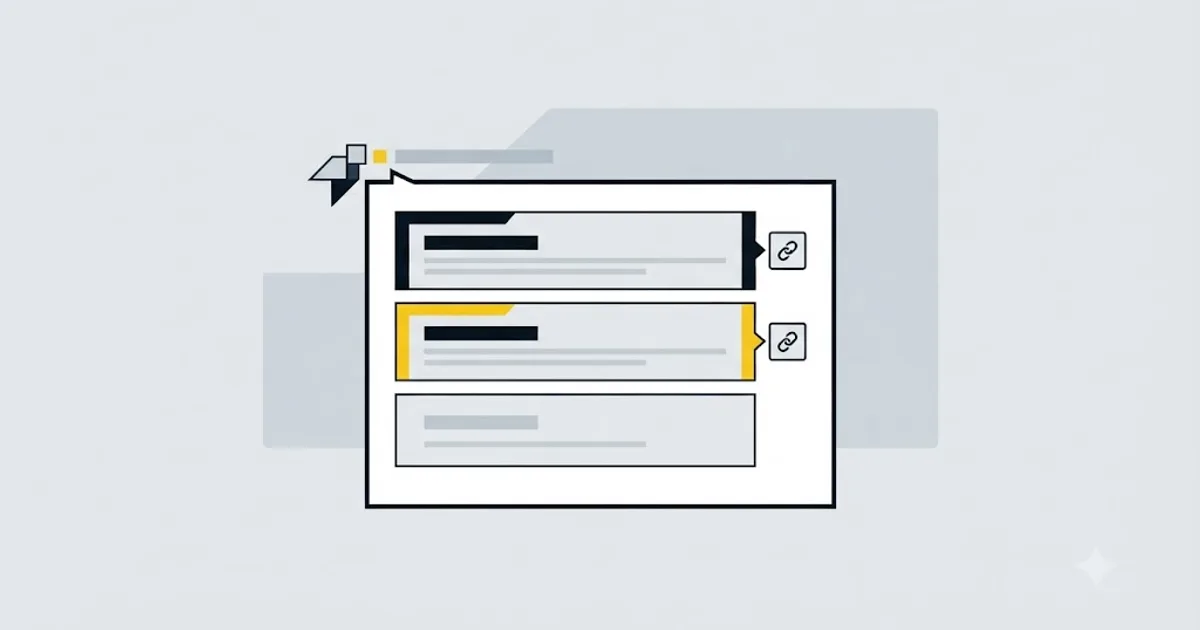
Someone types a question into ChatGPT instead of Google. The answer comes back with two or three brand names in it, maybe a link, maybe not. Your brand is either in that list or it doesn't exist for that buyer, and there is no page two to fall back on.
This guide is the mechanism, not a promise. As of July 2026, getting mentioned inside ChatGPT's answers is earned through fetchable, source-backed, directly-answering content, spread across your own site and the third-party pages ChatGPT already trusts. It is not bought, and nobody can guarantee a specific mention. What follows is exactly how the retrieval works, what to do about it, and where the effort stops paying off.
What does it actually mean when a brand gets "mentioned" in ChatGPT?
A brand mention in ChatGPT is any point where the model names your company, product or service inside a generated answer, with or without a clickable citation attached. This is different from a Google ranking, and the difference changes almost everything about how you chase it. Engineering content specifically for this kind of retrieval, across ChatGPT and the other AI answer engines covered later in this guide, is what the industry has started calling generative engine optimization, and the mechanics below are that discipline applied to one engine.
There are two distinct ways a mention happens, and they behave completely differently.
The first is a training-data mention. The underlying model learned your brand exists somewhere in the enormous corpus it was trained on, and it recalls that fact the way it recalls any other. No link is attached, because no live retrieval happened. This kind of mention only changes when OpenAI trains and ships a new model, which is a matter of months.
The second is a retrieval mention. ChatGPT's search feature, sometimes called browse mode, actively fetches web pages at the moment of the question and cites what it used (OpenAI: Introducing ChatGPT search). This kind of mention can change within days of a new page being published and indexed, because it depends on what is retrievable right now, not on what a model memorized last year.
A brand named without a link still shapes a buyer's shortlist, and no analytics tool on your own site will ever show you that it happened.
That is the uncomfortable part of this discipline: you cannot watch it happen in Google Analytics. You have to go and ask the question yourself, on a schedule, the way we cover later in this guide.
Both kinds of mentions matter for a different reason. Training-data mentions are slow-moving brand equity, closer to how a Wikipedia entry or a decade of press coverage compounds. Retrieval mentions are closer to live SEO: they respond to what you publish this month, on your own site and on the third-party pages that ChatGPT's search tool actually fetches. Most of the tactical work in this guide targets the second kind, because it is the one you can influence on a timeline shorter than a model retraining cycle.
Does it matter whether ChatGPT names your brand or just links to your site?
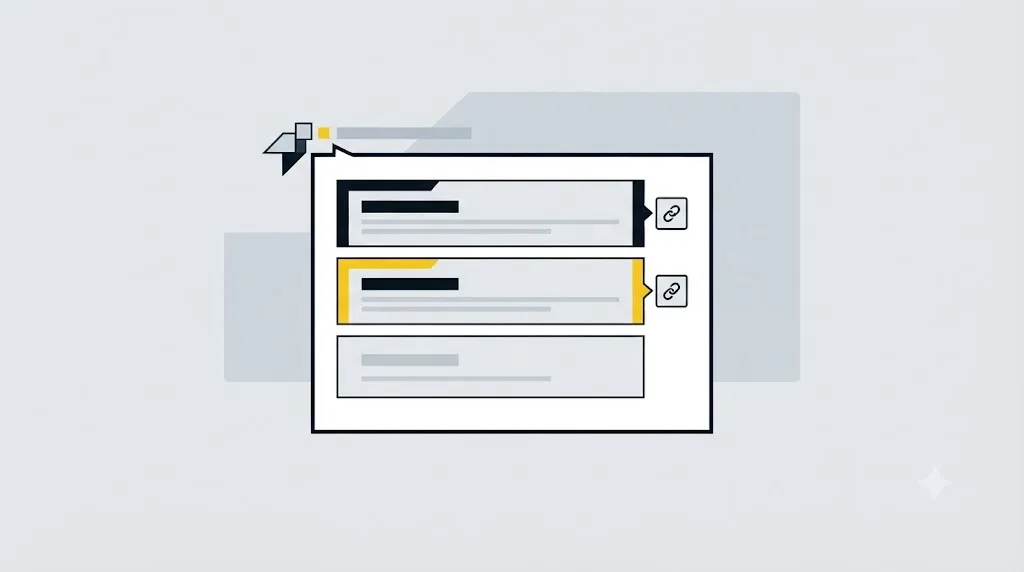
Yes, and they are not the same outcome. A named mention puts your brand's own word, the thing a buyer will remember and search for again, directly inside the sentence the user reads. A citation link with no name attached is quieter: the user has to notice the footnote-style marker, hover or tap it, and read the domain before your brand registers at all, and many readers skim straight past a numbered citation the way they skim past a Google result they were not planning to click.
Both are worth having, but they fail differently, and each failure calls for a different fix.
A page that gets fetched and cited, link attached, but never gets its brand name spoken in the sentence itself usually means the source was used as supporting evidence for a fact, a price, a statistic, rather than as the subject of the sentence. The fix is to make sure your own brand name appears in the exact sentence carrying the fact you want cited, not just somewhere else on the page. "According to [Brand]'s pricing page, plans start at $X" gets named. A page that only states "$X" without ever naming who charges it gives the model a fact to cite without a brand to attach to it.
A page that gets named without a link usually means the mention came from the model's training data rather than a live fetch, the training-data mention described above, and no on-page fix changes that on any timeline shorter than a model release. The only lever there is being the kind of source, third-party coverage, a Wikipedia entry, sustained press mentions, that is more likely to have been present in whatever corpus the next model trains on.
There is a middle case worth naming too: ChatGPT sometimes attaches a citation link while paraphrasing your fact without ever writing your brand name in the visible sentence, so the link is present in the source panel but a skimming reader never sees who it came from unless they open it. This is common enough that it is worth checking for specifically when you run your tracked question list, covered later in this guide: note not just whether a link appeared, but whether the brand name itself was spoken in the sentence the user actually reads, since only one of those two outcomes does anything for unaided brand recall.
For most brands chasing this goal, a named mention with no link is still worth more commercially than a link with no name, because the name is what a buyer carries into their next search or their next sales call, while a citation link only pays off if the buyer actually clicks it. Optimize the sentence structure on your own pages for the name first, and treat the link as the second, not the primary, win.
How do you actually get your brand mentioned in ChatGPT?
You get mentioned by making sure ChatGPT's crawlers can reach a page that answers the exact question a buyer would type, in a form the model can lift cleanly, and by making sure the same answer also exists on at least one third-party source the model already trusts. Here is the process broken into steps, in the order that actually matters.
Write down the real questions, not the keywords. Pull the exact phrasing your sales team, support inbox and comment sections get, word for word. "Best CRM for a 10-person agency" and "which CRM works for a small agency" are different questions to a retrieval system even if they mean the same thing to a human.
Answer each question in the first two sentences of a dedicated page. No throat-clearing, no "in this article we will explore". A model extracts a passage, not a page, so the passage that opens the section has to survive being lifted out on its own, with the subject named explicitly instead of left to a pronoun.
Attach a real, checkable number or fact to the claim wherever one exists. The research behind the term "generative engine optimization" found that adding citations, quotations and statistics to a source measurably increased how often that source was used in a generated answer (GEO: Generative Engine Optimization). An unsupported claim is skipped in favor of a competitor's sourced one.
Confirm OpenAI's crawlers are not blocked. Check your robots.txt for
GPTBot,OAI-SearchBotandChatGPT-User. If any of them are disallowed without you deciding that on purpose, you have opted out of appearing in exactly the surface you are trying to win. We cover the difference between these three crawlers in detail below.Make the page fast and simple to parse. Clean HTML, a real
<title>, one clear H1, short paragraphs. A page a crawler cannot render quickly or reliably is a page that gets skipped for a competitor's page that loads clean.Get the same answer published somewhere you do not control. A review platform profile, a comparison article on an independent blog, an active forum thread, a Wikipedia mention if your category and scale genuinely warrant one. ChatGPT's search draws on sources outside your domain as readily as it draws on your own site, and a third-party source often carries more trust for a comparison-type question than your own marketing page does.
Keep the page current. A generative engine has no reason to trust a page that contradicts itself against a fresher source elsewhere. Revisit pricing pages, comparison pages and "best X" pages on a fixed schedule, and update the date shown on the page when the facts change.
Ask the actual questions yourself, in ChatGPT, on a schedule. This is the only reliable way to know whether any of the above worked, because there is no dashboard for it inside ChatGPT itself. Run the same fixed list of questions weekly or monthly and record whether your brand appeared and whether it was linked.
Fix what the answers reveal, then repeat. If a competitor gets cited and you do not, open the page ChatGPT actually cited for them. Nine times out of ten it answers the question in the first sentence, states a number, and loads clean. Match that structure, then move to the next question on the list.
None of these nine steps involves paying OpenAI anything, because there is currently no product for that.
The lever is always content that exists, is reachable, and answers the question a real buyer typed.

How does ChatGPT actually decide which sources to cite?
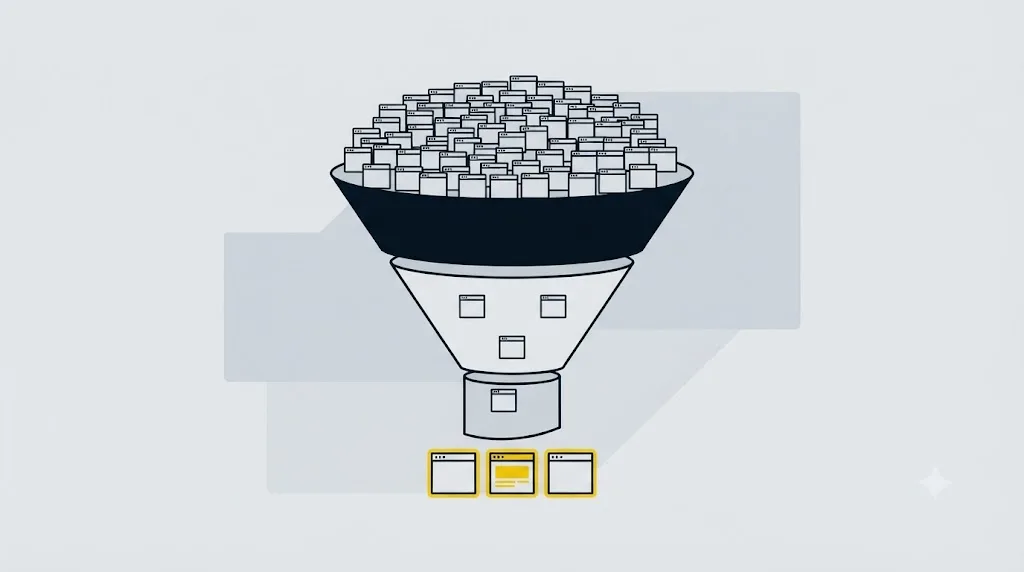
ChatGPT's search tool rewrites a user's question into several sub-queries, retrieves candidate pages for each one, and then selects which passages are clear and self-contained enough to quote or paraphrase with a citation attached. Authority helps, but only after a passage is usable, and a well-known domain with a rambling answer regularly loses the citation to a smaller, clearer source.
This process, sometimes called query fan-out, means a single question can pull from dozens of candidate URLs before the model settles on the two or three it actually names. A page competes not against every page on the internet for that keyword, but against every page that was retrieved for that specific sub-query, which is a much smaller and much more winnable contest.
The selection favors three properties, in roughly this order of importance:
A passage that answers the question in a form that survives being lifted out of the page. No "as discussed above," no dangling "it," the subject stated plainly. This is the single most fixable factor on this list, because it is entirely under your control on the page you publish today.
A page that is fast and simple to fetch and parse. Heavy JavaScript rendering, paywalls and slow servers all reduce the odds a crawler successfully retrieves usable content on the first attempt.
A domain the model has reason to treat as credible for that specific claim. This is contextual, not a single global authority score. A niche industry publication can outrank a large generic news site for a narrow technical question, because the retrieval system weighs topical fit alongside general trust.
Independent research supports how thin this margin actually is. Ahrefs tested 15,000 long-tail queries across Google, Bing and four AI assistants and found that ChatGPT's in-text citations overlapped with Google's top 10 results for the same query only about 8% of the time on average, and that roughly 80% of the pages ChatGPT cited did not rank anywhere in Google's top 10 for the original phrasing at all (Ahrefs: How much do AI answers overlap with Google and Bing search results).
The same research behind the term "generative engine optimization" tested traditional SEO tactics against this kind of retrieval directly, and the results cut against old habits. Keyword stuffing, repeating the target phrase across a page the way classic SEO once rewarded, performed worse than an unoptimized baseline page in their tests, while adding real statistics and direct quotations to a page produced the strongest, most consistent gains across every visibility metric the researchers measured (GEO: Generative Engine Optimization). The lesson translates cleanly to the steps above: a page written for a keyword loses to a page written for a fact.
Ranking well on Google and getting cited by ChatGPT for the same question are two largely separate contests, decided by two different retrieval systems querying in two different ways.
That single fact is why treating GEO as "SEO but for ChatGPT" undersells the work required.
Does ChatGPT use Google or Bing to find your brand?
ChatGPT's search feature has historically drawn on Bing's index and search infrastructure for live web retrieval, though the exact mix of sources ChatGPT's retrieval systems query is not something OpenAI has published in detail, and third-party testing suggests the picture keeps shifting as OpenAI adjusts its systems.
What that means in practice is you cannot treat "ranking on Bing" and "ranking on Google" as interchangeable proxies for ChatGPT visibility, and you cannot assume optimizing for one search engine's index automatically covers the other engine's retrieval behavior. The Ahrefs study cited above found average overlap between AI assistant citations and Bing's own top 10 results sat around 10%, in the same low range as the Google overlap (Ahrefs: How much do AI answers overlap with Google and Bing search results). Both numbers point at the same conclusion: generative engines are not simply re-serving a traditional search engine's top results with a summary bolted on top. They run their own retrieval logic on top of whatever index they draw from.
The practical takeaway is to stop treating "rank on page one" as the finish line. It remains a reasonable prerequisite, since a page that cannot be found at all by any search index is even less likely to be found by an AI retrieval layer. But it is not sufficient on its own, and teams that stop at classic SEO and assume GEO comes free with it are consistently surprised by what does and does not get cited.
Google's own AI features, including AI Overviews and AI Mode, are a separate system again, drawing on Google's regular index and following the same crawling rules as the rest of Google Search (Google Search Central: AI features and your website). Getting mentioned in a Google AI Overview and getting mentioned inside ChatGPT are related goals that reward similar content, but they are measured, retrieved and served by entirely separate systems, and a page can win one and be invisible in the other.
Should you block or allow GPTBot, OAI-SearchBot and ChatGPT-User?
Allow OAI-SearchBot if you want to be cited in ChatGPT's live answers, since blocking it removes your site from that specific surface. GPTBot and ChatGPT-User are separate crawlers with separate purposes, and confusing the three is the single most common technical mistake keeping otherwise-strong content out of ChatGPT.
OpenAI operates three distinct crawlers, each controllable independently through robots.txt (OpenAI: Overview of OpenAI crawlers):
| Crawler | What it does | If you block it |
|---|---|---|
| GPTBot | Collects content to train future GPT models | Your content is excluded from training data for future models, but live ChatGPT search is unaffected |
| OAI-SearchBot | Powers ChatGPT's live search feature, discovering and indexing pages for retrieval-based answers | You stop appearing in ChatGPT's live, cited search answers, though you may still show as a navigational link |
| ChatGPT-User | Fetches a specific page only when a user or a Custom GPT explicitly requests it in the moment | Blocking it can break user-triggered fetches inside a conversation, since it is not automated crawling in the usual sense |
GPTBot and OAI-SearchBot answer two completely different questions, and a robots.txt line written to stop one from training on your content can accidentally stop the other from ever citing you.
A site that blanket-blocks every OpenAI user agent, often copied from a generic "block all AI bots" snippet found online, has silently opted out of every ChatGPT mention it could otherwise have earned.
There is a legitimate reason to block GPTBot specifically: if you publish content you license for a fee and do not want it absorbed into training data for free, disallowing GPTBot while still allowing OAI-SearchBot is a coherent, defensible choice. That is a reasonable trade a publisher makes deliberately. It is the wrong default for a business whose entire goal is being recommended by name inside ChatGPT's answers.
OpenAI notes that a robots.txt change to allow or disallow OAI-SearchBot can take roughly 24 hours to be reflected in its systems, so a fix made today will not show results the same afternoon (OpenAI: Overview of OpenAI crawlers).
Should you also optimize the same page for Perplexity, Claude and Google's Gemini surfaces?
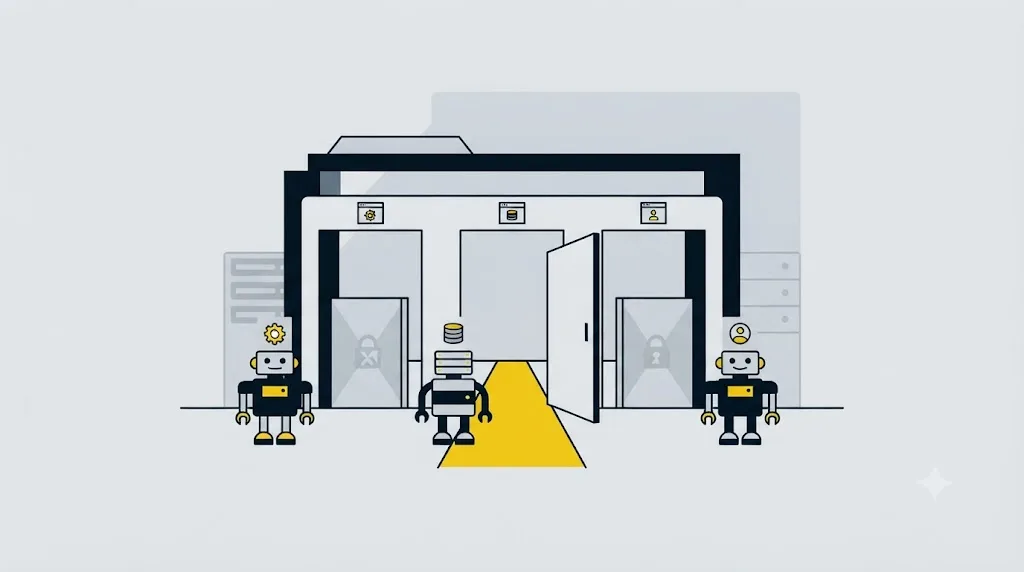
Yes. The same fetchability discipline, an accessible crawler, an answer stated plainly near the top, a working robots.txt, determines visibility across every major AI answer engine, not only ChatGPT, though each vendor names, scopes and behaves differently enough that treating "AI search" as one undifferentiated target will get some of it wrong.
Three other engines are worth naming specifically, because each operates its own crawler with its own robots.txt behavior, separate from ChatGPT's OAI-SearchBot covered above:
| Engine | Crawler(s) | What it does | robots.txt behavior |
|---|---|---|---|
| Perplexity | PerplexityBot, Perplexity-User | PerplexityBot indexes pages to surface and link them in Perplexity's own search results. Perplexity-User fetches a page live when a user's question requires it | PerplexityBot is documented to respect robots.txt. Perplexity-User generally does not, because it acts on a specific, live user request rather than crawling autonomously (Perplexity: Perplexity's crawlers) |
| Claude (Anthropic) | ClaudeBot, Claude-User, Claude-SearchBot | ClaudeBot collects content for model training. Claude-User fetches a page live when a Claude user's question requires it. Claude-SearchBot indexes content to improve Claude's own search results | All three are documented to respect robots.txt, and each can be allowed or disallowed independently of the other two (Anthropic: Does Anthropic crawl data from the web, and how can site owners block the crawler?) |
| Google Gemini and AI Overviews | Google-Extended, alongside the standard Googlebot that already powers Search | Google-Extended controls only whether content Google has already crawled can be used to train Gemini models and for grounding in Gemini apps | Disallowing Google-Extended does not remove a page from Google Search or from AI Overviews, since neither treats Google-Extended as an inclusion or ranking signal (Google Search Central: Google's common crawlers) |
The pattern across all three mirrors what OpenAI already does with GPTBot, OAI-SearchBot and ChatGPT-User: one crawler for training, a separate one for live retrieval, and blocking the training crawler does not automatically block the retrieval crawler or the other way round.
Copying a single "block all AI bots" robots.txt snippet, the same mistake named above for OpenAI's crawlers, quietly opts a site out of Perplexity, Claude and Gemini visibility at the same time it opts the site out of ChatGPT.
The practical move is to audit robots.txt once, for all of them, rather than fixing OpenAI's crawlers this month and discovering the Perplexity or Anthropic ones are blocked next quarter. Confirm PerplexityBot, ClaudeBot, Claude-SearchBot, GPTBot and OAI-SearchBot are each allowed on purpose, not by accident, and decide Google-Extended, ChatGPT-User, Perplexity-User and Claude-User separately, since those four fetch on a live user's behalf rather than crawling ahead of time and carry a different trade-off from the training and indexing crawlers.
One operational detail is worth knowing before you rely on any of these crawler names: a request claiming to be GPTBot, PerplexityBot or ClaudeBot is not automatically genuine, since any script can set that string in its own request headers. Anthropic publishes the IP ranges its bots crawl from at a public bots.json file so a site can verify a request is really Anthropic rather than an impersonator, and Perplexity's own documentation recommends reverse DNS verification for the same reason. If your analytics show heavy traffic from one of these user agents and something about it looks off, a sudden spike, requests from an unexpected IP range, verify before assuming it is the real crawler and adjusting your robots.txt in response.
Nothing else in this guide is ChatGPT-specific by accident, either. A page that answers a real buyer question in its first two sentences, backs the claim with a checkable source, and gets corroborated on a third-party site a model already trusts is exactly the page Perplexity's search, Claude's search and Google's AI Overviews are each independently built to prefer, because all four systems are solving the same underlying retrieval problem with different infrastructure. Treat this as generative engine optimization applied across engines rather than a ChatGPT-only project, and the marginal cost of covering Perplexity and Claude alongside ChatGPT is close to zero once the content itself already exists.
The one place engines genuinely diverge is measurement. A weekly ChatGPT question set, described later in this guide, tells you nothing about whether the same page is being cited inside Perplexity or Claude. If a meaningful share of your buyers use more than one AI tool to research a purchase, the same fixed question list needs to be run against each engine you care about, not only the one this guide is named for.
Do you need an llms.txt file to get mentioned in ChatGPT?
No, an llms.txt file is not required, and there is no evidence OpenAI's crawlers currently read or depend on one. It is a voluntary convention, not a standard any AI company has committed to supporting.
The file was proposed in September 2024 by Jeremy Howard as a markdown file placed at /llms.txt on a site, intended to give language models a curated, concise map of a site's most important pages without forcing them to parse full HTML navigation and markup (llms.txt: a proposal to provide information to help LLMs use websites). The idea borrows its shape from robots.txt and sitemap.xml, but unlike those two, no search engine or AI company has published documentation committing to read or act on it.
That does not make it worthless. A concise, accurate summary of your site's structure costs little to maintain and does no harm. It is simply not a substitute for the two things that actually determine whether ChatGPT can find and use your content: crawler access through a correctly configured robots.txt, and pages that answer real questions cleanly enough for a model to extract a usable passage.
Spend the first hour on robots.txt and the first day on a page that answers a real question in its opening sentence. Spend the leftover time, if any is left, on an llms.txt file.
Teams that reverse that order tend to have a beautifully summarized site that no crawler was ever allowed to reach.
Does schema markup or structured data help you get mentioned in ChatGPT?
No, no dedicated schema type gets a page cited in ChatGPT, and there is no evidence OpenAI reads or requires one at all. Google, which runs the most widely used AI-generated-answer surface in search, has said as much about its own AI Overviews and AI Mode directly: "You don't need to create new machine readable files, AI text files, or markup to appear in these features. There's also no special schema.org structured data that you need to add" (Google Search Central: AI features and your website).
OpenAI has not published anything comparable, which is itself informative. If a specific schema type reliably improved citation odds in ChatGPT, it would be a five-minute engineering fix every content team would already know about, the same way GPTBot and OAI-SearchBot access is documented plainly in OpenAI's own crawler reference. The absence of that guidance is a real signal that structured data is not the lever, in much the same way the absence of any OpenAI documentation on llms.txt, covered just above, is a signal that file is not required either.
Chasing a schema trick is the same mistake as chasing an llms.txt file: it treats a symptom-shaped problem as if it had a syntax-shaped fix.
The retrieval systems behind both Google's AI features and ChatGPT's search tool are built to extract meaning from ordinary, well-structured prose and HTML, not to reward a business for adding markup a human reader never sees and a model was never shown to weigh.
That does not make structured data worthless on the page. Organization, Article and FAQPage schema still help a page get parsed and categorized correctly across every ordinary surface a site depends on, including plain Google Search, which remains a large part of how any page becomes reachable at all in the first place. There is one narrow, genuine exception worth naming: Organization markup that correctly states your legal name, logo, official site URL and sameAs links to your verified social profiles, Wikipedia page or Wikidata entry helps disambiguate your brand as a single entity across the web. That is not a ChatGPT citation lever either. It is groundwork that makes it more likely any crawler resolves scattered mentions of your brand, your social bio, your G2 listing, your homepage, back to the same entity instead of three unrelated things.
Keep structured data accurate and current for those ordinary reasons, maintain it as routine technical hygiene rather than a GEO tactic, and expect nothing more dramatic from it than that.
Does coverage on Reddit, review sites and forums help you get mentioned?
Yes, often more reliably than your own marketing pages, because ChatGPT's retrieval draws on third-party sources it already treats as credible for comparison and opinion-style questions, and community platforms are a large part of that trusted set.
OpenAI signed a data partnership with Reddit in May 2024 that gives OpenAI structured, real-time access to Reddit's content through its Data API, explicitly to help ChatGPT and other OpenAI products better understand and surface Reddit discussions (Silicon Republic: OpenAI and Reddit team up to bring more data to ChatGPT). Reddit's own CEO framed the deal in terms of helping "new audiences find community on Reddit," which is a candid admission that Reddit expects, and wants, its threads to keep showing up inside AI answers.
For a "best X for Y" or "is X worth it" question, the kind a real buyer actually types, a genuine, detailed discussion thread with specific pros and cons frequently reads as more trustworthy to a retrieval system than a vendor's own comparison page, for the same reason it reads that way to a human. Nobody suspects a forum commenter of writing to rank.
This is not a call to fabricate reviews or astroturf a subreddit, which is both against most platforms' rules and the fastest way to get a brand's mentions actively suppressed once discovered. It is a case for participating honestly in the places your category is already being discussed: answering questions on relevant forums as a real person representing the company, making sure your product is accurately represented on review platforms like G2 or Capterra, and being straightforward about trade-offs when a Reddit thread asks about them directly.
Half of what determines whether ChatGPT mentions your brand happens on pages you do not own and cannot edit after publication.
That reframes the work closer to public relations and community presence than to conventional on-page SEO, and it means a content team working only on the company blog is only doing half the job.
How is getting mentioned in ChatGPT different from ranking in Google?
Ranking in Google competes for a position in a list of ten links a human scans and mostly does not click past the third of. Getting mentioned in ChatGPT competes for one of two or three names inside a single generated answer, and missing that shortlist is functionally the same as not existing for that user, regardless of what position you would have held in a traditional search result.
The practical differences change which tactics are worth your time:
| Ranking in Google | Getting mentioned in ChatGPT | |
|---|---|---|
| Who consumes the result | A person scanning a list of links | A model assembling one answer from retrieved passages |
| What "winning" looks like | Position 1 to 3 in a list of ten | Named among two to three brands, with or without a link |
| What is rewarded | Keywords, backlinks, dwell time, page experience | A directly-answering sentence, checkable numbers, clean structure, third-party corroboration |
| Where you are evaluated | Google's own index | Bing-derived retrieval, live browse results, and training data, depending on the query |
| Cost of losing | Page two, still findable with effort | Absent from the one answer the user actually reads |
| How you measure it | Rank tracking tools, organic traffic | Manually running a fixed question set and recording mentions, since there is no ChatGPT analytics dashboard |
Position four on Google is a mediocre outcome. Position four in a ChatGPT answer does not exist, because the answer usually stops at three names.
That single asymmetry is why teams that were comfortable optimizing for "top ten" now have to optimize for "top three, or nothing."
None of this means abandoning conventional SEO. The two disciplines reward overlapping work: a clear, well-structured, honestly-sourced page tends to do reasonably well at both. The content strategy already covered in what generative engine optimization actually is explains the broader relationship between the two disciplines in more depth, including where a tactic that helps one hurts the other, which is worth reading if you are building a content plan rather than fixing one page.
Do you need to rewrite your whole site, or can you retrofit what already exists?
Most sites do not need a rewrite. They need the handful of pages that already answer a real buyer question, pricing, comparison, "best X for Y," FAQ, audited against the nine-step process above and patched at the two or three points that are actually failing, which is usually the opening sentence and a missing source, not the entire page.
Start the audit with the pages that already have the best shot at a quick win. A page already ranking somewhere on Google for a buyer-intent question, or one your own analytics show gets direct traffic from people who already know what they want, is a far easier retrieval win than a page with zero existing authority for that question. New pages are for genuine content gaps, questions nothing on the site answers at all. Existing pages that already half-work are almost always the faster path to a first mention.
Run each candidate page through a short, repeatable checklist before deciding whether it needs an edit or a full rewrite:
Does the first two sentences answer the exact question, or does the page open with scene-setting first? If a reader, or a model, has to get past a paragraph of context before reaching the answer, that is the single highest-value fix available and the one to make first.
Is every specific claim on the page attached to a source, or is it an unsupported adjective? "Industry-leading," "trusted by thousands" and similar phrases are exactly the kind of claim a retrieval system skips in favor of a competitor's sourced one, covered earlier in this guide.
Is the page reachable at all, and quickly? Confirm it is not blocked in robots.txt, does not sit behind a script-heavy render that delays content, and does not 404 or redirect somewhere unexpected.
Does the page's date reflect the last time the facts were actually checked, or is it stale? A pricing page or comparison table with an outdated number is a liability once a fresher competitor page exists for the same question.
Does anything outside your own domain corroborate the same answer? If not, that is a content-ops task, not a rewrite: get the same fact represented accurately on a review platform, a forum thread or a comparison article, rather than trying to solve third-party trust from your own page alone.
A page that fails check 1 or check 2 is usually a two-hour edit: move the answer to the top, attach a source to the claim that needs one. A page that fails check 3 is a technical ticket, not a content one, and should go to whoever owns the site's infrastructure the same day it is found. A page that fails check 5 is the slowest fix of the five, because it depends on someone else's editorial timeline, which is exactly why that outreach should start now rather than after the on-page work is finished.
A ten-page audit that fixes the opening sentence and adds three real sources will usually outperform one sprawling new pillar page written from scratch, because the audited pages already carry whatever authority and existing traffic got them ranked in the first place.
Reserve genuinely new pages for buyer questions nothing on the site currently answers at all, and treat the rest of the site as an inventory to work through rather than a reason to start over.
Track the audit the same way the rest of this guide recommends tracking outcomes: before touching a page, run its target question through ChatGPT and note whether the brand appears. Fix the page. Re-run the same question on the same monthly cadence used for the rest of the tracked list, and treat the audited page as a normal entry in that list going forward rather than a one-time project with its own separate check-in.
How do you measure whether your brand is being mentioned in ChatGPT?
You measure it by running a fixed set of real buyer questions through ChatGPT on a repeated schedule and recording, per question, whether your brand was named and whether a link was attached, because there is no built-in analytics dashboard inside ChatGPT that reports this for you.
This is the part most teams skip, and it is also the reason most teams cannot tell whether any of the work in this guide is doing anything. The process is manual but not complicated:
- Write down 15 to 30 real questions your buyers ask before choosing a vendor in your category, sourced from actual sales calls and support tickets rather than guessed keywords.
- Ask each one in ChatGPT exactly as a buyer would type it, ideally with the browse or search behavior enabled so you can see both training-data and retrieval-based mentions.
- Record three things per question: was your brand named, was it linked, and which sources ChatGPT actually cited if any.
- Repeat the same list monthly, on the same dates, and track the trend rather than any single run.
- Where a competitor is named and you are not, open the page ChatGPT cited for them and compare its structure to yours on the same question.
A share-of-answer metric like this is only meaningful measured against a fixed, unchanging question set over time. Swap the questions each month and you have changed the ruler, not the score, which makes any trend line meaningless.
Teams without budget for a paid tracker can build the same thing in a spreadsheet at no cost: one row per tracked question, one column per month, and a simple yes or no for whether the brand appeared and whether it was linked. The only discipline required is running the exact same question wording on the exact same day each month, since a rephrased question is a different question to a retrieval system even when a human reader would call it the same request. A spreadsheet run consistently for six months beats a paid tool run inconsistently for two, and the choice between them should come down to whether your team will actually keep the habit, not which one looks more sophisticated in a report.
Third-party tools exist to partially automate this tracking rather than doing it by hand every month. Otterly.ai's published pricing, checked 30 July 2026, lists a Lite plan at 29 US dollars a month covering 15 tracked prompts across four AI engines, a Standard plan at 189 US dollars a month covering 100 prompts, and a Premium plan at 489 US dollars a month covering 400 prompts, all list prices before any annual discount (Otterly.ai: Pricing). Semrush's AI Visibility Toolkit, an add-on to its core suite, lists at 99 US dollars a month per domain billed annually for 25 tracked prompts across ChatGPT, Google AI and other engines, also checked 30 July 2026 (Semrush: AI Visibility Toolkit pricing). Neither tool guarantees a mention. Both simply automate the manual process described above at a scale a spreadsheet stops handling comfortably.
What mistakes keep brands out of ChatGPT's answers?
The most common mistake is blocking the wrong crawler by accident, followed closely by writing pages that never state the answer plainly enough for a model to lift it. Both are fixable in an afternoon once identified, which makes them expensive mistakes to leave unfixed for months.
Blocking OAI-SearchBot while trying to block GPTBot. Covered above, and worth repeating because it is genuinely the most common technical error: a robots.txt rule copied from a generic "block AI crawlers" list often disallows every OpenAI user agent at once, removing the site from ChatGPT's live citations as a side effect of a decision that was only meant to opt out of training data.
Burying the answer under three paragraphs of preamble. "In this article, we'll explore the many factors that go into choosing the right solution for your business" is a sentence a retrieval system cannot extract anything useful from. The answer needs to be the first sentence, not the reward for reading four hundred words to get there.
Writing claims with no number and no source attached. A vague "our platform is trusted by businesses worldwide" is unusable to a model that needs a checkable fact to cite with confidence. A specific, sourced claim survives extraction. A marketing adjective does not.
Treating the company blog as the only surface that matters. As covered above, a meaningful share of what ChatGPT cites for comparison and opinion questions comes from third-party review sites, forums and independent comparison articles. A content plan that only touches the owned domain is optimizing half the actual surface.
Publishing once and never updating. A pricing page or "best X" list from eighteen months ago, still live with stale numbers, gets outcompeted by a fresher, more accurate competitor page the moment retrieval compares the two. Generative engines have no loyalty to a page's age.
Confusing "ranks well on Google" with "will be cited by ChatGPT." The Ahrefs overlap data above shows how small the actual intersection is. A page that dominates Google for a keyword can be entirely absent from ChatGPT's answer to the same question, because the two systems are querying different indexes with different logic.
Chasing volume keywords that are already saturated. The questions with the highest search volume in a competitive category are usually already answered by a publisher with years of accumulated trust behind them. The openings tend to be narrower, more specific questions nobody has written a clean, sourced answer to yet.
Fabricating a statistic to make a page sound more authoritative. This backfires twice: a model has no way to verify an invented number so it may simply skip an unsourced claim, and a human buyer who checks the source and finds it does not exist stops trusting everything else on the page. A page with fewer, real numbers beats a page with one convincing but fabricated one, every time it is checked.
When should you not chase ChatGPT mentions?
Skip active investment in ChatGPT visibility if your buyers do not research your category through conversational AI tools yet, if your category has no meaningful comparison or "best X" question a buyer would ever type, or if your basic SEO and site content are not solid enough yet to be a competitive answer to any question at all.
Four honest situations where this is not the right priority:
Your sales cycle does not involve pre-purchase research questions. Some categories are relationship-driven, referral-driven, or bought through an RFP process where nobody types "best supplier for X" into any AI tool at any point. If that describes your business, the effort described in this guide has little to attach to, and your time is better spent elsewhere.
Your foundational content does not exist yet. If your site has no page that clearly explains what you do, who it is for, and why someone would choose it, chasing ChatGPT citations before that exists is building the second floor before the first. Fix the fundamentals, then layer GEO-specific structure on top of pages that already answer the basic questions well.
Your category genuinely has low conversational search volume right now. Some B2B niches are narrow enough, and buyer research habits traditional enough, that the realistic near-term payoff of ChatGPT mentions is small relative to the effort. That is a legitimate, honest read of a market, not a failure of technique. Revisit it in a year, because conversational research habits are still shifting quickly across most categories.
Your buyers research in a language your content does not cover. A retrieval system can only lift a passage in the language it was written in, and a single English page will not surface for a buyer typing the question in Romanian, Polish or Danish, no matter how well that English page is structured. If a meaningful share of your buyers research in another language, the fix is a natively written page in that language, not a translation of the English one, since a translated page reads as slightly off to both the local buyer and, over time, to the retrieval systems trained on how native speakers of that language actually write.
There is also a scale question worth being honest about. OpenAI reported more than 900 million weekly active users for ChatGPT as of late February 2026, up from 800 million the previous October (Search Engine Land: OpenAI says ChatGPT now has 900 million weekly active users), and Google reported its AI Overviews feature alone had surpassed 2.5 billion monthly active users by June 2026 (Digital Information World: Google says AI Overviews has over 2.5 billion monthly active users). Those are enormous reach numbers, but reach is not the same as relevance to your specific category, and a large audience for AI-generated answers in general does not guarantee a meaningful share of it is asking about your product specifically.

Agency, in-house team, or a tracking tool: who should run this?
None of the three is universally correct, and the right choice depends on whether your gap is content volume, technical access, or measurement, since each option is built to solve a different one of those three problems well.
A tracking tool alone, like Otterly.ai or Semrush's AI Visibility Toolkit, solves measurement. It tells you what is happening and, to a degree, why, by showing which sources get cited for your tracked questions. It does not write a single page, fix a single robots.txt entry, or pitch a single journalist or forum thread on your behalf. Bought alone, it is a very expensive way to watch a problem you are not fixing.
An in-house team makes sense once you already have writers who understand your buyers' real questions and a technical resource who can touch robots.txt and site structure without a ticket queue. The constraint is usually volume and consistency: this work compounds through a large, steady body of specific, well-sourced pages published over months, and most in-house teams are sized for a handful of pages a month, not the dozens needed to cover a category's full set of buyer questions.
An agency makes sense when the constraint is volume, breadth, or a technical pipeline the internal team does not have time to build. The trade-off worth naming honestly: an agency without a track record you can verify is asking you to trust a promise. Ask any agency, including Brictale, to show you the actual page it would publish for one real buyer question in your category before you commit to a retainer, and judge that single page against everything in this guide.
Brictale publishes more than 500 posts a month, with a few thousand accompanying images, through an in-house content pipeline, and has produced and published AI-generated campaign films, including a Revolut Junior Christmas ad. Brictale has no published client results yet in the GEO discipline specifically, and does not claim any. What is on offer instead is the method itself, laid out step by step in this guide, and a free visibility audit that runs a set of real questions in your category through the major AI engines so you can see exactly where your brand currently stands before spending anything.
| Option | Solves | Does not solve | Typical monthly cost band |
|---|---|---|---|
| Tracking tool only | Measurement, trend visibility | Content creation, technical fixes, third-party coverage | 29 to 489 US dollars a month, list price, checked 30 July 2026 |
| In-house team | Brand voice control, deep product knowledge | Publishing volume at category-wide scale, specialist GEO technical setup | Existing salary cost, no new spend |
| Agency | Volume, technical pipeline, third-party outreach | Full control over voice unless closely managed, requires vetting | Not publicly stated by Brictale; ask for a demo page and a written scope before committing |
Choose a tracking tool alone if all you need right now is to confirm whether a problem exists before committing budget to fixing it. Choose in-house if your team already has the writers and the technical access and simply needs the priorities in this guide. Choose an agency if the gap is volume or a technical pipeline you do not have time to build internally, and vet any agency, Brictale included, by asking to see one real page before signing anything.

What does this actually cost and how long does it take?
The tooling to measure it costs between roughly 29 and 489 US dollars a month at list price depending on scope, as shown above, but the real cost of this work is the content and technical time behind it, and the real timeline is measured in months, not days, because it depends on indexing cycles and, for training-data mentions, on model release cycles entirely outside your control.
Break the timeline into what you actually control and what you do not:
Within your control, days to weeks. Fixing a robots.txt entry, rewriting an opening paragraph to lead with the answer, adding a real sourced number to a claim. These changes can be live within a day of deciding to make them.
Partially within your control, weeks to a couple of months. Getting a page freshly indexed and picked up by OAI-SearchBot's live retrieval, which OpenAI notes can take on the order of a day for a robots.txt change to propagate and longer for a new page to be discovered, crawled and treated as a reliable source (OpenAI: Overview of OpenAI crawlers). Earning a mention or a link from a third-party site, a review platform listing, or a forum thread with real engagement, which depends on other people's editorial timelines and cannot be forced on your own schedule.
Outside your control entirely, months to longer. A training-data mention, the kind with no citation link attached, only changes when OpenAI trains and releases a new model. There is no publish-and-wait shortcut for that category of mention. If your realistic goal is "get named even when the model is answering from memory rather than live search," accept that the timeline is tied to OpenAI's release cadence, not yours.
A reasonable planning assumption: budget three to six months of consistent, sourced, correctly-structured publishing before judging whether the approach is working, and measure it with the fixed question set described earlier rather than by checking once and concluding nothing changed. A single week of no visible movement is normal. Three months of a completely flat share-of-answer number, measured against the same fixed questions, is the signal to change tactics rather than wait longer.
The verdict: what to do this week
Start with the two things that cost nothing and take less than a day: check robots.txt for GPTBot, OAI-SearchBot and ChatGPT-User, and rewrite the opening sentence of your three most important pages so each one states the answer plainly in the first line. Everything else in this guide builds on those two fixes.
Then write down your real question list, fifteen to thirty entries pulled from actual sales conversations rather than guessed keywords, and run it through ChatGPT this week to get a baseline before you change anything else. You cannot measure movement against a number you never recorded.
Getting mentioned in ChatGPT is not a purchase, a trick, or a one-time setup task. It is a content and technical discipline that rewards the same honesty a skeptical human buyer would reward, run on a timeline of months rather than days.
If you want to see where your brand currently stands across the real questions your buyers are already asking AI tools, before committing budget to fixing it, Brictale's visibility audit is free and shows you exactly that.